Cath Staincliffe - Split Second
Здесь есть возможность читать онлайн «Cath Staincliffe - Split Second» весь текст электронной книги совершенно бесплатно (целиком полную версию без сокращений). В некоторых случаях можно слушать аудио, скачать через торрент в формате fb2 и присутствует краткое содержание. Жанр: Детектив, на английском языке. Описание произведения, (предисловие) а так же отзывы посетителей доступны на портале библиотеки ЛибКат.
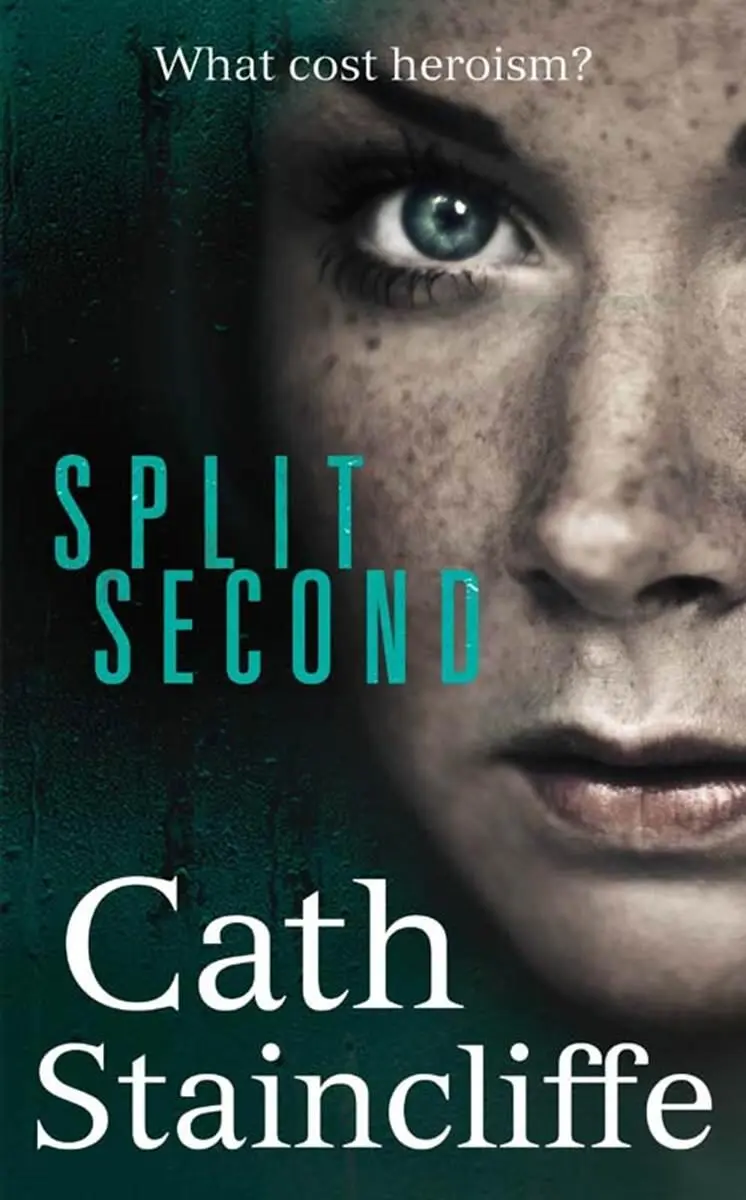
- Название:Split Second
- Автор:
- Жанр:
- Год:неизвестен
- ISBN:нет данных
- Рейтинг книги:4 / 5. Голосов: 1
-
Избранное:Добавить в избранное
- Отзывы:
-
Ваша оценка:
Split Second: краткое содержание, описание и аннотация
Предлагаем к чтению аннотацию, описание, краткое содержание или предисловие (зависит от того, что написал сам автор книги «Split Second»). Если вы не нашли необходимую информацию о книге — напишите в комментариях, мы постараемся отыскать её.
Split Second — читать онлайн бесплатно полную книгу (весь текст) целиком
Ниже представлен текст книги, разбитый по страницам. Система сохранения места последней прочитанной страницы, позволяет с удобством читать онлайн бесплатно книгу «Split Second», без необходимости каждый раз заново искать на чём Вы остановились. Поставьте закладку, и сможете в любой момент перейти на страницу, на которой закончили чтение.
Интервал:
Закладка:
They had Jason’s key and made themselves known to the manager of the halls, who they’d spoken to on the phone. She greeted them warmly. Andrew liked the lilt of her accent. ‘We’re just up here,’ she said. He was glad of the guidance; although he had been here before, helping Jason move in, he would never have remembered the way.
‘If there’s anything you need, just give us a call.’ She left them outside the room.
Andrew opened the door. The space was small and cluttered and shouted Jason from every angle: his guitar, his rugby shirt, his photos. Andrew took a sharp breath and moved towards the desk at the back wall where books and CDs and files were strewn about. Val took a step after him and stopped in the middle of the room between the bed and the chest of drawers.
Andrew scanned the desk. What had Jason been reading, working on, listening to? Hungry for more knowledge about his son. When he turned back to Val, she moved to him. They embraced. All the nevers, thought Andrew. He will never come in that door, play that song, read another word. He eased himself away from her.
‘I’ll fetch the boxes,’ he said. ‘I’ll do the books, if you can empty the drawers.’
She nodded, and they set to work.
Louise
‘Oh, Louise.’ Omar looked crestfallen, shaking his head at her when she went in the shop for milk. ‘It shouldn’t be allowed.’ He waved his hand at the bundles of newspapers he was undoing for the shelves.
Her eyes flew from one headline to the next. COMA BOY’S REIGN OF TERROR – DEATH IN VAIN? STUDENT GAVE LIFE FOR TEENAGE THUG. COMA VICTIM’S LIFE OF CRIME. Luke’s face and Jason’s staring out at her in black and white.
Louise felt her heart clench, gasped at the savagery of the words.
‘Don’t read them,’ Omar said.
She was dizzy, frightened. ‘How can I not read them?’
‘It’s all lies,’ he said.
‘I need to know what they’re saying.’ She got out her purse.
‘Keep your money,’ he said. ‘If I could, I’d burn the lot.’
She forgot the milk. Ran home and spread the papers out. Ten minutes until she had to wake Ruby.
It was lies, most of it. The facts twisted beyond all recognition. Supposition and exaggeration and righteous indignation stuffed between barbed comments. Luke had been out of control, uncontrollable, feckless, reckless, known to the police, excluded from school, a thug, prone to antisocial behaviour, a budding criminal, an arsonist, a vandal, a drug-user, disturbed. He’d been raised in a broken home, by a single parent who had children by two different men. Neither of the children saw their fathers. There was no mention of Eddie’s sudden death. Luke had caused explosions in an arson attack, defaced public property. Neighbours reported living in fear. A source close to the family did not want to be named.
He was the devil incarnate, her spawn.
Something broke inside her. This was her boy, her lovely boy, lying sick in a coma, his skull broken, and they could write all this about him. The cruelty of it sang through her, circulated like acid in her blood. And a great swell of doubt came crashing after it. Was it her fault? Could she have done more? Done better? Was this a broken home? She had filled it with love and encouraged laughter, tried to keep it warm, kept the fridge stocked, their clothes clean. Revelled in them, even when she was ragged with fatigue. She’d have done anything to prevent Eddie’s death; she had not chosen to be left on her own raising a family. And in her heart she did not equate lone parents with broken homes. Weren’t they simply victims of unsuccessful relationships? While a broken home was a dysfunctional one, surely, one without love or care or comfort.
She recalled the visits to school, her attempts to broker some sort of peace between Luke and his teachers, Luke and the attendance officer. She had done her level best to listen, to try and find out how she could help him, why he was so unhappy and restless.
The possibility that she had fallen short, that there were mistakes, inadequacies in what she had done, made her sick with guilt. Shame clawed through her.
But when she returned to the papers and read them anew, the anger returned. This was not Luke, this was not fair.
Shivering with rage, she rang DC Illingworth, never mind how early it was. ‘Have you seen the papers?’ she demanded, a tremor in her voice.
‘No,’ the woman replied. ‘What is it?’
‘It’s bloody character assassination,’ she said, close to tears, ‘that’s what it is. My boy’s a victim here and they’re making him out to be a right villain.’
‘Louise-’
‘Please,’ she blurted out, ‘read them!’ She ended the call.
‘Mum?’ Ruby was there in her school uniform. ‘What’s going on?’
Louise only hesitated for a moment – there was no way she could keep it from Ruby; she was bound to hear about it. ‘The papers, they’re saying things about Luke, things that aren’t true.’
‘What sort of things?’
‘That he was a criminal, that he was terrorizing the place.’
‘Oh, Mum.’ Ruby’s eyes filled.
‘I know it’s not true and you know it’s not true, but it’s there in black and white and some people will take it as gospel.’
‘Can’t we sue them, then?’
Oh, Ruby. ‘I doubt it.’ She tried to focus, to concentrate on what was important. ‘Listen, you might get some bother at school. Do you want me to talk to Miss Morley?’
‘No, it’ll be all right.’
‘But you would let me know if…’ A spike of panic in her guts; was she neglecting Ruby too? Should she keep her off, cocoon her here?
‘Course.’ Ruby poured cereal, drained the last of the milk, pulled one of the papers closer.
‘How do they know all this?’ Louise wondered aloud. ‘The stuff with the police, the cautions, that’s not public knowledge. He was only fifteen, it’s meant to be confidential. So either the police have leaked stuff, or someone who knows Luke told them. But why? Why would anyone do that?’
‘It makes him sound horrible,’ Ruby exclaimed. ‘There’s our house.’ She pointed at an inside page. The picture made the place look smaller, meaner than it really was. Barren. Taken so that the great tree, with Luke’s lights in, was not in view.
The only reference to Luke’s attackers was right at the end of the piece, which repeated that the police had issued e-fit pictures of two men and a young woman wanted for questioning in the assault that led to the death of Good Samaritan Jason Barnes.
‘Why would they write all this?’ asked Ruby.
‘Because it sells papers. They can stir it up, get people talking. You know what spin is; this is spin. Your great-grandad called them the gutter press, this lot. Best used for wiping yer arse on.’
‘Mum!’
‘His words, not mine.’ She drew a breath; her chest ached. ‘Just remember, if anyone says anything at school, you know Luke, and what sort of person he is. And this isn’t him.’
DC Illingworth rang back before they left. ‘I’m so sorry, Louise.’
‘Can’t you do anything? Make them take it back? What if it affects how people see things when we get to court? Isn’t that illegal if there might be a trial?’
‘They’ve been very careful; there are no details about the incident itself in what they’ve written.’
‘Aren’t your press office meant to stop them printing stuff like this?’
‘We do our best, but we have a free press. Publishing material like this doesn’t help anybody, but as I say, there’s nothing there that might materially affect our ability to press charges or mount a prosecution. You could try for a right of reply or an apology, but we really wouldn’t advise it. It could make things even worse.’
Читать дальшеИнтервал:
Закладка:
Похожие книги на «Split Second»
Представляем Вашему вниманию похожие книги на «Split Second» списком для выбора. Мы отобрали схожую по названию и смыслу литературу в надежде предоставить читателям больше вариантов отыскать новые, интересные, ещё непрочитанные произведения.
Обсуждение, отзывы о книге «Split Second» и просто собственные мнения читателей. Оставьте ваши комментарии, напишите, что Вы думаете о произведении, его смысле или главных героях. Укажите что конкретно понравилось, а что нет, и почему Вы так считаете.