Arnon Grunberg - The Jewish Messiah
Здесь есть возможность читать онлайн «Arnon Grunberg - The Jewish Messiah» весь текст электронной книги совершенно бесплатно (целиком полную версию без сокращений). В некоторых случаях можно слушать аудио, скачать через торрент в формате fb2 и присутствует краткое содержание. Год выпуска: 2008, Издательство: Penguin Group US, Жанр: Современная проза, на английском языке. Описание произведения, (предисловие) а так же отзывы посетителей доступны на портале библиотеки ЛибКат.
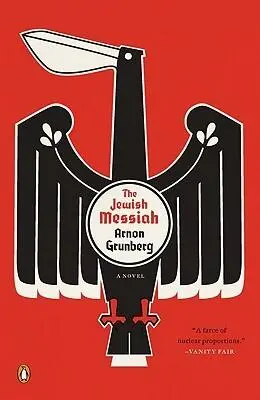
- Название:The Jewish Messiah
- Автор:
- Издательство:Penguin Group US
- Жанр:
- Год:2008
- ISBN:нет данных
- Рейтинг книги:4 / 5. Голосов: 1
-
Избранное:Добавить в избранное
- Отзывы:
-
Ваша оценка:
The Jewish Messiah: краткое содержание, описание и аннотация
Предлагаем к чтению аннотацию, описание, краткое содержание или предисловие (зависит от того, что написал сам автор книги «The Jewish Messiah»). Если вы не нашли необходимую информацию о книге — напишите в комментариях, мы постараемся отыскать её.
) Arnon Grunberg is one of the most subtly outrageous provocateurs in world literature.
, which chronicles the evolution of one Xavier Radek from malcontent grandson of a former SS officer, to Jewish convert, to co- translator of Hitler's
into Yiddish, to Israeli politician and Israel's most unlikely prime minister, is his most outrageous work yet. Taking on the most well-guarded pieties and taboos of our age,
is both a great love story and a grotesque farce that forces a profound reckoning with the limits of human guilt, cruelty, and suffering. It is without question Arnon Grunberg's masterpiece.
The Jewish Messiah — читать онлайн бесплатно полную книгу (весь текст) целиком
Ниже представлен текст книги, разбитый по страницам. Система сохранения места последней прочитанной страницы, позволяет с удобством читать онлайн бесплатно книгу «The Jewish Messiah», без необходимости каждый раз заново искать на чём Вы остановились. Поставьте закладку, и сможете в любой момент перейти на страницу, на которой закончили чтение.
Интервал:
Закладка:
Awromele stood up from the table. “I don’t feel anything,” he said, “but I’m going now, I’m leaving tonight, and I won’t let you stop me. Because I don’t feel anything, I’ll never feel anything again. I won’t let you lock me up. Lock yourselves up if you want. That’s the only way you two know how to avoid trouble. Lock yourselves up, bolt all the doors, shut the windows — and look what it’s brought you, look at what you’ve become. Despicable, that’s the only word for it. You two talk all day, all you do is talk, you don’t produce anything — okay, children who do the same thing you do — you don’t produce anything, only words, misleading words. Words that come from your mouths are dead words. The language of the future is the language of the shoe, of the knee, of the hand, of the whip. That is communication, honest communication.”
“You’re not going!” the rabbi shouted. “You’re not leaving this house, or you’re no son of mine. We’ll sit shiva for you. And if you stay, the two of us will go out on the town, the way we used to.”
“Stop it!” the rabbi’s wife shouted. “Don’t say things like that; you going there is bad enough already. How can you drag your children along to a den of thieves like that?”
“But, sweetheart,” the rabbi said, “sweetheart, darling, my dearest wife, I do it for you, I go there out of respect for you, respect and love. When I’m there, I’m close to you; I’m never that close to you anywhere else. I need the masseuse in order to love you more. To come closer to you, I need a mediator, the way the Christians need a mediator to come closer to God. The Christians have never understood that, but Jesus is the masseur of God.”
“Stop it!” the rabbi’s wife cried. “I don’t want to hear this. This is blasphemy, this is an insult to God. How can you call yourself a rabbi?”
“That’s what I mean,” Awromele said. “Talking, raping the language, turning it inside out, turning it around, then inside out again. It’s parasitism. That’s why they call you parasites, because you don’t speak the language of human beings. The language of human beings is the language of the shoe — that’s plain speaking. That’s clear talk; people can do something with that. That’s why they tried to exterminate you, because you’ve raped the language. Every word is something to be haggled over, every word can mean something else; you people are even prepared to haggle over your own death.”
Awromele ran to his room, gathered together his favorite trousers, his favorite shirt, his gym socks, the notebook with the Yiddish translation of Mein Kampf, and the book itself. Then he stuffed it all into a plastic bag. It’s starting, he thought. He didn’t know what was starting, all he knew was that it was starting, that something incredible was on its way. The rabbi’s wife knocked on his door. When she didn’t hear anything, she opened it and said: “Awromele, if you’re going to go, don’t go like this. Wait a little bit, until you’ve calmed down.”
“I have to,” he said. “Papa wants to lock me up. If I stay here, I’ll become like him. Something important is going to happen, and I have to be there. I’m part of the future; you two are only part of the past. A horrific past, a stinking past.”
“Awromele,” the rabbi’s wife said, “stop babbling; you’ve got me all worried. Future, past — what are you talking about? Everything repeats itself, everything has already happened and is going to happen again. If the past stinks, the future will stink even worse. Keep your head down — that’s the best thing you can do. Keep your head down, and don’t make too much noise. Stay here; you’re my firstborn son.”
“No, Mama,” Awromele said, “I have to go. The surest way to say nothing is to speak. I have to go, in order to say something.”
He headed for the front door. He didn’t want to wait for the elevator, so he took the stairs.
In the kitchen the rabbi’s wife was stuffing cookies into a plastic bag. She shouted: “Rochele, hurry up, Rochele, come here. Run after your brother and give him this. And tell him not to talk nonsense: he can always come back, we’ll be waiting for him, I’ll be waiting for him.”
Rochele grabbed the bag and ran down the stairs. She didn’t catch up with Awromele until they were out on the street. She threw her arms around his waist.
“Here,” she said, “here. This is from Mama. She said I should give it to you. Please come back, Awromele, please. No one knows what to do without you. Papa doesn’t mean anything bad by it, you know that. He’s just autistic, that’s what Mama says: he can’t help it. People who are autistic can’t do anything about anything.”
Awromele took the bag of cookies. He lifted his little sister on his arm.
“Don’t go away, Awromele,” she whispered in his ear. “Don’t go away. The pelican is coming. The pelican will help us.”
He smiled a little and put her back down. He ran his hand over her hair.
“Language is in your feet, Rochele,” Awromele said. “Language is in your shoes. Anything that comes out of your mouth is useless. The language of the future is in the knuckles of both hands.” He showed her his knuckles, and for a moment Rochele laid her fingers on her brother’s knuckles. “Awromele,” she whispered.
Then he walked on, the bag of cookies in one hand, in the other the plastic bag with his most valued possessions.
“Awromele,” Rochele cried, “Awromele, come back, we need you.”
But Awromele kept walking, because the language that came from people’s mouths was dead.
Rochele knelt down on the pavement. She looked at the sky, at the trees, the clouds, the windows hung with curtains, and the windows hung with nothing at all.
“Pelican,” she said softly, “look at me. I know you can see me. Look at me.”
Eye to Eye
IT WAS TEN O’CLOCKin the evening by the time Awromele rang Xavier’s doorbell. In the hand that hadn’t been broken, he held the plastic bag with his most valued possessions and the bag of cookies. He was sweating from his walk across town.
Awromele had stuffed all his savings into his pants pocket. He didn’t know how he would get by in the Venice of the North, so he had decided to be frugal. No more public transport, no more candy, and he would jot down all his revenues and expenditures in a notebook.
Marc opened the door.
Awromele was standing there in his black suit and pin curls, the tzitzit hanging out of his pants.
“Have we met?” Marc asked the Orthodox Jew. He wasn’t the kind of person to be flustered by strangers showing up at the door at ten o’clock at night. The way other people eat what’s set before them, that’s the way Marc accepted the world.
“I’m a friend of Xavier’s,” Awromele said. “Xavier Radek.” Awromele hoped that Xavier would hear his voice and come running out. But Xavier didn’t hear anything: he was painting, and when he painted he didn’t hear a thing. As was often the case at this hour of the evening, the mother was sitting across from him with his testicle in her hand.
“Yes, that’s right,” Marc said. “He lives here.” And he looked the devout Jew over from head to toe. It was hard for him to imagine that Xavier knew this boy, let alone that he was his friend. “Is he expecting you?” he asked. On the other hand, Xavier was an artist, and artists tended to have peculiar friends. Especially when they were young. The artist as a young man was an eccentric nonconformist. Conformity came only with success. Marc had read about that, and so he didn’t worry about Xavier’s strange hobbies. Everything would turn out just fine in the end. The people would love Xavier and forgive him everything, and in that way they would also love Marc a little, too. “Shall I call him?”
Читать дальшеИнтервал:
Закладка:
Похожие книги на «The Jewish Messiah»
Представляем Вашему вниманию похожие книги на «The Jewish Messiah» списком для выбора. Мы отобрали схожую по названию и смыслу литературу в надежде предоставить читателям больше вариантов отыскать новые, интересные, ещё непрочитанные произведения.











Обсуждение, отзывы о книге «The Jewish Messiah» и просто собственные мнения читателей. Оставьте ваши комментарии, напишите, что Вы думаете о произведении, его смысле или главных героях. Укажите что конкретно понравилось, а что нет, и почему Вы так считаете.