Arnon Grunberg - The Jewish Messiah
Здесь есть возможность читать онлайн «Arnon Grunberg - The Jewish Messiah» весь текст электронной книги совершенно бесплатно (целиком полную версию без сокращений). В некоторых случаях можно слушать аудио, скачать через торрент в формате fb2 и присутствует краткое содержание. Год выпуска: 2008, Издательство: Penguin Group US, Жанр: Современная проза, на английском языке. Описание произведения, (предисловие) а так же отзывы посетителей доступны на портале библиотеки ЛибКат.
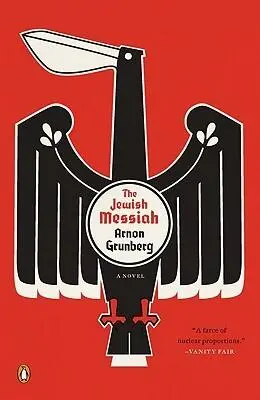
- Название:The Jewish Messiah
- Автор:
- Издательство:Penguin Group US
- Жанр:
- Год:2008
- ISBN:нет данных
- Рейтинг книги:4 / 5. Голосов: 1
-
Избранное:Добавить в избранное
- Отзывы:
-
Ваша оценка:
The Jewish Messiah: краткое содержание, описание и аннотация
Предлагаем к чтению аннотацию, описание, краткое содержание или предисловие (зависит от того, что написал сам автор книги «The Jewish Messiah»). Если вы не нашли необходимую информацию о книге — напишите в комментариях, мы постараемся отыскать её.
) Arnon Grunberg is one of the most subtly outrageous provocateurs in world literature.
, which chronicles the evolution of one Xavier Radek from malcontent grandson of a former SS officer, to Jewish convert, to co- translator of Hitler's
into Yiddish, to Israeli politician and Israel's most unlikely prime minister, is his most outrageous work yet. Taking on the most well-guarded pieties and taboos of our age,
is both a great love story and a grotesque farce that forces a profound reckoning with the limits of human guilt, cruelty, and suffering. It is without question Arnon Grunberg's masterpiece.
The Jewish Messiah — читать онлайн бесплатно полную книгу (весь текст) целиком
Ниже представлен текст книги, разбитый по страницам. Система сохранения места последней прочитанной страницы, позволяет с удобством читать онлайн бесплатно книгу «The Jewish Messiah», без необходимости каждый раз заново искать на чём Вы остановились. Поставьте закладку, и сможете в любой момент перейти на страницу, на которой закончили чтение.
Интервал:
Закладка:
“I don’t know you,” the Egyptian said, “and you don’t know me. You come here, I’m closed. You want to talk. That’s not good. That’s not the way you do it.” He tried to sound convincing, but he heard himself and thought his voice sounded like nothing. Like weakness, like a person who’s been tossed aside, like an inedible piece of meat.
The bald man lit a cigarette, and asked again: “You mean you’ve stopped?”
Nino wiped a few crumbs from the wooden table. He mustn’t forget to call the pest-control people. They needed to come by again; the kebabs might be only a front, but a modicum of hygiene never hurt. And he shouldn’t forget who he was, either: he was Nino; here in Basel they still called him Nino. “You people heard me,” he said, using his left hand again to wipe some imaginary crumbs onto the floor. “I don’t want to talk. I’ve got a lot to do. I manage this place. The management says: No talking. The management says: You two are going to go home now. You two are going to go drink something somewhere else.”
No one spoke. But the tourists didn’t get up, they didn’t go home — maybe they didn’t have a home — and then the bald man asked again, “Have you stopped?”
The Egyptian tugged at his necktie and scratched the back of his head. He felt hot. Why was he still alive? Three of his five brothers were already dead. Why wasn’t he dead? Why had death passed him by? Only because he was too cowardly to be a hero. If this was life, which he wasn’t so sure about anymore, then he didn’t really know what he was doing here. Trash was what it was, a filthy mess, full of bald pudenda and tourists who wouldn’t fuck off.
“Stopped what?” he asked. “I don’t know you people. You’ve made some kind of mistake. You’ve mistaken me for someone else. I don’t know who, because I don’t know very many people in this town. But I have to get on with my work. I’m the manager of this place. I’m going to call the police.” The longer he listened to himself talk, the more he sounded like an old woman. She was lying tied up on the living-room floor, but she kept protesting, just for the record.
“That’s not a bad question,” the bald man said. “Yeah, what have you stopped doing? Maybe we should ask, What haven’t you stopped doing? Maybe that’s a better question.” He looked at the woman beside him, but she didn’t seem to be listening: she was meditating, or thinking about another man, or a vacation on Malta when it hadn’t stopped raining for ten days. The Egyptian had been to Malta once. With a French woman. “So let’s ask you that,” the bald man went on. “What haven’t you stopped doing? You haven’t stopped dealing. You’re still living, so you haven’t stopped that, either. Let’s see, what else haven’t you stopped doing? What does a person like you not stop doing? What can a person like you not help doing?”
Nino looked at him, the bald man with the video camera around his neck. He rubbed his hands together; they felt dry. Then he stood up, but the bald man pushed him back in his chair rather forcefully, and the Egyptian couldn’t help thinking about his dogs. How he had fed them that morning, how he went into the garden with them sometimes to cry at the moon. He liked that. That made him happy; he would lie in the grass beside his dogs, even if it was cold out, even if it had just rained, and cry.
“Let’s talk,” the bald man said. “Let’s do it right now, because time is money, and before long it won’t be necessary anymore.”
The woman was toying with an elastic band she’d been wearing in her hair. Her hair was hanging loose now. It was kind of curly.
“There’s nothing to tell,” the Egyptian said, and he looked at them, these two people who looked like tourists. He kept looking at them, because he didn’t understand what they wanted from him. “I’m a busy man. You two have mistaken me for someone else. That’s why I don’t know what you’re talking about.”
Maybe they would believe him. He could be very convincing at times — people used to tell him that.
“There’s nothing to tell,” he said again, “I’m the manager. This is my place. My falafels are famous.”
For a moment, he was afraid that something had gone wrong with last month’s payment, that they hadn’t split it up correctly, and that the Swiss police had decided to take action. But he knew how the Swiss police operated — they worked in a different way. Besides, they didn’t look like this. Swiss undercover agents talked differently, too. He knew them; he knew them better than his own family.
“I sell famous falafels. So what’s to tell?”
He laughed and held up his hands. It was a good joke, too, he thought, if you stopped to think about it. When people asked him what he did, he could say that: I sell falafels.
“What is it that makes time so valuable?” the bald man asked imperturbably. “Death, that’s what makes time valuable. The faster death approaches, the more valuable time becomes. A fifteen-year-old boy thinks he’ll live forever — time isn’t valuable to him. You don’t see what we see. You don’t know what we know. Our death is fast and accurate, our death never misses the target, our death leaves no trace. Our death has to be faster than that of the enemy. Our death is faster. But let me put it differently: since we’ve been sitting here, your time has become more valuable, and we want just a little piece of that time before it becomes worthless and no one wants it anymore.”
The Egyptian shook his head and looked at the door. “I don’t understand,” he said, “I’m old — maybe I’ll live twenty, maybe thirty years, probably not — I don’t have any children. What do you people want? Money? Do you think I’m rich? Rich from what? Would I be sitting here if I was rich?” He thought about Malta again, and the French woman he’d been with there. Funny to think about that now — it had been months, maybe years since he’d last thought about it.
He laughed again, and the woman across from him looked at him in a way that gave the Egyptian an uneasy feeling. A bloated feeling, like when you’ve had too much to eat.
“Hamas,” the bald man said. “Let’s talk about Hamas. First you start talking about it, because a conversation has to start somewhere, then we’ll tell you what we have to say. Come on, talk. Talk about Hamas as though it were your grandma. Your favorite grandma, who told you all her naughty secrets.”
The woman was weaving little figures with her elastic band; she was pretty good at it. Outside, a fire engine went by, its sirens blaring.
The owner of the kebab place shrugged. “Who?” he asked. “I don’t understand. My grandma? My favorite grandma? Hamas?” He laughed. “My grandma is dead. My grandfather is, too. And my grandma didn’t have any naughty secrets — she didn’t have any secrets at all. Listen, my hair smells like frying fat, my hands are tired from slicing lamb and running the deep-fryer, I never remember a name, I don’t have any regular customers, and when I do I forget them right away. My falafels are famous, but customers can’t find me because I’ve moved so often. First I had a place over there, now I’m here. I should try advertising, but I don’t have enough money to advertise.” He moved his face closer to that of the bald man. “My heart doesn’t get stolen anymore,” said the Egyptian. “Because the people who steal your heart steal your cash register, too. My heart is locked up.”
He put his hand over his heart, and the bald man looked around wearily. Then the bald man said: “Okay, so let me tell you something. Let me tell you about your dogs. Heinrich and Günther — that’s it, isn’t it?”
The Egyptian cleared his throat, and looked at the door as if he expected the cleaner to show up, though he wouldn’t be coming for half an hour. He often came late, never early.
Читать дальшеИнтервал:
Закладка:
Похожие книги на «The Jewish Messiah»
Представляем Вашему вниманию похожие книги на «The Jewish Messiah» списком для выбора. Мы отобрали схожую по названию и смыслу литературу в надежде предоставить читателям больше вариантов отыскать новые, интересные, ещё непрочитанные произведения.





Обсуждение, отзывы о книге «The Jewish Messiah» и просто собственные мнения читателей. Оставьте ваши комментарии, напишите, что Вы думаете о произведении, его смысле или главных героях. Укажите что конкретно понравилось, а что нет, и почему Вы так считаете.