Arnon Grunberg - The Jewish Messiah
Здесь есть возможность читать онлайн «Arnon Grunberg - The Jewish Messiah» весь текст электронной книги совершенно бесплатно (целиком полную версию без сокращений). В некоторых случаях можно слушать аудио, скачать через торрент в формате fb2 и присутствует краткое содержание. Год выпуска: 2008, Издательство: Penguin Group US, Жанр: Современная проза, на английском языке. Описание произведения, (предисловие) а так же отзывы посетителей доступны на портале библиотеки ЛибКат.
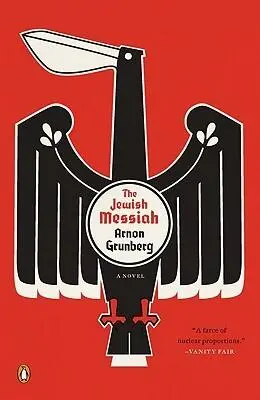
- Название:The Jewish Messiah
- Автор:
- Издательство:Penguin Group US
- Жанр:
- Год:2008
- ISBN:нет данных
- Рейтинг книги:4 / 5. Голосов: 1
-
Избранное:Добавить в избранное
- Отзывы:
-
Ваша оценка:
The Jewish Messiah: краткое содержание, описание и аннотация
Предлагаем к чтению аннотацию, описание, краткое содержание или предисловие (зависит от того, что написал сам автор книги «The Jewish Messiah»). Если вы не нашли необходимую информацию о книге — напишите в комментариях, мы постараемся отыскать её.
) Arnon Grunberg is one of the most subtly outrageous provocateurs in world literature.
, which chronicles the evolution of one Xavier Radek from malcontent grandson of a former SS officer, to Jewish convert, to co- translator of Hitler's
into Yiddish, to Israeli politician and Israel's most unlikely prime minister, is his most outrageous work yet. Taking on the most well-guarded pieties and taboos of our age,
is both a great love story and a grotesque farce that forces a profound reckoning with the limits of human guilt, cruelty, and suffering. It is without question Arnon Grunberg's masterpiece.
The Jewish Messiah — читать онлайн бесплатно полную книгу (весь текст) целиком
Ниже представлен текст книги, разбитый по страницам. Система сохранения места последней прочитанной страницы, позволяет с удобством читать онлайн бесплатно книгу «The Jewish Messiah», без необходимости каждый раз заново искать на чём Вы остановились. Поставьте закладку, и сможете в любой момент перейти на страницу, на которой закончили чтение.
Интервал:
Закладка:
“That’s right, Mama,” Awromele said quietly. “Of course I’m alive. And you?”
“Look who I brought to see you,” the rabbi’s wife said. “Your sister.” She picked up Rochele and sat her down on the bed.
“Hi, Awromele,” Rochele said. “I knew everything would be okay. It’s because of the pelican.” Then she whispered in her brother’s ear, “Don’t tell anyone else, but the pelican is coming to save us.”
IN A BASEL suburb, the Egyptian awoke from a dreamless sleep, fed his dogs, and remembered that this was the day the policemen would come by for their money. Then, for just a moment, Bettina crossed his mind again, and he gently shook the half-empty box of dog food. His wife had already gone out. She hadn’t left a note.
When the moon was full, the Egyptian sometimes crawled quietly out of bed, so as not to wake his wife, and went out into their little garden with his dogs to cry with them at the moon.
He started shaving, but stopped halfway through. “That’s enough shaving,” he said to his dogs. “Enough. No time today, don’t feel like it today.”
In the bedroom, he dressed and picked out a necktie. He always dressed up for the Swiss policemen — they appreciated that. They liked doing business with genteel people.
IN ANOTHER PART of the city, the rabbi yanked off his condom and soon rid himself of his sperm in Lucy’s mouth, an event that made him feel such relief that he fired off a prayer of thanks. “I thought it would never come,” he told Lucy, “I thought I was sick.” And he hugged her tightly and asked with real interest, “Where do you live, anyway?”
“Downstairs,” Lucy said, “in the basement.”
“That’s handy,” the rabbi said, dressing quickly. “So at least you don’t have to commute.”
ONCE THE NURSE had fixed the drip and left the room, the rabbi’s wife asked: “Awromele, what happened? I want you to tell us everything.”
But Awromele didn’t have the strength to tell everything. He took Rochele’s hand with a smile and said, “Xavier knows the whole story — ask Xavier.” And then he fell asleep. Still sitting on his bed, Rochele held her sick brother’s hand and said quietly to her mother: “It’s because of the pelican. The pelican is on its way.”
The rabbi’s wife said nothing, just looked sad.
Rochele said, “Mama, your wig’s on crooked.”
IN A USED MERCEDES that dated from his time at the restaurant in Rapperswil — he had remained frugal, so as not to disappoint his parents — the Egyptian drove to Jerusalem Kebabs.
He’d had too little sleep, and he mulled over what had happened last night. Make a donation to a charitable institution, that was what he needed to do, and soon. That was the only remedy he knew for depression. Giving to a good cause, supporting his brothers’ struggle for freedom.
He unlocked the door of his restaurant. The Nigerian cleaner would be coming along in an hour, a friendly kid with great teeth who wasn’t afraid of applying a little elbow grease.
The policemen would come by early in the afternoon. He hated them, really. It wasn’t enough just to give them money; you had to talk to them as well, had to remember everything, their wives’ names, their sons’ hobbies, their favorite soccer team. If it got any worse, you’d be better off becoming a social worker, instead of a dealer. It wasn’t about the money, the policemen said, it was about having a nice little talk. But it was precisely that nice little talk that the Egyptian was dreading today.
He had just poured a glass of tea and seated himself at the table in the back of the restaurant where he always sat if things were quiet when the door opened and two people came in, a man and a woman. Tourists, from the looks of them. The man had a little video camera around his neck.
“Closed,” the Egyptian called out from the back of the restaurant.
The tourists didn’t pay any attention.
They closed the door behind them and walked into the restaurant. Straight towards him.
Of course, they hadn’t understood what he said. Tourists never did.
“Closed,” the Egyptian said again. “Closed, fermé, gesloten. Chiuso. ”
They didn’t turn around right away, so the Egyptian shouted, louder now, “We are closed!”
“We only want to drink something,” the man said once he was standing at the Egyptian’s table. “We’re thirsty.” He was wearing a woolen watch cap and had a slight accent that the Egyptian couldn’t quite place.
“All right, something to drink,” the Egyptian said. “Fast. Drink something fast, and then go.”
His weapon was behind the bar, a little pistol he had never used — he didn’t like violence. In films it was okay, to look at, but he preferred not to do it himself. And he hadn’t been to the movies for years. No time for that.
He thought: I’ll get my gun, that’s what it’s there for. The Egyptian didn’t like the looks of this. He had heard stories from his colleagues: the robbers didn’t look like robbers these days, sometimes they looked like backpackers, and they would get all cozy with you, and when you were least expecting it, once they’d stolen your heart, they took off with the cash register. Or with your stash.
That was why the Egyptian no longer allowed his heart to be stolen. He couldn’t afford it. A stolen heart meant a stolen cash register.
He wanted to increase his market share, but not at any price; he was careful, careful with the competition, too. He wasn’t looking for trouble.
In any case, they hadn’t come to liquidate him. If that was what they’d been planning to do, they would have done it already.
Before he could get up and move for his gun—“Drink something fast, and then go,” he had said again — the man in the watch cap pushed him back in his chair.
The Egyptian looked at him in amazement. His amazement was sincere. You always take the possibility of violence into account, but when it finally comes along, you’re surprised anyway, because it’s always different from what you expected. Despite his muscles, which were clear to see, the man in the watch cap had something feminine about him, something gentle, yes, almost courteous, even when he spoke in a commanding tone.
“Sit down,” the man said. “First we’re going to talk. Then we’ll drink something.”
The woman he had with him was not unattractive: blonde, medium stature. She was wearing a blouse and a fairly nondescript windbreaker. She nodded amiably to the Egyptian.
They both sat down now, the man and the woman, across from the Egyptian. They looked around with interest, while the Egyptian did his best to remain who he was, the boss of the kebab place. The manager of a one-man business. A successful immigrant. A dealer with principles. A man who, in his happiest moments, sensed that he commanded respect.
The tourist across from him took off his woolen cap. He was bald.
Maybe they were just racists; maybe they didn’t want to steal anything, just pound him. Pound until they were satisfied, pound until they couldn’t pound anymore.
“So let’s talk,” the bald man said, after he was finished looking around.
If I jump up now, the Egyptian thought, and run to the bar, I can get my gun and shoot him. If I can remember where I put it. But he remained seated and asked: “Talk? Talk about what?”
The bald man didn’t reply, so the Egyptian said: “I’m a busy man. I don’t want to talk. I have a lot to do today.”
“Cigarette?” the bald man asked. He pulled a pack of Marlboro Lights from his inside pocket.
The Egyptian shook his head. “I have a lot to do,” he said again, “I don’t have time to talk.”
“So you mean you’ve stopped?” the bald man asked. He had long eyelashes, the Egyptian noticed, and on the right side of his forehead a birthmark, one of those fat ones.
Читать дальшеИнтервал:
Закладка:
Похожие книги на «The Jewish Messiah»
Представляем Вашему вниманию похожие книги на «The Jewish Messiah» списком для выбора. Мы отобрали схожую по названию и смыслу литературу в надежде предоставить читателям больше вариантов отыскать новые, интересные, ещё непрочитанные произведения.











Обсуждение, отзывы о книге «The Jewish Messiah» и просто собственные мнения читателей. Оставьте ваши комментарии, напишите, что Вы думаете о произведении, его смысле или главных героях. Укажите что конкретно понравилось, а что нет, и почему Вы так считаете.