Arnon Grunberg - The Jewish Messiah
Здесь есть возможность читать онлайн «Arnon Grunberg - The Jewish Messiah» весь текст электронной книги совершенно бесплатно (целиком полную версию без сокращений). В некоторых случаях можно слушать аудио, скачать через торрент в формате fb2 и присутствует краткое содержание. Год выпуска: 2008, Издательство: Penguin Group US, Жанр: Современная проза, на английском языке. Описание произведения, (предисловие) а так же отзывы посетителей доступны на портале библиотеки ЛибКат.
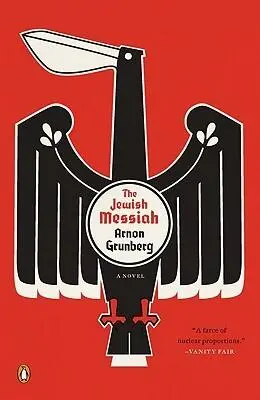
- Название:The Jewish Messiah
- Автор:
- Издательство:Penguin Group US
- Жанр:
- Год:2008
- ISBN:нет данных
- Рейтинг книги:4 / 5. Голосов: 1
-
Избранное:Добавить в избранное
- Отзывы:
-
Ваша оценка:
The Jewish Messiah: краткое содержание, описание и аннотация
Предлагаем к чтению аннотацию, описание, краткое содержание или предисловие (зависит от того, что написал сам автор книги «The Jewish Messiah»). Если вы не нашли необходимую информацию о книге — напишите в комментариях, мы постараемся отыскать её.
) Arnon Grunberg is one of the most subtly outrageous provocateurs in world literature.
, which chronicles the evolution of one Xavier Radek from malcontent grandson of a former SS officer, to Jewish convert, to co- translator of Hitler's
into Yiddish, to Israeli politician and Israel's most unlikely prime minister, is his most outrageous work yet. Taking on the most well-guarded pieties and taboos of our age,
is both a great love story and a grotesque farce that forces a profound reckoning with the limits of human guilt, cruelty, and suffering. It is without question Arnon Grunberg's masterpiece.
The Jewish Messiah — читать онлайн бесплатно полную книгу (весь текст) целиком
Ниже представлен текст книги, разбитый по страницам. Система сохранения места последней прочитанной страницы, позволяет с удобством читать онлайн бесплатно книгу «The Jewish Messiah», без необходимости каждый раз заново искать на чём Вы остановились. Поставьте закладку, и сможете в любой момент перейти на страницу, на которой закончили чтение.
Интервал:
Закладка:
Around the garden, where the park attendant grew a little parsley and chives for himself and his brother — he was still a bachelor — stood a makeshift fence. A few wooden posts and some chicken wire, that was all. An adult could step right over it.
And that is what Xavier did, without taking a running start, without climbing; he hurt himself, he scraped the inside of his thigh, but he didn’t even notice.
In the wheelbarrow was a little puddle of water and a few gardening tools. Xavier put the tools on the ground and took the wheelbarrow by the handles. They were rusty as well. Now he had to find a way out of the garden. He could climb over the fence himself, but he could never lift the wheelbarrow over it.
Xavier thought about Awromele, the way he had been lying there beneath the pine tree; he thought about the testicle in its jam jar at home, beside the collected works of Schiller. “King David,” he whispered, “give me strength, please, give me strength.”
Then he seized the wheelbarrow, rolled it straight across the chives and the parsley, and, with everything he had in him, rammed it against one of the fence posts.
The post shook, but remained firmly in place.
The park attendant had built the fence himself, tapping at the posts with a rubber hammer for a long time to force them deeply into the ground. He was fond of a job well done and took his work seriously, often remaining in the park longer than necessary. The park attendant loved the trees and bushes. And they loved him.
Xavier rolled the wheelbarrow back to the spot where he’d found it and began his second run at the fence post. “King David,” he shouted, “stand by me.” He trod the chives and the parsley underfoot, but didn’t notice: he saw neither chives nor parsley, he saw only the post. He saw Awromele.
The second collision with the post was so forceful that Xavier fell over, into the wheelbarrow. He didn’t care; he didn’t feel the scrapes and bruises. He scrambled out of the wheelbarrow and took another run at the fence. His lips murmured the name of the King as he saw his inflamed testicle before him again; he didn’t notice that he had hurt his hands, didn’t look to see whether anyone was watching, forgot that what he was doing was against the law, that he was destroying the vegetable garden of a loyal employee of the city of Basel. He was in a state of ecstasy.
He slammed the wheelbarrow against the post five times in total, until he was able to pull it out of the ground. There was nothing left of the vegetable garden; the vegetable garden had been plowed under; what the rain had not destroyed had been mashed beneath the wheel of the wheelbarrow and Xavier’s shoes.
It was fairly easy now for Xavier to push the wheelbarrow over the broken fence. He didn’t notice how heavy the thing actually was. He was not accustomed to wheelbarrows, and his only thought was to save Awromele.
Pushing the barrow, he ran to Awromele. His dearest, his very dearest, his loveliest. Running was perhaps putting it too strongly. He walked quickly: the wheelbarrow was heavy, and destroying the fence had cost him much of his strength. Occasionally the wheelbarrow slipped from his hands, the rusty handles wet with sweat.
THE EGYPTIAN KNOCKED on the restroom door. “Are you okay?” he asked. He was worried. In principle, he had nothing against overdoses. Money discriminates against no one, not even those who seek refuge in the overdose. But not in his restroom.
He didn’t want any trouble with the police. When people died in restrooms, it meant trouble. Respectable people die in bed. He himself hoped to die in bed.
Nino paid the police of Basel, but not the way he paid Hamas. Hamas he paid out of idealism and a feeling of guilt; the Swiss police he paid of necessity. When he was still living in France, people had said to him: “The Swiss police are incorruptible. Don’t go to Switzerland — stay here.” But it wasn’t as bad as all that. They weren’t incorruptible, only very expensive, ridiculously expensive, the most expensive police in Europe. Nino had never known that the police could be so expensive. And even if you did pay the police, it was better not to have corpses in the restroom at your workplace.
He knocked on the door again, a little louder this time. The more expensive the police, the more prosperous the country, and the more prosperous the country, the more expensive the women. Why didn’t he go to a less expensive country, where the police were honest enough to make do with a pittance? Ten, 20, these days sometimes even 30 percent — he barely kept anything for himself. He couldn’t stand it anymore, but where could he go? He had no choice.
“Everything okay in there?” Nino shouted.
No answer came.
“Everything okay?” he shouted again.
“No, not really,” Bettina replied, after she had blown her nose. You could tell from her voice that she had been crying. Her voice sounded weak and shaky — no longer brash and self-assured, no longer the voice of a woman who wanted to put solidarity into practice.
“Open up,” the Egyptian said, “I’ll help you.”
Two other members of the Committee of Vigilant Jews were still sitting at the bar. They had split a bag of M&Ms, then drunk two glasses of whisky. Jerusalem Kebabs wasn’t actually allowed to sell hard liquor, but to his best customers Nino sold everything under the counter. That was his way of getting back at the government, which didn’t like Egyptians, not even if their name was Nino. The government was no good; the government was no good anywhere. The policemen who came by once a month for a cup of tea felt exactly the same way. They said, “If the government gave us a decent paycheck, we wouldn’t have to do this.” “I know,” Nino would say then, “tell me about it.” And then he would pour the policemen a little more peppermint tea. He felt sorry for them. The government forced them to take money from an Egyptian who, in their heart of hearts, they despised. The government forced them to go through life as less incorruptible than they really were. All over the world, respectable people hated the government.
Bettina opened the restroom door a crack.
The Egyptian slipped inside and quickly bolted the door behind him. He could see that Bettina was nowhere near an overdose. He looked in the mirror, straightened his shirt so that the hair on his chest looked authoritative, and turned to his new customer. “What’s wrong? Why were you in here so long?”
“I don’t feel anything,” she said. Her mascara had run. “I don’t feel it at all. It’s sneezing powder.”
When that final word crossed her lips, she couldn’t help herself, she started to cry. Right there, with the Egyptian in the restroom. Her body shook.
The Egyptian stuck his tongue in her left ear: her sorrow was so huge, yet it was nothing compared with what was coming.
After he had ministered to her other ear as well, he realized that she was trouble. It was always the sorrowful women who betrayed you. Nothing was more dangerous to a man than a woman in sorrow. It seemed best to him to remind Bettina how attractive she was, how sexy he found her, even with a tear-stained face. True attractiveness cuts straight through all the tears. “Don’t cry, girlie,” he said. “This is excellent stuff. All the Jews buy from me, and Jews don’t settle for second best. You know how they are. The best of the best still isn’t good enough for them.”
Then he pressed his lips to Bettina’s, and hesitantly she began to kiss back. She had slept with eight men, but she still felt that she was inexperienced and made a lot of mistakes in bed. Foreplay still gave her nightmares.
Once the weenie was in her, though, nothing much could go wrong.
But this, this was still part of the foreplay, foreplay in a restroom.
Читать дальшеИнтервал:
Закладка:
Похожие книги на «The Jewish Messiah»
Представляем Вашему вниманию похожие книги на «The Jewish Messiah» списком для выбора. Мы отобрали схожую по названию и смыслу литературу в надежде предоставить читателям больше вариантов отыскать новые, интересные, ещё непрочитанные произведения.




Обсуждение, отзывы о книге «The Jewish Messiah» и просто собственные мнения читателей. Оставьте ваши комментарии, напишите, что Вы думаете о произведении, его смысле или главных героях. Укажите что конкретно понравилось, а что нет, и почему Вы так считаете.