Arnon Grunberg - The Jewish Messiah
Здесь есть возможность читать онлайн «Arnon Grunberg - The Jewish Messiah» весь текст электронной книги совершенно бесплатно (целиком полную версию без сокращений). В некоторых случаях можно слушать аудио, скачать через торрент в формате fb2 и присутствует краткое содержание. Год выпуска: 2008, Издательство: Penguin Group US, Жанр: Современная проза, на английском языке. Описание произведения, (предисловие) а так же отзывы посетителей доступны на портале библиотеки ЛибКат.
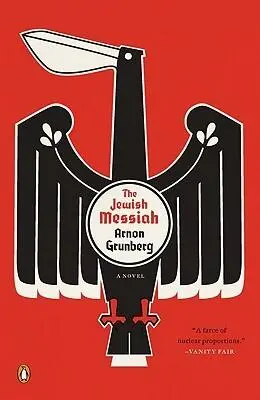
- Название:The Jewish Messiah
- Автор:
- Издательство:Penguin Group US
- Жанр:
- Год:2008
- ISBN:нет данных
- Рейтинг книги:4 / 5. Голосов: 1
-
Избранное:Добавить в избранное
- Отзывы:
-
Ваша оценка:
The Jewish Messiah: краткое содержание, описание и аннотация
Предлагаем к чтению аннотацию, описание, краткое содержание или предисловие (зависит от того, что написал сам автор книги «The Jewish Messiah»). Если вы не нашли необходимую информацию о книге — напишите в комментариях, мы постараемся отыскать её.
) Arnon Grunberg is one of the most subtly outrageous provocateurs in world literature.
, which chronicles the evolution of one Xavier Radek from malcontent grandson of a former SS officer, to Jewish convert, to co- translator of Hitler's
into Yiddish, to Israeli politician and Israel's most unlikely prime minister, is his most outrageous work yet. Taking on the most well-guarded pieties and taboos of our age,
is both a great love story and a grotesque farce that forces a profound reckoning with the limits of human guilt, cruelty, and suffering. It is without question Arnon Grunberg's masterpiece.
The Jewish Messiah — читать онлайн бесплатно полную книгу (весь текст) целиком
Ниже представлен текст книги, разбитый по страницам. Система сохранения места последней прочитанной страницы, позволяет с удобством читать онлайн бесплатно книгу «The Jewish Messiah», без необходимости каждый раз заново искать на чём Вы остановились. Поставьте закладку, и сможете в любой момент перейти на страницу, на которой закончили чтение.
Интервал:
Закладка:
“I don’t have that much with me.”
“Doesn’t matter,” the Egyptian said with a charming smile, scratching the hair on his chest with his left hand. “There’s a cash machine just around the corner. Money doesn’t discriminate. Not against me and not against you. That’s why we get along so well. I love you people.”
The Egyptian thought he was talking to an authentic Jewess. “Everybody hates us,” he said, pouring Bettina a glass of peppermint tea. “Everyone is against the Arabs, everyone is against the Jews. The only one who isn’t against us is money, and money needs the night the way a man needs a woman. That’s why we like the night. The night doesn’t discriminate, either; the night is there for everyone. My wife is Swiss; she’s from Rapperswil. At first I thought she wanted to marry me because she loved me, because she thought I was handsome, because I am handsome and I used to be even more handsome. I have the stamina of six wild horses. But do you know why she married me? Would you like to know?”
Bettina nodded. She wanted to know everything.
“Because money doesn’t discriminate against me.”
Then he couldn’t control himself any longer; he leaned over and stuck his tongue into Bettina’s ear.
The moment the Egyptian’s big tongue touched her earlobe, Bettina began to giggle. Giggling was always the right thing to do. Her face turned red. That encouraged the Egyptian to stick his tongue even deeper into her ear. Naïveté is a glorious thing. The blushing of a young woman was perhaps as alluring as nakedness.
But Bettina was not naïve. She just blushed quickly, there in Jerusalem Kebabs. For her life began there where the Jew began, but the Arab wasn’t exactly chopped liver, either. It was no accident, both of them being Semites. She had suspected that, even back when she lived in Ilanz. And only now did she discover how right her suspicions had been. She’d always wanted to be exotic. She had dreamed about that when she was only nine years old.
After the Egyptian’s tongue had licked her ear clean, Bettina felt more exotic than ever. There was indeed a huge difference between theoretical solidarity and solidarity that was put into practice with a passion.
“Hurry up, go to the cash machine,” the Egyptian said. “Look, it’s almost getting light. It’s not a good idea to postpone happiness. Happiness can’t take that. It dies.”
Bettina slid from her bar stool and put on her yellow jacket. Now that she had joined the committee, she enjoyed wearing bright clothes. It was raining, but her jacket had a hood. She put up the hood and ran to the cash machine.
Five minutes later, Bettina came back into Jerusalem Kebabs and slipped the Egyptian her banknotes. That was all the money she had for the rest of the month, but the important thing was to live. What good was the future if you skipped the present?
The Egyptian shuffled back to the refrigerator, took out a packet of M&Ms, and handed them lovingly to Bettina.
“What’s your name, anyway?” she asked the Egyptian.
“Ibrahim,” he said, and stuck out his hand. Because he found a handshake rather meager, and because he was pleased to do a little something extra for new customers, he stuck his tongue in her ear again. “But everyone calls me Nino. I used to work at an Italian restaurant in Rapperswil, and in an Italian restaurant you have to be Italian. That’s why they call me Nino. When I go back to Egypt, to my mama, then I’m Ibrahim again, but for you I’m Nino.”
BETTINA ENJOYED the feeling of his tongue in her ear more than she had the first time. Life was a table spread before her, and she felt like taking a second helping.
In her bedroom, the baby on her arm, the rabbi’s wife was murmuring prayers for Awromele’s well-being. The eczema on her hands had spread; her wig was on crooked. She feared the worst; she didn’t know how she was going to live through this, or whether she even wanted to.
Only vaguely did she know why she had to live through this — for her children.
The Vegetable Garden
EARLY THAT MORNING,Xavier awoke from the most horrible dream he’d had in months. He got up and looked out the window. It was still raining, and the first morning light was as weak and miserable as Xavier himself. He pulled on a jogging suit and went to the bathroom, where he looked at his eye in the mirror. It was bluer than the night before. What difference did it make? He had lost a testicle — a black eye was the least of his worries. He had to go back to the park.
Xavier was almost sure that Awromele was no longer lying beneath the pine tree. But the important thing was to have looked for him: the comforter’s task was to do the impossible. The important thing was to have tried everything. He would never forgive himself if he stayed in bed and waited until after school before going back to the park. The hardest thing is to forgive yourself. Other people you can forgive. After a while, you simply say, “It doesn’t matter, let bygones be bygones.” And usually it really doesn’t matter. But in your own eyes, every mistake is a fatal one, an unforgivable one. That’s why you need other people, to grant you what you can’t grant yourself: forgiveness. And that was what Xavier wanted to grant the Jews most generously: forgiveness. For all the wrongs they had committed throughout the centuries. For the guilt they had imposed on others. For the almost unforgivable guilt they had imposed upon themselves, by being born.
Xavier brushed his teeth vigorously and splashed on some aftershave. However slight the chance that he would find Awromele, he wanted to smell good for him.
The mother and Marc were still asleep. The mother was sleeping soundly. She had gone down to the kitchen again that night; the game of love had been more intense and bloodier than ever. The love game was becoming lovelier and lovelier, down there in the kitchen. First it had been only lust and infatuation, but slowly it had turned into something real, something deep and abiding. Real love. There was no longer any use denying it — the mother loved her knife.
But Xavier knew nothing about that; he had slept and dreamed of Awromele. He locked the front door behind him. He was wearing his Walkman, it was playing Pergolesi’s Stabat Mater . Although his headache had not gone away and his eye was still swollen, he knew, listening to the music, that things would turn out all right for him and for Awromele. And therefore for the Jews as well.
Before he started running he said quietly: “I’m going to find you, Awromele. I’m going to find you now; there are no two ways about it, because you’re my Awromele.”
Then he ran to the park to which he had run the night before, but he ran differently now — not faster, but with more love, more tenderness. And as he did so, there beneath the pine tree, beside the mandarin-orange peels, Awromele was contracting a slight case of pneumonia. His lips were blue, his hands had turned red, but he had punished the world. He had not surrendered his pride.
Because he felt that he had punished the world enough now, he whispered, “Xavier.” He had rolled onto his side. His body was stiff and wet; his feet were numb, mud was clinging to his wounds. He had been lying in the rain for more than twelve hours, like a dead animal. He lost consciousness.
Xavier stopped on the lawn where he had stood the night before, but in the morning light he recognized everything and headed without hesitation for the bushes where he had lain with Awromele.
The Stabat Mater was blasting in his ears, driving him on. Faster than he had expected, he reached the bushes where he had sworn never to feel a thing.
Читать дальшеИнтервал:
Закладка:
Похожие книги на «The Jewish Messiah»
Представляем Вашему вниманию похожие книги на «The Jewish Messiah» списком для выбора. Мы отобрали схожую по названию и смыслу литературу в надежде предоставить читателям больше вариантов отыскать новые, интересные, ещё непрочитанные произведения.











Обсуждение, отзывы о книге «The Jewish Messiah» и просто собственные мнения читателей. Оставьте ваши комментарии, напишите, что Вы думаете о произведении, его смысле или главных героях. Укажите что конкретно понравилось, а что нет, и почему Вы так считаете.