Carrie Brown - The Stargazer's Sister
Здесь есть возможность читать онлайн «Carrie Brown - The Stargazer's Sister» весь текст электронной книги совершенно бесплатно (целиком полную версию без сокращений). В некоторых случаях можно слушать аудио, скачать через торрент в формате fb2 и присутствует краткое содержание. Год выпуска: 2016, Издательство: Knopf Doubleday Publishing Group, Жанр: Современная проза, на английском языке. Описание произведения, (предисловие) а так же отзывы посетителей доступны на портале библиотеки ЛибКат.
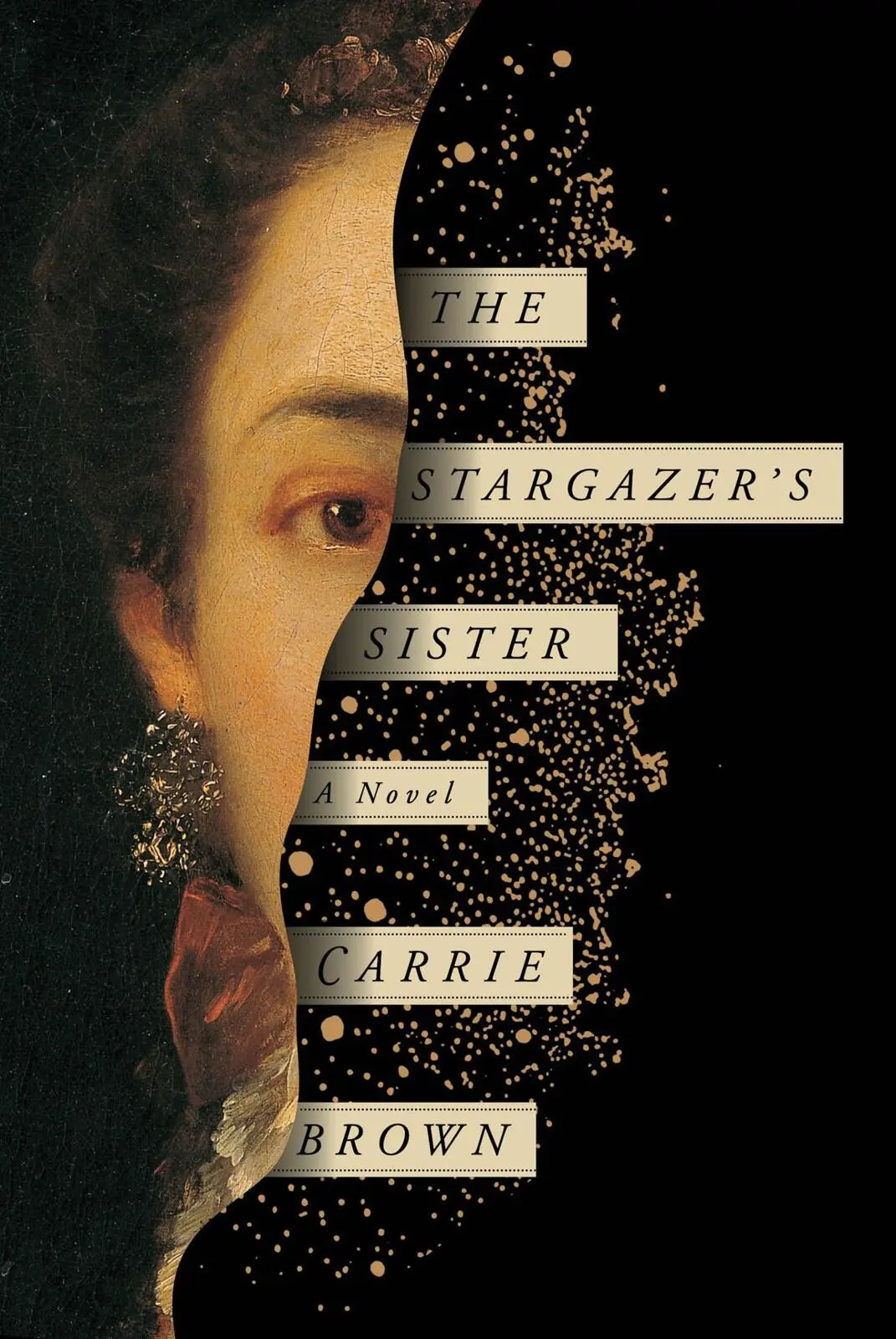
- Название:The Stargazer's Sister
- Автор:
- Издательство:Knopf Doubleday Publishing Group
- Жанр:
- Год:2016
- ISBN:нет данных
- Рейтинг книги:5 / 5. Голосов: 1
-
Избранное:Добавить в избранное
- Отзывы:
-
Ваша оценка:
The Stargazer's Sister: краткое содержание, описание и аннотация
Предлагаем к чтению аннотацию, описание, краткое содержание или предисловие (зависит от того, что написал сам автор книги «The Stargazer's Sister»). Если вы не нашли необходимую информацию о книге — напишите в комментариях, мы постараемся отыскать её.
a beautiful new period novel — a nineteenth-century story of female empowerment before its time — based on the life of Caroline Herschel, sister of the great astronomer William Herschel and an astronomer in her own right. This exquisitely imagined novel opens as the great astronomer and composer William Herschel rescues his sister Caroline from a life of drudgery in Germany and brings her to England and a world of music-making and stargazing. Lina, as Caroline is known, serves as William’s assistant and the captain of his exhilaratingly busy household. William is generous, wise, and charismatic, an obsessive genius whom Lina adores and serves with the fervency of a beloved wife. When William suddenly announces that he will be married, Lina watches as her world collapses.
With her characteristically elegant prose, Brown creates from history a compelling story of familial collaboration and conflict, the sublime beauty of astronomy, and the small but essential place we have within a vast and astonishing cosmos. Through Lina’s trials and successes, we witness the dawning of an early feminist consciousness, of a woman struggling to find her own place among the stars.
The Stargazer's Sister — читать онлайн бесплатно полную книгу (весь текст) целиком
Ниже представлен текст книги, разбитый по страницам. Система сохранения места последней прочитанной страницы, позволяет с удобством читать онлайн бесплатно книгу «The Stargazer's Sister», без необходимости каждый раз заново искать на чём Вы остановились. Поставьте закладку, и сможете в любой момент перейти на страницу, на которой закончили чтение.
Интервал:
Закладка:
She is surprised only occasionally now to find a little brown stain of blood on her undergarments, to feel the rare telltale cramping in her lower belly, a reminder of one of the uses of a woman’s body.
One Saturday morning in March she works in the kitchen, baking a cake from a supply of hazelnuts and dried currants and orange peel. The smell of the cake rising recalls for her one from her childhood, a round-domed treat studded with candied fruit and cloves and nuts, baked every year by Margaretta’s mother to celebrate her daughters’ birthdays.
And then Lina calculates and realizes that it is her own birthday today.
Such events were rarely celebrated in the Herschel house when Lina was a child, and she and William have never observed each other’s birthdays. Often, it seems, they simply do not remember them at all. She realizes that she has lost track of her own age; she sits down at the table, wiping her hands, staring out the window. When she calculates it, she is surprised to find that she has turned thirty-eight.
William, she realizes, will turn fifty in November.
Their mother has been dead for a decade. William saw her once before her death, on an ambassadorial trip to Göttingen, when the king dispatched him to deliver a telescope to the duke.
On his return to Observatory House, though Lina did not ask, William reported that he had found their mother “much changed.”
Lina did not answer him, busying herself with a task in the kitchen.
“But not in the essential ways, Lina,” he said after a moment, and he rested his hand on her shoulder as he left the room. “You may regret nothing, except what you could not have changed.”
Their mother never wrote to Lina, nor Lina to her.
“I should convey your greetings?” William would say, whenever he sent a letter.
“If it pleases you,” Lina would reply, but she is annoyed at his dutifulness to their mother.
She turns now at the sound of footsteps in the passage outside. Stanley comes into the kitchen. He has become, as Lina predicted, a big man, taller than William, who was once well over six feet tall, though he has lost some height as he has aged. Stanley’s ears are still enormous, his chest muscled as a cart horse’s. His hair — that bright shade of ginger which when he was a child made him seem so much the comic character — has darkened to rusty red. His wife keeps it cut very close to his head. Today he has one of his little boys with him, the baby’s eyes as blue as his father’s, his feathery hair the same color as Stanley’s when he was a boy.
Stanley hands the lad to Lina, who takes him on her lap. The child — this youngest, named William, since the names of both grandfathers now have been used for his older brothers — puts his soft hands up to touch her mouth.
His fine hair and pink cheeks smell of the fresh air, his breath of milk, both sour and sweet.
“I’ll chop some wood for—” Stanley begins, and then stops.
To her embarrassment, Lina has begun to cry. She turns her face aside, but she cannot hide her heaving shoulders. Her tears fall on the head of the heavy infant in her arms. The baby opens his mouth, reaching for the knuckle she raises to his lips.
Stanley’s expression is stricken.
“It’s all right, Stanley,” she says. “I’ve only realized….Sorry.”
“What?” he says. “What is the matter?”
“Nothing,” she says. She bends her head over the infant, dear little William. “It is only my foolishness.”
She raises her face. “No. No, it is only my good fortune, Stanley,” she says. “It is all around me.” She bends her face to the infant, little William, who reaches up to touch her cheek.
—
EVERY WINTER WILLIAM CATCHES a bad cold. This February, despite his habitual precautions, he develops a serious cough that will not leave him. Nor will he abandon the telescope at night, despite her entreaties. Stanley, too, has fallen ill, as has the baby. Lina has forbidden Stanley to join them outside, though sometimes he stays overnight anyway, sleeping in the kitchen and building up the fires for them there and in the old laundry, for Lina and William often work for an hour or more after they come inside.
There are frequent visitors to Observatory House — some traveling even from overseas — curious about the famous telescope, and they often want a look at the night sky through the celebrated instrument. This evening the temperatures have fallen very low, usually a deterrent to the casual onlooker, and Lina is alone with William. Owls call back and forth for over an hour. She has come to recognize the notes of different species — William’s ear is so good he can usually name the exact notes.
It’s often the tawny owls they hear, with their distinctive cry, ke-wit hoo hoo. William imitates both the male and female sounds with great success, cupping his hands and blowing through the aperture between them. The owls always answer him.
“You make them fall in love with you,” Lina says.
“I make them fall in love with each other,” William says.
—
BY MIDNIGHT THIS EVENING, despite the fact that she has brought a greater supply than usual of hot bricks for William’s feet and for the little hut under the telescope in which she works, her hands are numb, and her throat feels as if it is on fire. She tells William through the speaking tube that she is going inside for hot tea, but he does not answer. She wraps her shawl about her head and goes outside, calling up to him again.
“William!” She can feel her temper rise. It pains her to speak.
He answers her at last, coughing. “Yes, yes. I heard you,” he says.
Then why did he not answer ? she thinks. She stands beneath the scaffolding, looking up at the long, dark arm of the telescope raised toward the moon. “I’m going in to make tea,” she calls. “I’ll come back shortly. Do you want brandy?”
William makes no reply.
She knows she should be careful — there have been freezes and thaws for weeks now, and where there has been standing water in the meadow, patches of black ice have formed — but in her irritation she turns impatiently. At once she feels her leg slide out from beneath her. She grabs for one of the beams of the scaffolding, but to no avail. When she falls, the pain in her leg is so fierce she nearly faints; she feels certain one of the iron hooks for the mechanism by which the tube is hoisted has pierced her calf.
“I am hooked!” she calls up, when she recovers enough to speak. “William!”
An owl calls, and then another, as if her alarm has spread among them. She does not know if her brother hears her. She stares up through the crossed bars of the scaffolding at the stars. The full moon is above her, approaching and then receding. She closes her eyes for a moment.
Then Stanley is there, coughing, his arms under her. He has come with a fresh supply of hot bricks for her. She cries out when he lifts her, and he gasps as he realizes that he has pulled her leg free from one of the hooks.
“Missus!” he says, aggrieved. “Oh, missus!”
“Sir!” he shouts up to William, and she hears a rare anger in Stanley’s voice. “Sir, your sister has fallen!”
At last she hears William’s voice coming from far above. The effect is strange in the otherwise silent night, as though he speaks from the stars themselves.
“What is it?” he calls down. “What has happened?”
“Come. Come quickly, sir!” Stanley calls, and it is an order, not a request.
—
STANLEY CARRIES HER to William’s bed, as William insists. The fireplace in his room is bigger, and the room will be warmer. When Stanley gently lifts her torn skirt from her calf, she sees William, standing at the side of the bed, blanch at the sight of the wound.
Читать дальшеИнтервал:
Закладка:
Похожие книги на «The Stargazer's Sister»
Представляем Вашему вниманию похожие книги на «The Stargazer's Sister» списком для выбора. Мы отобрали схожую по названию и смыслу литературу в надежде предоставить читателям больше вариантов отыскать новые, интересные, ещё непрочитанные произведения.











Обсуждение, отзывы о книге «The Stargazer's Sister» и просто собственные мнения читателей. Оставьте ваши комментарии, напишите, что Вы думаете о произведении, его смысле или главных героях. Укажите что конкретно понравилось, а что нет, и почему Вы так считаете.