Carrie Brown - The Stargazer's Sister
Здесь есть возможность читать онлайн «Carrie Brown - The Stargazer's Sister» весь текст электронной книги совершенно бесплатно (целиком полную версию без сокращений). В некоторых случаях можно слушать аудио, скачать через торрент в формате fb2 и присутствует краткое содержание. Год выпуска: 2016, Издательство: Knopf Doubleday Publishing Group, Жанр: Современная проза, на английском языке. Описание произведения, (предисловие) а так же отзывы посетителей доступны на портале библиотеки ЛибКат.
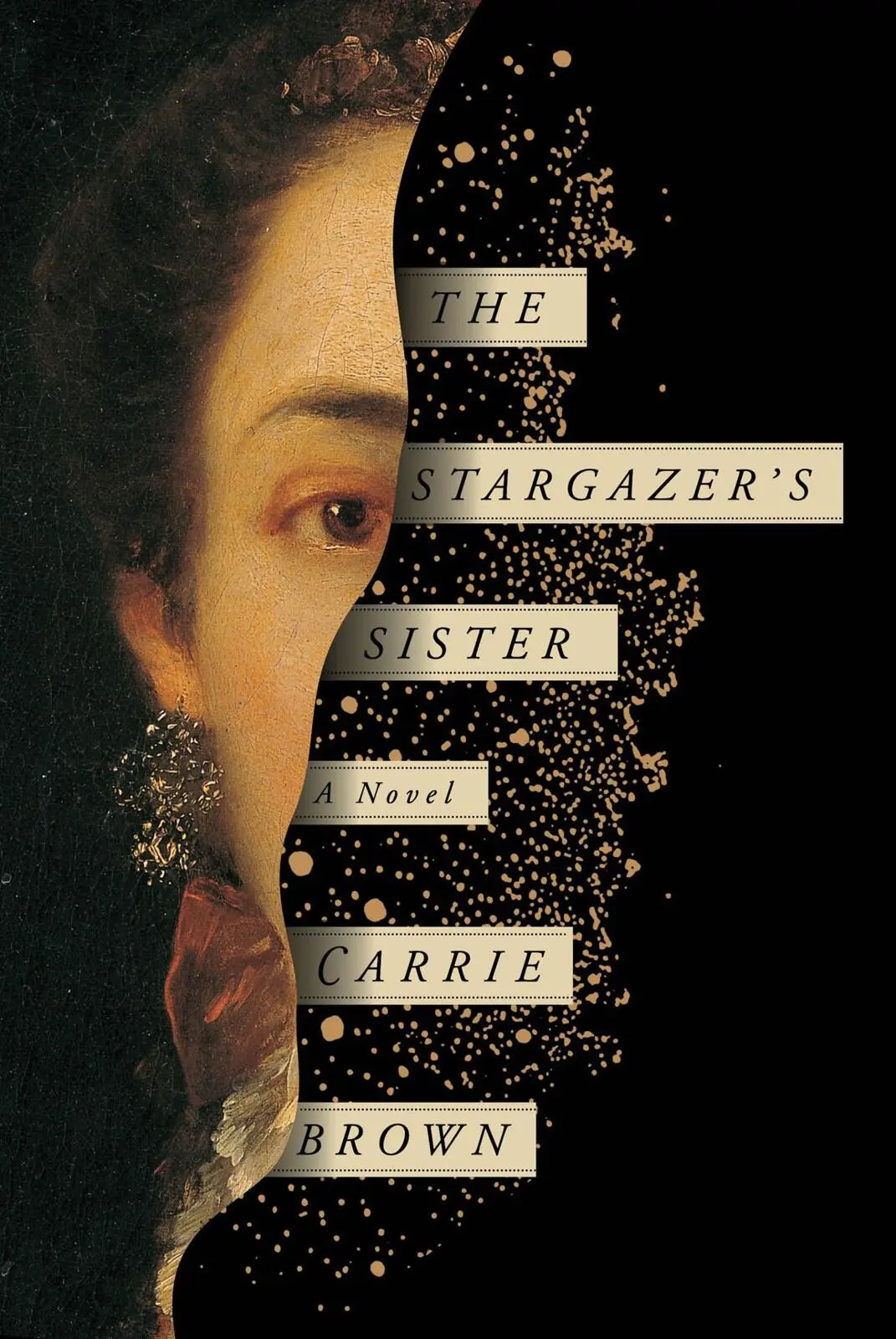
- Название:The Stargazer's Sister
- Автор:
- Издательство:Knopf Doubleday Publishing Group
- Жанр:
- Год:2016
- ISBN:нет данных
- Рейтинг книги:5 / 5. Голосов: 1
-
Избранное:Добавить в избранное
- Отзывы:
-
Ваша оценка:
The Stargazer's Sister: краткое содержание, описание и аннотация
Предлагаем к чтению аннотацию, описание, краткое содержание или предисловие (зависит от того, что написал сам автор книги «The Stargazer's Sister»). Если вы не нашли необходимую информацию о книге — напишите в комментариях, мы постараемся отыскать её.
a beautiful new period novel — a nineteenth-century story of female empowerment before its time — based on the life of Caroline Herschel, sister of the great astronomer William Herschel and an astronomer in her own right. This exquisitely imagined novel opens as the great astronomer and composer William Herschel rescues his sister Caroline from a life of drudgery in Germany and brings her to England and a world of music-making and stargazing. Lina, as Caroline is known, serves as William’s assistant and the captain of his exhilaratingly busy household. William is generous, wise, and charismatic, an obsessive genius whom Lina adores and serves with the fervency of a beloved wife. When William suddenly announces that he will be married, Lina watches as her world collapses.
With her characteristically elegant prose, Brown creates from history a compelling story of familial collaboration and conflict, the sublime beauty of astronomy, and the small but essential place we have within a vast and astonishing cosmos. Through Lina’s trials and successes, we witness the dawning of an early feminist consciousness, of a woman struggling to find her own place among the stars.
The Stargazer's Sister — читать онлайн бесплатно полную книгу (весь текст) целиком
Ниже представлен текст книги, разбитый по страницам. Система сохранения места последней прочитанной страницы, позволяет с удобством читать онлайн бесплатно книгу «The Stargazer's Sister», без необходимости каждый раз заново искать на чём Вы остановились. Поставьте закладку, и сможете в любой момент перейти на страницу, на которой закончили чтение.
Интервал:
Закладка:
“I cannot bear for you to know how I must have brought this on myself. Some…instances of foolishness,” he says, as if reading her mind. “Fatal foolishness. I never imagined myself — desirable.”
She sits down, because she fears she cannot stand. Behind her, a log falls from the fire, and she smells smoke in the room. Her eyes are burning. It is as if he is leaving her, leaving them at this moment, as if she is watching it happen.
But he takes a seat and pulls his chair near to her. “I intend to convey what I can to William in goods — furnishings, silver, paintings,” he says, “before the event of the marriage takes place. But they have a good idea of my assets, and they will notice losses of any significance. What I want to do, as well, is to speak to the queen about you, especially before the news of the circumstance spreads, as surely it will, once I am gone. What she will give is little, though heaven knows the royal coffers are deep enough, but it will be something to help you, and I believe she will enjoy the autonomy of the gesture.”
—
LINA REALIZES NOW that he is saying goodbye. And she had thought he intended to propose marriage to her. What a foolish woman she is, to have apprehended so little. She looks up at Henry’s paintings, the sensuous mound of grapes on the plate, the flowers at the end of their season, petals touched with pink or drops of red blood scattered over a cloth white as a cloud, the hare’s shining fur, its eye holding a window of white light. She does not want to cry. She puts her hands over her mouth.
“Listen to me,” Henry says. “There is no reason you should not have an annual salary, as William does. It cannot equal his, of course, but it will be something. I think I may suggest to the queen that her investment — her private investment in the work of another woman — will be to her lasting credit in history.”
Lina drops her face into her hands. She cannot bear it.
She hears him stand up. “I am so very sorry,” he says. “Believe me, my dearest Caroline, when I say I wish…I wish I could do more. So much more.”
She takes her hands away from her face. “You are not leaving us,” she says. “You must not leave us, Henry. William will be— I am! — heartbroken. There is no need for it, for you to leave! Stay here. Stay with us! We will care for you, gladly.”
She stands up. She knows that she did love him once. “I would have said yes,” she says.
He looks at her, and at that moment she thinks she has never seen an expression of such kindness on the face of any person, even William.
They look at one another for a long moment. “I think we might have been happy,” he says finally. “I would have tried very, very hard to make you happy.”
Lina thinks of the moons they witnessed earlier that evening, the ghostly ring of satellites orbiting the planet.
“How beautiful and strange a phenomenon,” Henry had said. “Every celestial object with its attendants and companions.”
“I will collect William’s letters from him and ride out this evening,” he says now.
It feels difficult for her to speak. “He does not know. William does not know?”
Henry drops his head. “The coward in me…I have written to him.” He produces a letter from his pocket. “I will leave it with you…to give to him. Later, please. After I am gone.”
—
WILLIAM DOES NOT LOOK UP when she comes into the laundry. She places Henry’s letter on the desk beside him.
He looks up at her, and she fears her face will give her away, but he seems to notice nothing amiss. “Going to bed?”
“Yes,” she says. “Good night, William.”
There is a coward in her, too. She can neither warn him nor stay to comfort him. She goes to bed, where she expects to weep, but instead she feels a rage so powerful it is as if it will lift her body from the bed or burn her up. She lies rigidly in the cold sheets, her hands clenched, her throat aching from suppressing her grief. Tears run down her face anyway.
At one point, she realizes that William must be standing in the hall outside her door, for candlelight shows beneath it.
He knocks softly, but she does not answer.
Later, regretting this, she opens the door, but the hallway is dark. No light shines from beneath William’s door or, when she goes downstairs, in the old laundry.
So they are both alone in the darkness.
England 1788–1822
FOURTEEN Hooked
It is Stanley, grown as a young man into an experienced orchardist, who tends capably to the old trees and plants new apple varieties — Bramley Seedlings and Flower of Kent — caring for them through the years. In the market he sells pears and apples from Observatory House’s orchard. The income helps sustain the household.
In the flower borders along the terrace wall, he and Lina have planted delphiniums and roses, phlox and alliums and asters. In every season, Lina likes to keep a vase of flowers on William’s desk in the old laundry, even when he is away. In the cold months she cuts a frosted sprig of boxwood or a stem of holly, its berries bright, for the silver bud vase that was one of Henry’s last gifts to them.
She never fills it with water without thinking of Henry; indeed, she feels sometimes oddly close to him, as if he is present along with the constellations and planets — and their inhabitants, should such inhabitants exist, as William says — looking down on her as she goes about her work.
The vegetable garden, dug in during the spring after their arrival and maintained mostly by Stanley, yields potatoes and cabbages, squashes and beans and peas and lettuces.
They have, in this way, enough.
In the old laundry, the muslin curtains sewn by Lina to protect William’s papers and books are bleached and hung to dry in the spring air once a year. They are fastened along polished wooden rods at the tops and bottoms of the high shelves, so that they may be easily drawn aside or closed. When the windows are open to the breeze, the curtains ripple like water. It is pleasant to Lina, while she sits alone working, to feel as if the walls shift responsively around her. Her hand moves swiftly, covering the pages: William’s papers on astronomy, his letters, his Philosophical Transactions, as he calls them. The wooden boxes Stanley builds for William’s correspondence, each letter copied and ordered by Lina according to date and to writer, grow in number. By now she answers alone many of the letters William receives — asking for assistance in locating various celestial objects or for clarification of his ideas — without needing to consult her brother at all. She can sign his signature as easily as she signs her own. There are too many letters for him to attend to himself.
The old linen smocks worn by the twenty-four men who polished the first big mirror for the forty-foot have been washed and folded long ago and put away in a trunk with wormwood and rosemary to protect them from moth larvae.
Lina has the sense, growing as the years pass, that everything of William’s life and work must be preserved. There is no object too small to be worth discarding.
The world will want to remember William, to know him even when he is gone.
—
WHEN LINA APPROACHES FORTY, her monthly bleeding, never strong, becomes suddenly painfully heavy for a short time and then in a few months dwindles to almost nothing. She suffers a few fainting spells during these weeks of heavy bleeding, one in which she falls, cutting her head, from several rungs up on the circular staircase she has had built to her rooftop telescope. She has been discomforted more frequently over the years by her old headaches, rolling spherical objects and explosive flashes in her vision, sometimes areas darkening in odd patterns like frost on a windowpane. But the disturbances rarely last long, and they appear to cause no permanent harm. In general she feels increasingly vigorous, in fact. Her arms are strongly muscled, her hands rough from outdoor work and from so many seasons of cold at the telescope. Sometimes at night in the winter she slathers them with lard and wears gloves to bed. Adapted over the years to little sleep, she does not find it difficult to make do with only a few hours each night.
Читать дальшеИнтервал:
Закладка:
Похожие книги на «The Stargazer's Sister»
Представляем Вашему вниманию похожие книги на «The Stargazer's Sister» списком для выбора. Мы отобрали схожую по названию и смыслу литературу в надежде предоставить читателям больше вариантов отыскать новые, интересные, ещё непрочитанные произведения.










Обсуждение, отзывы о книге «The Stargazer's Sister» и просто собственные мнения читателей. Оставьте ваши комментарии, напишите, что Вы думаете о произведении, его смысле или главных героях. Укажите что конкретно понравилось, а что нет, и почему Вы так считаете.