Carrie Brown - The Stargazer's Sister
Здесь есть возможность читать онлайн «Carrie Brown - The Stargazer's Sister» весь текст электронной книги совершенно бесплатно (целиком полную версию без сокращений). В некоторых случаях можно слушать аудио, скачать через торрент в формате fb2 и присутствует краткое содержание. Год выпуска: 2016, Издательство: Knopf Doubleday Publishing Group, Жанр: Современная проза, на английском языке. Описание произведения, (предисловие) а так же отзывы посетителей доступны на портале библиотеки ЛибКат.
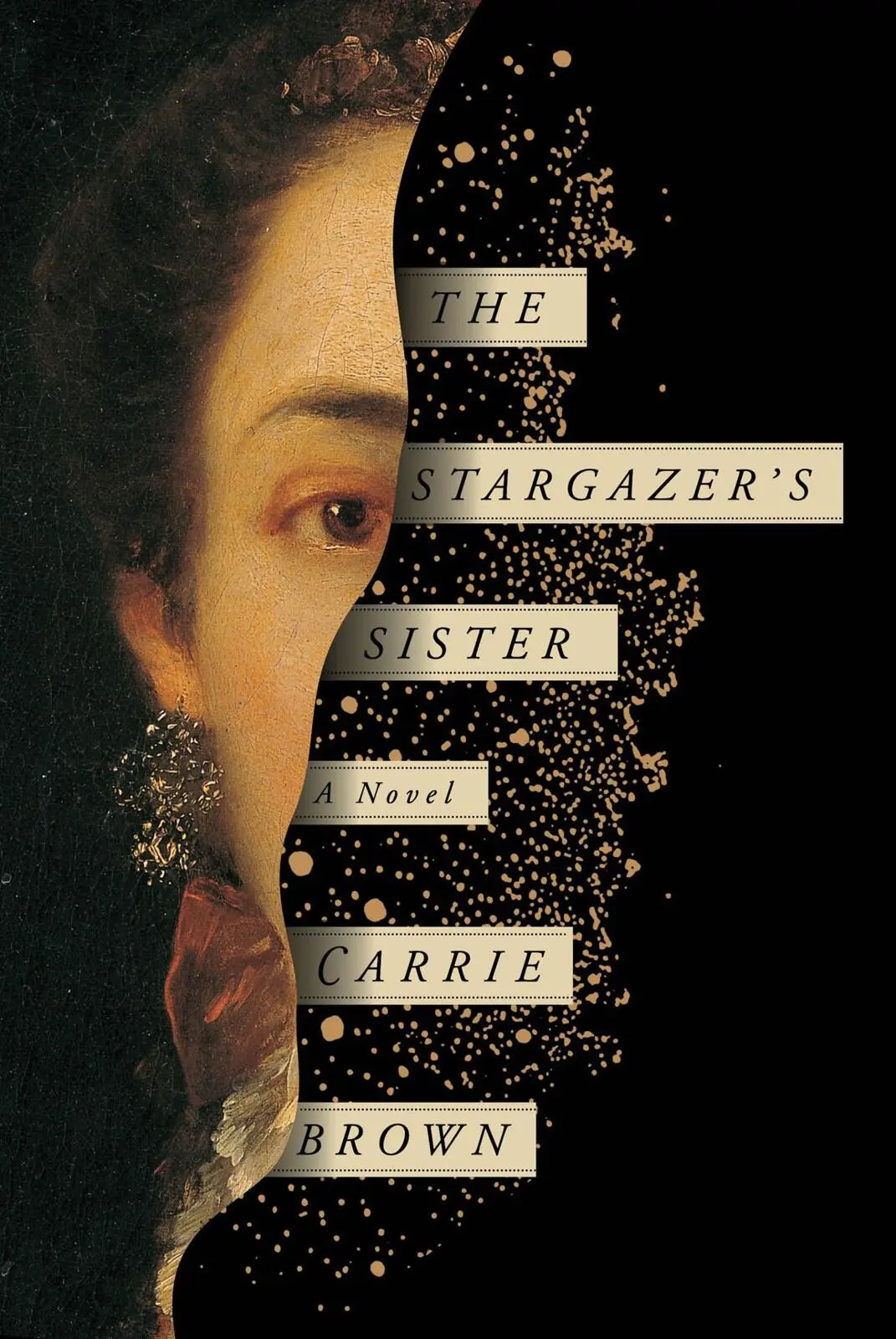
- Название:The Stargazer's Sister
- Автор:
- Издательство:Knopf Doubleday Publishing Group
- Жанр:
- Год:2016
- ISBN:нет данных
- Рейтинг книги:5 / 5. Голосов: 1
-
Избранное:Добавить в избранное
- Отзывы:
-
Ваша оценка:
The Stargazer's Sister: краткое содержание, описание и аннотация
Предлагаем к чтению аннотацию, описание, краткое содержание или предисловие (зависит от того, что написал сам автор книги «The Stargazer's Sister»). Если вы не нашли необходимую информацию о книге — напишите в комментариях, мы постараемся отыскать её.
a beautiful new period novel — a nineteenth-century story of female empowerment before its time — based on the life of Caroline Herschel, sister of the great astronomer William Herschel and an astronomer in her own right. This exquisitely imagined novel opens as the great astronomer and composer William Herschel rescues his sister Caroline from a life of drudgery in Germany and brings her to England and a world of music-making and stargazing. Lina, as Caroline is known, serves as William’s assistant and the captain of his exhilaratingly busy household. William is generous, wise, and charismatic, an obsessive genius whom Lina adores and serves with the fervency of a beloved wife. When William suddenly announces that he will be married, Lina watches as her world collapses.
With her characteristically elegant prose, Brown creates from history a compelling story of familial collaboration and conflict, the sublime beauty of astronomy, and the small but essential place we have within a vast and astonishing cosmos. Through Lina’s trials and successes, we witness the dawning of an early feminist consciousness, of a woman struggling to find her own place among the stars.
The Stargazer's Sister — читать онлайн бесплатно полную книгу (весь текст) целиком
Ниже представлен текст книги, разбитый по страницам. Система сохранения места последней прочитанной страницы, позволяет с удобством читать онлайн бесплатно книгу «The Stargazer's Sister», без необходимости каждый раз заново искать на чём Вы остановились. Поставьте закладку, и сможете в любой момент перейти на страницу, на которой закончили чтение.
Интервал:
Закладка:
It is not easy.
She has lost her old sensation of the stars being fixed points pasted against the sky. Everything around them, she now knows, is moving. Yet if she closes her eyes, the knowledge of this still makes her dizzy. Often at the telescope she has to steady herself — her hand reaching for something solid — against the sensation of falling. It is only the ticking of the clock beside her, its metronome set to assist her in timing her observations, which reminds her that she is on terra firma. When she looks down, she sees the garden below, even in the dark illuminated by lights from within the house. She sees the shapes of the barns and the curve of the orchard rows beyond, the scaffolding standing at its distant spot alone in the meadow. In William’s absence, the telescope is lowered, as if hanging its head in weariness.
Much of what she sees on earth now reminds her of the sky with its planets and comets, its blooming nebulae full of clusters of stars: the English hawthorn branches she has come to love, full in spring of white flowers. Falling snow. The shining flagstones of the terrace on rainy nights, the lights from the house falling across them in bands like the Milky Way. From the rooftop she can see down to the small pond, and on clear nights its surface reflects the stars, so that they seem both above and below her. When she stands alone in the darkness at her own little telescope, sweeping by orderly degrees across the night sky, she knows now that she will never tire of it.
She is grateful for this joy, the joy of being amazed, this transformation of her gaze from admiration — for anyone can see the stars are beautiful — to astonishment.
This is William’s greatest gift to her, she thinks, the gift of awe. She lies down with it at night and wakes with it in the morning. Somehow, her awe makes what is quotidian or tedious — the tiring business of making meals or beds, or washing clothes — almost holy.
—
AND THEN ONE NIGHT it happens.
William has been frustrated by the persistent imperfections of the mirror, imperfections that interfere with and distort his vision, but now, at last, he thinks it is perfect. He aims the telescope into the sky, and within only a few minutes, he calls down triumphantly through the tube: A sixth moon of Saturn, Lina. There it is.
Lina, sitting in the hut, lifts her hand from the page and stares out the little window into the dark. The ink in her bottle has already frozen. Her feet and hands are so cold she can scarcely feel them.
A moment later, he speaks again, his voice strangely near. She thinks of the first night of their crossing to England, when he held her against him and spoke into her ear above the sound of the waves and the wind in the sails.
“And a seventh moon,” he says now. “Lina. There is a seventh. ” Silence follows.
Then he says, “I’m coming down.”
Lina leaves the hut and begins to lower the telescope, but her legs are shaking. Had the telescope failed them, she cannot imagine what would have happened. But it has not failed them. William was right.
He descends from the viewing platform by ladder and comes to help her fix the telescope into its resting position.
His eyes are shining, and he reeks of raw onion, but he takes her face in his hands and kisses her on one cheek and then on the other. It is so cold that the muscles of her face feel frozen. She tries to smile.
“My monster,” he says, and for a moment she thinks he means her …what can he mean, addressing her in that way?
She thinks of the moon, her face.
And then he laughs. “Our forty-foot monster. It has obliged us, after all.”
—
THE NEXT EVENING, Henry Spencer comes to see for himself. First he and then Lina ascend in the viewing chair, William giving them directions through the speaking tube about where to look.
Later that night, after they return to the house and have a late supper, William excuses himself to write letters to Dr. Maskelyne and Sir Joseph Banks and to the king. Henry will take them with him when he leaves the next day for London. He will be proud to serve as messenger with such news, he says.
Lina’s relief at the immediate and profound yield of the forty-foot is immense. She realizes now how worried she has been that the king’s investment would turn out to be for naught, and that William’s assertions about the capability of the new instrument might be exaggerated.
Henry has been a frequent visitor to Observatory House over recent months. She knows that he, too, has staked his reputation on William’s success, many times adding his endorsement to William’s petition for additional funds. At Henry’s direction, Lina has meticulously calculated every expense: every candle, every pint of beer, every log for the fire, the accounts with their suppliers, the wages they pay, even to Stanley. Surely Henry, too, is relieved now. Yet it has occurred to her that their expenses will not disappear with the completion of the telescope. They still must eat, must light the fire. William’s salary from the king of fifty pounds a year will do little to approach meeting their needs. And William will not be satisfied with these discoveries, she knows. There are other endeavors: the catalog of nebulae he wishes to publish, which will require hours and hours of her time, as well as his. And yet these sorts of ambitions — to support the work of other astronomers, rewriting the sky for them — are not so sensational as to attract the king’s financial support.
From the parlor where she and Henry sit, she can see William’s light in the old laundry through the window — they have continued to call it that, despite its transformation into a well-stocked and useful library. William had put more wood on the fire before leaving the room. She feels its warmth at her back now, though a draft moves around their feet. The remains of the night’s supper are on the table, a roast chicken, stewed cabbage, a plum tart. The house is empty but for the three of them. Immediately following the forty-foot’s revelations about the moons of Saturn, Lina recommended that William send James and Stanley home for a visit with their father, who has been ill. They are both in need of a rest, she senses. Before leaving, Stanley hugged her, and she realized — her cheek against his shoulder, his arms around her — what a big man he would one day become.
“Wee Stanley,” she said, using her pet name for him. “I will miss you. Come back to us soon.”
She wishes he were here now. How both he and James would be rejoicing with them.
With William’s departure from the room, the usual silence falls between her and Henry.
She begins to stand to clear away their dishes, but Henry moves his chair abruptly, its legs scraping against the floor.
“I have been thinking,” he says. He looks away from her out the window into the darkness.
She stops, her plate and William’s in her hands.
“I have been thinking,” he repeats, “that the queen might be very glad to be invited to support the work being done here at Observatory House. Especially your work, Caroline.”
“I do not see why that would be,” she says. “I am only an assistant — and a kitchen maid — here. You know that I would do anything for William, but—”
“Nothing William has done would have been possible without you,” Henry says. He turns to look at her. It is the first time he has held her gaze for any length of time. She feels her face coloring.
Henry had eaten little at dinner, she’d noticed. He seems even more gaunt than usual. She looks past him. On the wall, they have hung two of his paintings, both still life arrangements. A dead hare hangs its head in one, a tiny window of light in its black eye.
Читать дальшеИнтервал:
Закладка:
Похожие книги на «The Stargazer's Sister»
Представляем Вашему вниманию похожие книги на «The Stargazer's Sister» списком для выбора. Мы отобрали схожую по названию и смыслу литературу в надежде предоставить читателям больше вариантов отыскать новые, интересные, ещё непрочитанные произведения.









Обсуждение, отзывы о книге «The Stargazer's Sister» и просто собственные мнения читателей. Оставьте ваши комментарии, напишите, что Вы думаете о произведении, его смысле или главных героях. Укажите что конкретно понравилось, а что нет, и почему Вы так считаете.