Carrie Brown - The Stargazer's Sister
Здесь есть возможность читать онлайн «Carrie Brown - The Stargazer's Sister» весь текст электронной книги совершенно бесплатно (целиком полную версию без сокращений). В некоторых случаях можно слушать аудио, скачать через торрент в формате fb2 и присутствует краткое содержание. Год выпуска: 2016, Издательство: Knopf Doubleday Publishing Group, Жанр: Современная проза, на английском языке. Описание произведения, (предисловие) а так же отзывы посетителей доступны на портале библиотеки ЛибКат.
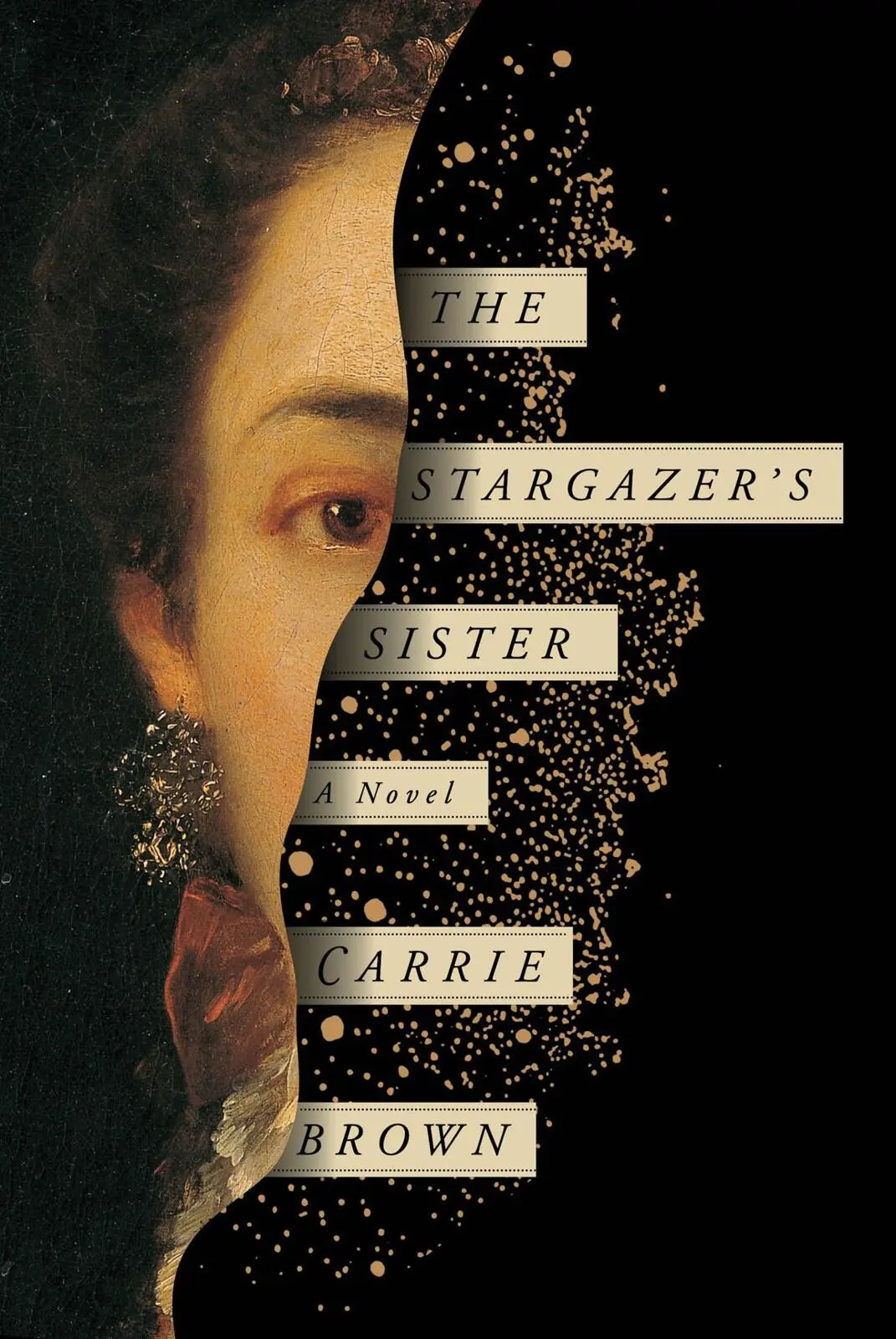
- Название:The Stargazer's Sister
- Автор:
- Издательство:Knopf Doubleday Publishing Group
- Жанр:
- Год:2016
- ISBN:нет данных
- Рейтинг книги:5 / 5. Голосов: 1
-
Избранное:Добавить в избранное
- Отзывы:
-
Ваша оценка:
The Stargazer's Sister: краткое содержание, описание и аннотация
Предлагаем к чтению аннотацию, описание, краткое содержание или предисловие (зависит от того, что написал сам автор книги «The Stargazer's Sister»). Если вы не нашли необходимую информацию о книге — напишите в комментариях, мы постараемся отыскать её.
a beautiful new period novel — a nineteenth-century story of female empowerment before its time — based on the life of Caroline Herschel, sister of the great astronomer William Herschel and an astronomer in her own right. This exquisitely imagined novel opens as the great astronomer and composer William Herschel rescues his sister Caroline from a life of drudgery in Germany and brings her to England and a world of music-making and stargazing. Lina, as Caroline is known, serves as William’s assistant and the captain of his exhilaratingly busy household. William is generous, wise, and charismatic, an obsessive genius whom Lina adores and serves with the fervency of a beloved wife. When William suddenly announces that he will be married, Lina watches as her world collapses.
With her characteristically elegant prose, Brown creates from history a compelling story of familial collaboration and conflict, the sublime beauty of astronomy, and the small but essential place we have within a vast and astonishing cosmos. Through Lina’s trials and successes, we witness the dawning of an early feminist consciousness, of a woman struggling to find her own place among the stars.
The Stargazer's Sister — читать онлайн бесплатно полную книгу (весь текст) целиком
Ниже представлен текст книги, разбитый по страницам. Система сохранения места последней прочитанной страницы, позволяет с удобством читать онлайн бесплатно книгу «The Stargazer's Sister», без необходимости каждый раз заново искать на чём Вы остановились. Поставьте закладку, и сможете в любой момент перейти на страницу, на которой закончили чтение.
Интервал:
Закладка:
The planning for all this takes hours. The mirror, weighing nearly half a ton, will be fired at a forge in London according to William’s instructions and transported to Observatory House, first by barge up the Thames, and then for the last miles in a cart lined with hay to protect it. Finally the mirror arrives on a glorious October day. William is in charge of seeing the men conscripted to unload it and lift it to the polishing apparatus. A cheer goes up among the workers, who have stopped their labors to witness this endeavor.
While one crew of smiths and carpenters works on the scaffolding and the tube for the forty-foot reflector, the business of polishing can at last begin. Lina and Stanley take to sitting in the open doors of the barn to pit fruit from the orchard — they can’t afford for any of it to go to waste — watching the men move through their rotations at the strange machine. They’re all simple country fellows recruited by William, but it does not surprise Lina that they have taken to the task of working for him like acolytes to a priest. Indeed there is something occult about their efforts, Lina thinks, the teams of men in their white linen smocks, working with concentration and care in the shadowy barn.
Stanley’s father has agreed to allow Stanley to remain with the Herschels through the winter ahead, with Lina serving as his tutor. As they sit working together they discuss mathematics and history, philosophy and natural science. Stanley turns twelve the day the mirror arrives; as they watch the wagon proceed slowly up the lane from the toll road toward the barn, Lina takes his hand in excitement.
“I’ll never forget this birthday,” he says. “I know I shan’t ever forget it.”
She squeezes his hand.
Sometimes when Lina looks at Stanley, working sums beside her or sitting with a bowl of pitted plums between his knees, juice on his mouth and shirtfront, she thinks that between William and this beloved boy with his rough hair and big ears, she has everything in the world she wants. Indeed, despite the constant air of industry and excitement at Observatory House, it is a surprisingly peaceful place. Flocks of white butterflies hover over the tall grass of the lawn. No one has had time to scythe the whole area, though Stanley has trimmed a path to the twenty-foot and down through the orchard and into the big field where the scaffolding for the forty-foot is being erected. The grasses in the meadow move with the wind as if a big hand passes gently over them, and Lina feels a kind of benediction given to their enterprises.
In the early evenings before dark falls, she works in the old laundry, beginning to develop a proper ordering and index system for William’s papers. She purchases additional long tables for the library from a church rectory she learns from one of the men is being refurbished; some of the pieces of joinery for the telescope are stored there under sheets, as well as supplies of mirrors for the smaller telescopes, for William is never content to have only one enterprise underway, and now his reputation has put his telescopes in even greater demand.
The weather remains unseasonably warm and sunny into late October. Lina is able to work with the doors of the laundry open, even as the sun descends behind the orchard. Now when she looks out across the lawn and past the orchard, the enormous scaffolding for the forty-foot telescope looms against the sky in the meadow. William has spent weeks out there under the sun, along with the parade of workmen led by James; he lies on his back or stomach on one beam or another — sometimes perilously high above the ground — supervising every screw and bolt. The behemoth structure, fixed on a two-axle mount so that it can be rotated, looks to Lina like a fantastical animal. It seems vaguely mournful to her, like a creature that is the last of its kind, a beast that might shake itself one day and begin to move, to creak slowly through the meadow at night toward the house in search of its master. She imagines it standing at the upper-story windows and inclining its long neck, looking for the man who will be lifted to the viewing platform thirty feet above the ground to tilt the biggest telescope in the world toward the stars and the deepest recesses of the heavens.
Certainly the telescope’s claim on William — on them all — is utterly complete.
She feels sometimes that it is they who serve it, rather than the other way around.
—
ONCE THE SCAFFOLDING and the iron tube are completed, every evening when the sky is clear the mirror is removed from the polishing machine in the barn and laboriously transported in a cart to the tube, into which it is lowered by means of yet another complicated apparatus that William has designed.
Two men are needed to raise and lower the viewing platform, working in careful unison to prevent the platform from tilting and pitching William to the ground, an accident Lina is certain would kill him. William designs a further system to ensure that the platform will rise smoothly — two bells, which must ring in unison, letting the men know they are hauling on the ropes with equal pressure — but the process fills Lina with anxiety. The first night of this experiment, she stands in the grass with a shawl over her shoulders, watching William hoisted into the evening sky, and listening to the bells. Not until the sound dies away and William waves gaily from the platform at its fixed location does she realize she has been holding her breath. From her position on the ground, he seems so small.
Beside her, Stanley whoops and cavorts through the grass.
And each night the process is repeated, as William judges how closely the mirror approaches the standard he imagines.
No other man, Lina thinks, would have had the patience for this endeavor.
Yet they are all inflamed by what William imagines he will see when it is finished, and though he walks like a prophet among his workers, he is as familiar with the use of a hammer as he is with the arcane business of the cosmos, and this endears him to the men he employs.
One windy afternoon, as she is bringing in washing from the line in the garden, she hears the unearthly sound of voices from the far meadow. She can see no one, however, and it is with a start that she realizes a few of the men are actually standing inside the telescope’s enormous tube, which has been lowered to the ground for some adjustment.
After a moment, she realizes that they are singing.
—
ONE AFTERNOON LATER THAT MONTH, Stanley comes running to find her in the old laundry. “The royal carriages are in the drive!” he says.
“What?” she says. “It is the king ?”
“And the archbishop, I think. They’ve gone round to the meadow.” Stanley’s eyes are wide. “But they’ve left a lot of others behind, as the king told them to wait in their carriages in the road. They don’t look very happy.”
“Go. Go and wash your face,” she says. “Then come help me.”
She hurries to change her dress and then to the kitchen to prepare a tray of tea and cake and wine.
The archbishop and William are standing in the meadow below the scaffolding, but the king has already ascended the short flight of steps to the viewing platform and the cage, where a viewer may be raised securely thirty feet in the air. As Lina crosses into the meadow through the gate, Stanley behind her carrying the teapot, the king waves gaily down to her.
Once on the ground again, he greets her familiarly, though they have met only once, in the Octagon Chapel, at a performance of music composed in his honor by William. He allows her to kiss his hand but then raises her up. He turns to the archbishop.
“Come, my lord bishop,” he says, getting down on his hands and knees and beginning to crawl into the tube on the ground. “My royal astronomer here will show you the way to heaven with this great telescope of his!”
Читать дальшеИнтервал:
Закладка:
Похожие книги на «The Stargazer's Sister»
Представляем Вашему вниманию похожие книги на «The Stargazer's Sister» списком для выбора. Мы отобрали схожую по названию и смыслу литературу в надежде предоставить читателям больше вариантов отыскать новые, интересные, ещё непрочитанные произведения.











Обсуждение, отзывы о книге «The Stargazer's Sister» и просто собственные мнения читателей. Оставьте ваши комментарии, напишите, что Вы думаете о произведении, его смысле или главных героях. Укажите что конкретно понравилось, а что нет, и почему Вы так считаете.