Carrie Brown - The Stargazer's Sister
Здесь есть возможность читать онлайн «Carrie Brown - The Stargazer's Sister» весь текст электронной книги совершенно бесплатно (целиком полную версию без сокращений). В некоторых случаях можно слушать аудио, скачать через торрент в формате fb2 и присутствует краткое содержание. Год выпуска: 2016, Издательство: Knopf Doubleday Publishing Group, Жанр: Современная проза, на английском языке. Описание произведения, (предисловие) а так же отзывы посетителей доступны на портале библиотеки ЛибКат.
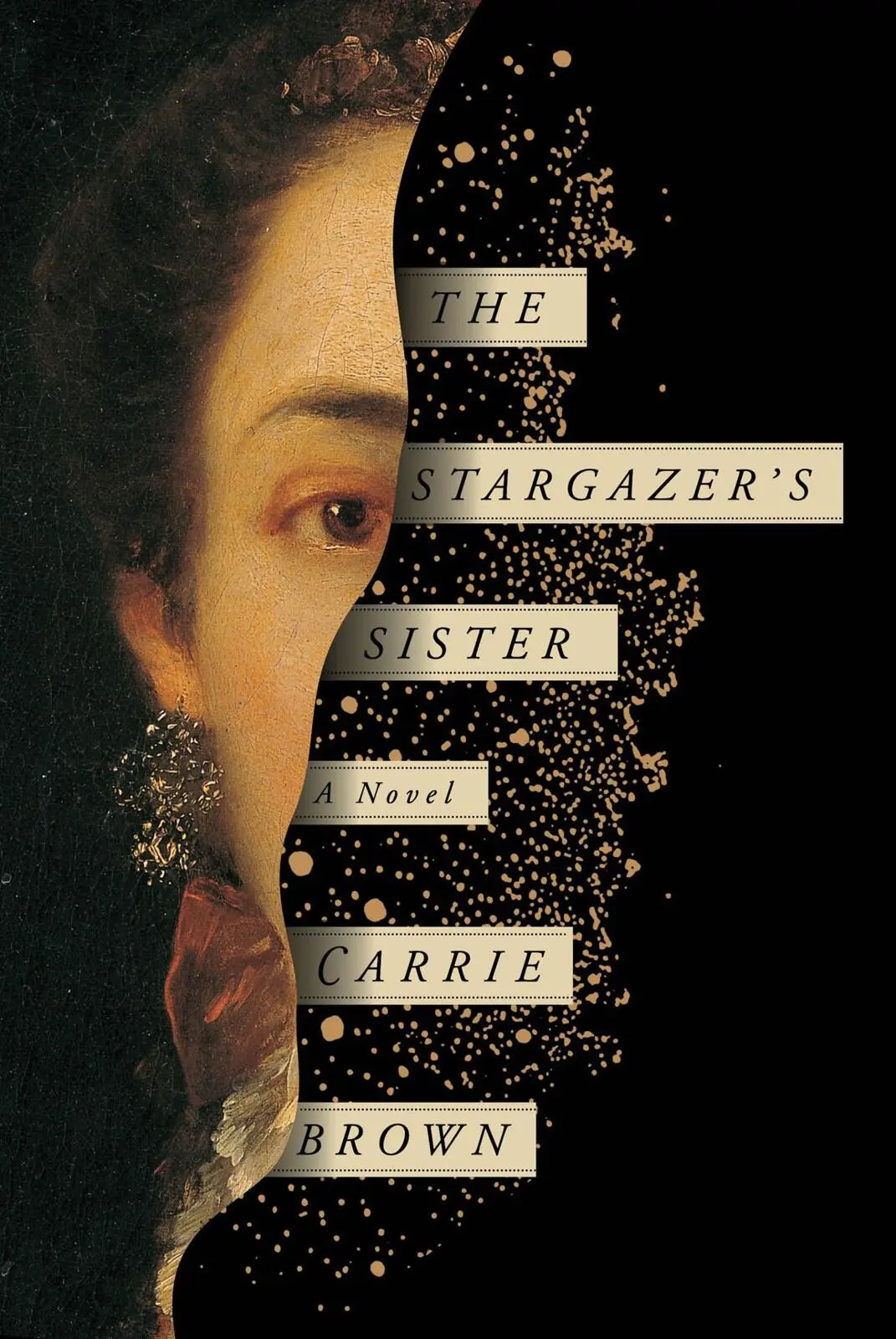
- Название:The Stargazer's Sister
- Автор:
- Издательство:Knopf Doubleday Publishing Group
- Жанр:
- Год:2016
- ISBN:нет данных
- Рейтинг книги:5 / 5. Голосов: 1
-
Избранное:Добавить в избранное
- Отзывы:
-
Ваша оценка:
The Stargazer's Sister: краткое содержание, описание и аннотация
Предлагаем к чтению аннотацию, описание, краткое содержание или предисловие (зависит от того, что написал сам автор книги «The Stargazer's Sister»). Если вы не нашли необходимую информацию о книге — напишите в комментариях, мы постараемся отыскать её.
a beautiful new period novel — a nineteenth-century story of female empowerment before its time — based on the life of Caroline Herschel, sister of the great astronomer William Herschel and an astronomer in her own right. This exquisitely imagined novel opens as the great astronomer and composer William Herschel rescues his sister Caroline from a life of drudgery in Germany and brings her to England and a world of music-making and stargazing. Lina, as Caroline is known, serves as William’s assistant and the captain of his exhilaratingly busy household. William is generous, wise, and charismatic, an obsessive genius whom Lina adores and serves with the fervency of a beloved wife. When William suddenly announces that he will be married, Lina watches as her world collapses.
With her characteristically elegant prose, Brown creates from history a compelling story of familial collaboration and conflict, the sublime beauty of astronomy, and the small but essential place we have within a vast and astonishing cosmos. Through Lina’s trials and successes, we witness the dawning of an early feminist consciousness, of a woman struggling to find her own place among the stars.
The Stargazer's Sister — читать онлайн бесплатно полную книгу (весь текст) целиком
Ниже представлен текст книги, разбитый по страницам. Система сохранения места последней прочитанной страницы, позволяет с удобством читать онлайн бесплатно книгу «The Stargazer's Sister», без необходимости каждый раз заново искать на чём Вы остановились. Поставьте закладку, и сможете в любой момент перейти на страницу, на которой закончили чтение.
Интервал:
Закладка:
“It is only relief,” he calls to James, patting her back. “She is only relieved we are all right.”
She does not want William to touch her.
“I must go for a walk,” she says.
She takes off her filthy apron and drops it on the ground. She wrenches away the scarf from around her neck. She knows William is bewildered by her reaction, but she doesn’t care.
“Don’t,” she says, when he tries to put an arm round her shoulders.
“I can’t, I can’t…” But she cannot finish her sentence.
—
THE AIR IS COOLER by the river. She walks quickly, her hands under her arms.
She is exhausted. It is her fatigue as much as her fear that has upset her so; she knows that. Yet why does William appear to thrive on the furious pace he keeps, at work all day on the twenty-foot telescope or the mirror, up all night looking at the stars, and meanwhile composing music, directing the choir, conducting the orchestra?
He is truly the happy genius of his own company.
He needs no companions, she thinks — not even her — unless they are useful to his ambitions.
He loves no one. Not really. He lives only for the work.
How would he have felt if she had been killed in that explosion?
On the river a pair of swans keeps pace with her. She puts the backs of her hands to her eyes, wipes her dirty face. She never forgets that she owes William her freedom and the privilege of this position at his side, watching as scientific history is made. She owes him the welcome expansion of her mind and even her body — her voice, these newly strong arms. Yet why, why when the furnace exploded…why were they laughing, while she feels so angry? And so sad?
She glances at the river. The two mated swans have become four, she sees, the reflection of each white bird mirrored in the water’s surface as the light has changed. Afternoon closes in toward evening. There will be a mess back at the house, she knows. The men are no doubt already working to clean up what they can from the accident: the broken bricks of the furnace, the cracked flagstones. She can’t exactly imagine the extent of the damage, but she knows that days and days of work will have been lost. There will be filth everywhere, filth that William and the men will track into the house. She thinks of the kettles of water she will need to heat so that they might wash. Their faces had been black with soot, and their clothes filthy.
She stops by a willow tree and looks at the river.
The young ladies she sees on the streets of Bath stroll arm in arm in their lovely dresses and tiny slippers or in the company of finely dressed gentlemen. That is not her life, and she knows she would not trade the life she has now for theirs. She finds the conversation of the women who come for music lessons uninteresting, though it is not their fault; they have no tutor such as she has had in William. They seem childish to her, these young women, even unreal, somehow, with their powdered skin and fine clothes and elaborately dressed hair and long gloves. They sing for William, their eyes heavenward — some of them prettily enough, a hand resting daintily on the harpsichord — and their stout mothers look on approvingly. But she would not want to be them. Not for a minute. The life she has with William is as provocative and exciting as she could ever have imagined for herself. Yet still she cannot seem to prevent the sadness that overtakes her sometimes, her old familiar, her loneliness. Her Überangst.
It is the ghost of her father in her, perhaps.
There is some longing in her that she cannot name or assuage…except she knows that it only goes away with work, work, and more work. Perhaps this, too, is William’s dilemma.
It’s strange to her that sometimes she feels this longing most piercingly when she looks up at the night sky with William. How oddly alone she feels then.
What would it be like to lie down beside a husband every night, someone whose steady breathing comforted her in the dark hours?
She would marry Henry Spencer, she knows. She loves him for his kindness and his generosity, and she does not want to feel alone in the world, as she sometimes feels when confronting — or being confronted by — the endless distances of the night. But Henry Spencer will never ask her to marry him, though likely there is not another woman on the planet with whom he could share so many of his interests.
It is time for her to turn back.
She is hungry, she realizes. Lately, working in the garden so often, she has been much in the company of the men. She brings tea outside to the garden most afternoons when the weather is fine and eats with them. She likes being with them. They even tease her — how is it that such a tiny woman can put away such quantities of bread and cheese? they ask. No one expects her to be silent on these occasions. She is as much a part of the shared endeavors as any.
The swans proceed away from her down the river, the two white bodies side by side. When they disappear beneath the canopy of a willow tree’s long wands hanging over the water and touching its cold surface, she turns back to the house. The hours ahead seem very long indeed.
—
THAT SUMMER, after deliberations by the Royal Society, which has amassed many excited reports confirming William’s observations from other astronomers around the world, the object William saw is determined finally to be a new planet.
William wishes it to be named for the king, the Georgium Sidus.
With the Society’s official recognition, and thanks to support from Dr. Maskelyne, William is awarded the Copley Medal by the Royal Society and named a royal astronomer for a salary of fifty pounds a year. It is not anywhere near enough to support him and to pay consistently the men in his employ, but Henry Spencer succeeds in lobbying for additional sums from the king toward the construction of the forty-foot telescope. Lina, balancing the books, calculates that with occasional concerts and performances of William’s music, they can make do for a time, but she knows that her brother’s ambitions will soon outstrip their income, and there is the problem of where the forty-foot telescope will be built as well.
William makes frequent trips between Bath and London or Windsor in the weeks after the announcement. He takes the seven-foot telescope with him, and uses it to instruct King George, who is very enthusiastic. He writes daily to Lina when he is away. On one trip to London, when the sky is cloudy and William cannot provide his usual entertainment with the telescope, he delights the princesses with elaborate displays of lamps lit in the gardens at Kew and pasteboard models of Saturn mounted on the garden walls. Of this pretty conceit for the royal young ladies, he writes to Lina with undisguised pride: The best astronomer might have been deceived! You know vanity is not my foible, so I tell it all to you without fearing your censure.
Gradually, their life in Bath begins to change. With the Royal Society’s recognition, William has garnered greater numbers of friends in the scientific community, and he is away from home more often. Lina knows from the letters he receives that he has risen from his status as an eccentric amateur to a leader among astronomers of the day: more enterprising, bolder in his approach, and with a genius for mechanics and invention, as well as a gift for writing and explanation. Henry Spencer tells her on one visit that William’s charm has won over even the most reluctant and stodgiest members of the Royal Society. It is impossible to resist the combination of William’s intelligence, his obvious accomplishments — as Henry says, no one else is building telescopes the size of William’s or with mirrors so large and fine — or his good humor and delight about it all.
Читать дальшеИнтервал:
Закладка:
Похожие книги на «The Stargazer's Sister»
Представляем Вашему вниманию похожие книги на «The Stargazer's Sister» списком для выбора. Мы отобрали схожую по названию и смыслу литературу в надежде предоставить читателям больше вариантов отыскать новые, интересные, ещё непрочитанные произведения.











Обсуждение, отзывы о книге «The Stargazer's Sister» и просто собственные мнения читателей. Оставьте ваши комментарии, напишите, что Вы думаете о произведении, его смысле или главных героях. Укажите что конкретно понравилось, а что нет, и почему Вы так считаете.