Carrie Brown - The Stargazer's Sister
Здесь есть возможность читать онлайн «Carrie Brown - The Stargazer's Sister» весь текст электронной книги совершенно бесплатно (целиком полную версию без сокращений). В некоторых случаях можно слушать аудио, скачать через торрент в формате fb2 и присутствует краткое содержание. Год выпуска: 2016, Издательство: Knopf Doubleday Publishing Group, Жанр: Современная проза, на английском языке. Описание произведения, (предисловие) а так же отзывы посетителей доступны на портале библиотеки ЛибКат.
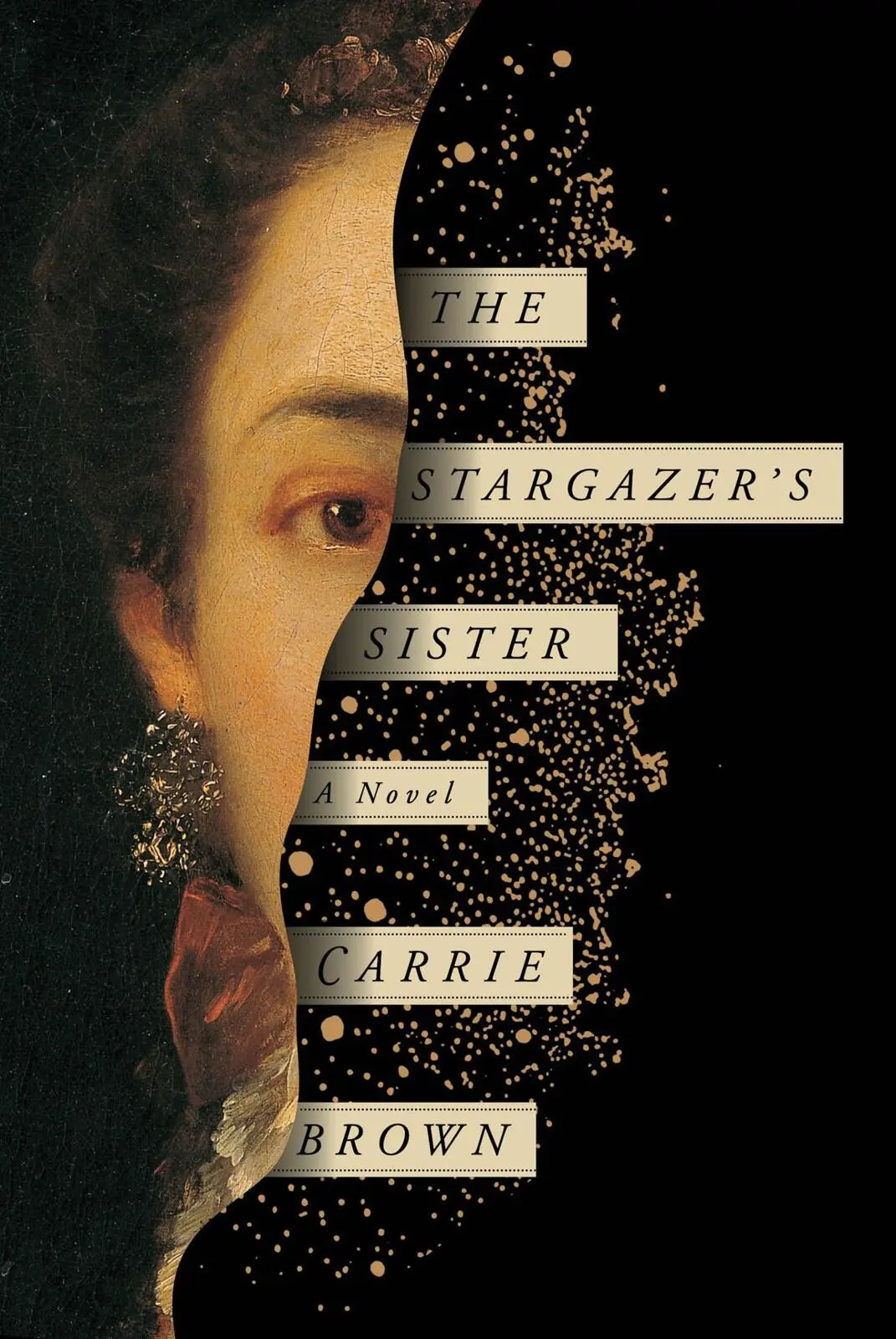
- Название:The Stargazer's Sister
- Автор:
- Издательство:Knopf Doubleday Publishing Group
- Жанр:
- Год:2016
- ISBN:нет данных
- Рейтинг книги:5 / 5. Голосов: 1
-
Избранное:Добавить в избранное
- Отзывы:
-
Ваша оценка:
The Stargazer's Sister: краткое содержание, описание и аннотация
Предлагаем к чтению аннотацию, описание, краткое содержание или предисловие (зависит от того, что написал сам автор книги «The Stargazer's Sister»). Если вы не нашли необходимую информацию о книге — напишите в комментариях, мы постараемся отыскать её.
a beautiful new period novel — a nineteenth-century story of female empowerment before its time — based on the life of Caroline Herschel, sister of the great astronomer William Herschel and an astronomer in her own right. This exquisitely imagined novel opens as the great astronomer and composer William Herschel rescues his sister Caroline from a life of drudgery in Germany and brings her to England and a world of music-making and stargazing. Lina, as Caroline is known, serves as William’s assistant and the captain of his exhilaratingly busy household. William is generous, wise, and charismatic, an obsessive genius whom Lina adores and serves with the fervency of a beloved wife. When William suddenly announces that he will be married, Lina watches as her world collapses.
With her characteristically elegant prose, Brown creates from history a compelling story of familial collaboration and conflict, the sublime beauty of astronomy, and the small but essential place we have within a vast and astonishing cosmos. Through Lina’s trials and successes, we witness the dawning of an early feminist consciousness, of a woman struggling to find her own place among the stars.
The Stargazer's Sister — читать онлайн бесплатно полную книгу (весь текст) целиком
Ниже представлен текст книги, разбитый по страницам. Система сохранения места последней прочитанной страницы, позволяет с удобством читать онлайн бесплатно книгу «The Stargazer's Sister», без необходимости каждый раз заново искать на чём Вы остановились. Поставьте закладку, и сможете в любой момент перейти на страницу, на которой закончили чтение.
Интервал:
Закладка:
The growing pile steams. She cannot imagine what William intends to do with it; it is far too much for the vegetable beds.
Lina leaves the window in the kitchen, where she has turned a bowl of dough for a last rising. She has been awake, as usual, since before dawn. From the window of her bedroom, as she had buttoned her dress in the dark, she had seen Aquarius tipped on the horizon. The seasons are progressing. There are loaves to be punched down now and pea soup to be started. Later she will roast two ducks brought to them by Stanley’s father. She has learned that if she wants to complete the work of feeding the household, she must find time for it before William requires her for other tasks.
She wipes her hands on her apron and goes down the passageway and out to the garden.
The cart has been emptied in short order. The boys wave to her from the back of the wagon as it tilts and rocks away down the track running alongside the river. William, his shirt loosened, sweat on his forehead, stands by the heap. The smell reminds Lina of their old stable in Hanover, the hours she had spent in the horse’s shadowy stall, watching the progress of the spiders laboring in their high cobwebs.
William leans the pitchfork against the wall of the workshop.
“It’s a good supply,” he says, “but I fear not quite enough. Well, I can get him back for a second trip, if we need more. No shortage of manure in the world, after all.”
He turns to her. “When shall we begin? I think it will be easy enough work.”
She tucks her hands beneath her armpits. The air is warm, but her hands suddenly feel cold. “Begin what ?”
“We discussed it, surely,” he says. “It’s for making the molds, for the mirrors.”
She must look baffled, because he continues with some impatience. “The manure. We will pound it in a mortar and sift it fine. It will be the perfect material, very strong and yet sufficiently flexible.”
“William,” she says. “I do not understand you.”
From among the tools leaning against the workshop wall, he produces what she understands after a moment is a giant pestle, a wooden post that has been sanded neatly to a cylinder and rounded at one end. From the doorway beside the pile of manure, William drags forward a large barrel sawn in half.
“Better outside than in, I think,” William says. “It will be dusty work. But fine exercise, of course.” He claps his hand against his chest.
She looks at the pestle, the barrel that will serve as mortar bowl, and then at the heap of dung.
“You want me to do this work,” she says. “In addition to everything else. You’re serious.”
“Stanley will help you,” William says. “He is a big enough boy for such labor. And Henry has said he will come take a turn when he is here. In fact he has built the sieve we will use to sift it. I expect it to arrive any day. I don’t think it will be too big for you to manage.”
She hears defensiveness in William’s voice now, the aggrieved tone he is capable of taking with her when she is not wholly enthusiastic about some enterprise. His face — his expression in concentration like that of a statue of an emperor, she has thought, both grave and noble — can take on a spoiled hauteur when he feels he is being resisted.
“You cannot really mean for me to do this,” she says.
He does not answer.
“William.” She knows her tone is sharp, but she can’t help it. “To pound manure ?” she says. “To sift dung ?”
His jaw is set, his expression truculent.
“There is no other way,” he says. “The mixture must be very fine before we can mix it with water. Otherwise it’s likely to crack when we fire the mirrors.”
“Get the men to do it!” She feels outraged.
“It’s pointless work for them, Caroline,” he says, and now he actually raises his voice. “ You cannot do the work they do. It’s a waste of their time!”
He takes up the stick to be used as a pestle, pounds the ground with it a few times, as if she has failed to understand how it is to be managed.
“And my time?” she says. “What of my time, William?”
He frowns and says nothing.
“You don’t know what to say to me right now, do you?” she says. “You have no answer for me. It is not enough for you to find planets and comets and to catalog every star in the heavens and build a telescope as tall as — as a house,” she says. “I see now it will never be enough for you. Nothing will ever be enough.”
He does not look at her.
“I thought you were happy,” he says. He turns away from her and stares at the river.
“I am happy!” She puts her hand over her heart. “I am happy, William! That is not it! You are being…”
She looks at the heap of dung and then around at the garden. James and another workman have appeared in the open doors of the big workshop. She supposes she has raised her voice as well.
“I shall find someone else to do it,” William says, more quietly.
“No,” she says. “No.” She will be involved in the great work of their life, even if it means sifting dung. She doesn’t want anyone else to do it. But why can he not see that what he asks of her is so…unfair?
She unties her apron and then reties it more tightly around her waist. She runs her hand over her head, the braids wound there. She raises her other hand, holds her head between her palms for a minute.
“We begin now, ” she says. “As always.”
—
SHE SPENDS THE NEXT few weeks helping to make the molds, pounding the manure into dust for hours at a time. At the end of the day, her back and shoulders are so tired and sore she cannot lift her arms above her head to unpin her hair without pain. There is filth in her handkerchief when she coughs and blows her nose, the cloth stained black with dust and red from nosebleeds.
The only thing that keeps her going is her fury at William. He is a lunatic, she thinks. She doesn’t care if he invented the universe. He has no feeling for other people.
One morning while she works, a scarf over her nose and mouth, grinding the pestle into another barrel of manure, a tremendous blast sounds from within the workshop. The ground shakes beneath her feet.
Holding their hands over their heads, the men run from the workshop out onto the grass.
One of the furnaces has exploded, she understands. The mirror on which William has been working must have shattered.
She drops the pestle.
William and James have stopped and stare at one another. Then, surprisingly, they begin to laugh.
“My god,” William says. “That was a near escape. Look—” He bends down and picks up a glittering shard; the force of the explosion has embedded fragments of the mirror in the earth. James doubles over, howling, as if it is all a great joke.
She cannot understand why they are laughing. She keeps the accounts, and she knows that nearly five hundred pounds of metal has been lost — who knows whether any of it can be salvaged? And the furnace will need to be rebuilt. They have no money for such endeavors right now! William has found a new planet, he is the greatest astronomer on earth, and yet they have hardly a shilling, and he is laughing like a madman, wandering around and picking up pieces of the shattered mirror. They might have been killed. She might have been killed, a piece of the mirror lodged in her heart!
Her legs are trembling. It is as if she has not seen the mad enterprise of their household clearly until this moment; other people do not live this way.
She puts her hands over her face.
William approaches her. “No harm was done, Lina. Look. No one has been harmed.”
Читать дальшеИнтервал:
Закладка:
Похожие книги на «The Stargazer's Sister»
Представляем Вашему вниманию похожие книги на «The Stargazer's Sister» списком для выбора. Мы отобрали схожую по названию и смыслу литературу в надежде предоставить читателям больше вариантов отыскать новые, интересные, ещё непрочитанные произведения.











Обсуждение, отзывы о книге «The Stargazer's Sister» и просто собственные мнения читателей. Оставьте ваши комментарии, напишите, что Вы думаете о произведении, его смысле или главных героях. Укажите что конкретно понравилось, а что нет, и почему Вы так считаете.