Nikos Kazantzakis - Zorba The Greek
Здесь есть возможность читать онлайн «Nikos Kazantzakis - Zorba The Greek» весь текст электронной книги совершенно бесплатно (целиком полную версию без сокращений). В некоторых случаях можно слушать аудио, скачать через торрент в формате fb2 и присутствует краткое содержание. Жанр: Современная проза, на английском языке. Описание произведения, (предисловие) а так же отзывы посетителей доступны на портале библиотеки ЛибКат.
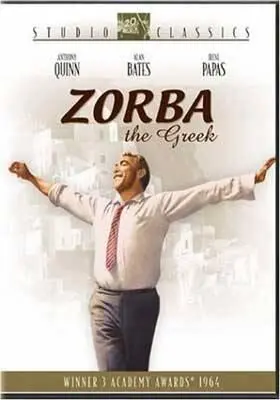
- Название:Zorba The Greek
- Автор:
- Жанр:
- Год:неизвестен
- ISBN:нет данных
- Рейтинг книги:3 / 5. Голосов: 1
-
Избранное:Добавить в избранное
- Отзывы:
-
Ваша оценка:
Zorba The Greek: краткое содержание, описание и аннотация
Предлагаем к чтению аннотацию, описание, краткое содержание или предисловие (зависит от того, что написал сам автор книги «Zorba The Greek»). Если вы не нашли необходимую информацию о книге — напишите в комментариях, мы постараемся отыскать её.
Zorba The Greek — читать онлайн бесплатно полную книгу (весь текст) целиком
Ниже представлен текст книги, разбитый по страницам. Система сохранения места последней прочитанной страницы, позволяет с удобством читать онлайн бесплатно книгу «Zorba The Greek», без необходимости каждый раз заново искать на чём Вы остановились. Поставьте закладку, и сможете в любой момент перейти на страницу, на которой закончили чтение.
Интервал:
Закладка:
You know me well enough to realize that these cruel meditations, far from making me flee, are, on the contrary, indispensable tinder for my inner flaine. Because, as my master, Buddha, says: "I have seen." And as I have seen and, in the twinkling of an eye, have got on good terms with the jovial and whimsical, invisible producer, I can henceforward play my own part on earth to the end, that is to say coherently and without discouragement. For, having seen, I have also collaborated in the work in which I am acting on God's stage.
This is how it is that, scanning the universal stage, I can see you over there, in those legendary fastnesses of the Caucasus, also playing out your role; I can see you fighting to save thousands of souls of our race who are in danger of death. A pseudo-Prometheus who must, however, suffer very real tortures while he combats the dark forces of hunger, cold, sickness and death. But, being proud, you must sometimes rejoice that the dark forces of destruction are so numerous and invincible: for thus your aim to live almost without hope becomes more heroic and your soul acquires a more tragic greatness.
You certainly must consider the life you lead a happy one. And since you consider it such, such it is. You have also cut your happiness according to your stature; and your stature now-God be praised-is greater than mine. The good master desires no greater recompense than this: to form a pupil who surpasses him.
As for me, I often forget, I disparage myself, I lose my way, my faith is a mosaic of unbelief. Sometimes I feel I should like to make a bargain: to live one brief minute and give the rest of my life in exchange. But you keep a firm hold on the helm and you never forget, even in the sweetest moments of this life, towards which destination you have set your course.
Do you remember the day we both crossed Italy on our way to Greece? We had decided to make for the Pontus region, which was then in danger. We hastily alighted from the train in a little town-we had just one hour to catch the other train. We went into a large wooded garden near the station. There were broad-leaved trees, bananas growing, bamboos of dark metallic colors, bees were swarming over a flowering branch which trembled to see them suck.
We strolled on in müte ecstasy, as if in a dream. Suddenly, at a turn of the flower walk, two girls appeared, reading a book as they went along. I no longer remember whether they were pretty or plain. I remember only that one was fair, the other dark, and both were wearing spring blouses.
And with the boldness one has in dreams, we approached them and you said: "Whatever the book may be you are reading, we'll discuss it with you." They were reading Gorki. Then, going posthaste, for we had little time, we talked of life, of poverty, of the revolt of the mind, of love…
I shall never forget our delight and our sorrow. We and these two unknown girls were already old friends, old lovers; we had become responsible for their souls and bodies, and we made haste, for a few minutes later we were going to leave them forever. In the vibrant air we could smell ravishment and death.
The train arrived and whistled. We started, as if awaking from a dream. We shook hands. How can I ever forget the tight and desperate grip of our hands, the ten fingers which did not wish to separate. One of the girls was very pale, the other was laughing and trembling.
And I said to you then, I remember: "What do Greece, Our Country, Duty mean? The truth is here!" And you replied: " Greece, Our Country, Duty mean nothing. And yet, for that nothing we willingly court destruction."
But why am I writing this to you? To let you see that I have forgotten none of the moments we have lived together. And also to have an opportunity of expressing what, because of our good (or bad) habit of curbing our feelings, I can never reveal to you when we are together.
Now that you are no longer before me and cannot see my face, and now that I run no risk of appearing soft or ridiculous, I can tell you I love you very deeply.
I had finished my letter. I had conversed with my friend, and I felt relieved. I called Zorba. Crouching beneath a rock, so as not to get wet, he was trying out his model line.
"Come along, Zorba," I cried. "Get up and let's go for a stroll to the village."
"You're in a good humor, boss. It's raining. Can't you go alone?"
"I don't want to lose my good humor. If we go together, there'll be no danger of that. Come along."
He laughed.
"I'm glad you need me," he said. "Come on, then."
He put on the little woolly Cretan coat with a pointed hood which I had given him and, splashing through the mud, we made for the road.
It was raining. The mountain peaks were hidden. There was not a breath of wind. The pebbles gleamed. The lignite hill was smothered by the mist. It was as if the woman's face of the hill were shrouded in sorrow, as if she had fainted beneath the raín.
"A man's heart suffers when it rains," Zorba said. "You mustn't bear it any ill will, boss. The poor wretch has a soul, too."
He stooped by a hedge and picked the first little wild narcissi. He looked at them a long while, as if he could not see enough of them, as if he were seeing narcissi for the first time. He closed his eyes and smelled them, sighed, then gave them to me.
"If only we knew, boss, what the stones and rain and flowers say. Maybe they call-call us-and we don't hear them. When will people's ears open, boss? When shall we have our eyes open to see? When shall we open our arms to embrace everything-stones, rain, flowers, and men? What d'you think about that, boss? And what do your books have to say about it?"
"The devil take them!" I said, using Zorba's favorite expression. "The devil take them! That's what they say, and nothing else!"
Zorba took me by the arm.
"I'm going to tell you of an idea of mine, boss, but you mustn't be angry. Make a heap of all your books and set light to them! After that, who knows, you're no fool, you're the right sort… we might make something of you!"
"He is right!" I exclaimed to myself. "He is right, but I can't."
Zorba hesitated and reflected. Then he said:
"There's one thing I can see…"
"What? Out with it!"
"I don't know, but I think, just like that, I can see it. But if I try to tell you, I'll make a hash of it. One day, when I'm in good form, I'll dance it for you."
It started to rain harder. We came to the village. Little girls were bringing the sheep back from grazing; the ploughmen had unyoked the oxen and were abandoning the half-ploughed field; the women were running after their children in the narrow streets. A cheerful panic had broken out in the village when the shower started. Women uttered shrill cries and their eyes were laughing; from the men's stiff beards and curled-up moustaches hung large drops of rain. A pungent smell rose from the earth, the stones and the grass.
We dived into The Modesty Café-and-Butcher's-Shop like drowned rats. It was crowded. Some men were playing a game of belote, others arguing at the top of their voices as if they were calling to each other across the mountains. Round a little table at the far end the village elders were laying down the law: uncle Anagnosti with his broad-sleeved white shirt; Mavrandoni, severe and silent, smoking his hookah, with his eyes riveted on the floor; the gaunt, middle-aged and rather imposing schoolmaster leaning on his thick stick and listening with a condescending smile to a hairy giant who had just returned from Candia and was describing the marvels of that great town. The café proprietor, standing behind the counter, was listening and laughing as he kept an eye on the coffeepots which stood in a row on the stove.
As soon as he saw us, uncle Anagnosti got up.
"Do come and join us, countrymen," he said. "Sfakianonikoli is telling us about all he saw and heard in Candia. He's very funny. Do come!"
Читать дальшеИнтервал:
Закладка:
Похожие книги на «Zorba The Greek»
Представляем Вашему вниманию похожие книги на «Zorba The Greek» списком для выбора. Мы отобрали схожую по названию и смыслу литературу в надежде предоставить читателям больше вариантов отыскать новые, интересные, ещё непрочитанные произведения.










Обсуждение, отзывы о книге «Zorba The Greek» и просто собственные мнения читателей. Оставьте ваши комментарии, напишите, что Вы думаете о произведении, его смысле или главных героях. Укажите что конкретно понравилось, а что нет, и почему Вы так считаете.