Nasser Amjad - Land of No Rain
Здесь есть возможность читать онлайн «Nasser Amjad - Land of No Rain» весь текст электронной книги совершенно бесплатно (целиком полную версию без сокращений). В некоторых случаях можно слушать аудио, скачать через торрент в формате fb2 и присутствует краткое содержание. Год выпуска: 2014, Издательство: Bloomsbury Qatar Foundation Publishing, Жанр: Современная проза, на английском языке. Описание произведения, (предисловие) а так же отзывы посетителей доступны на портале библиотеки ЛибКат.
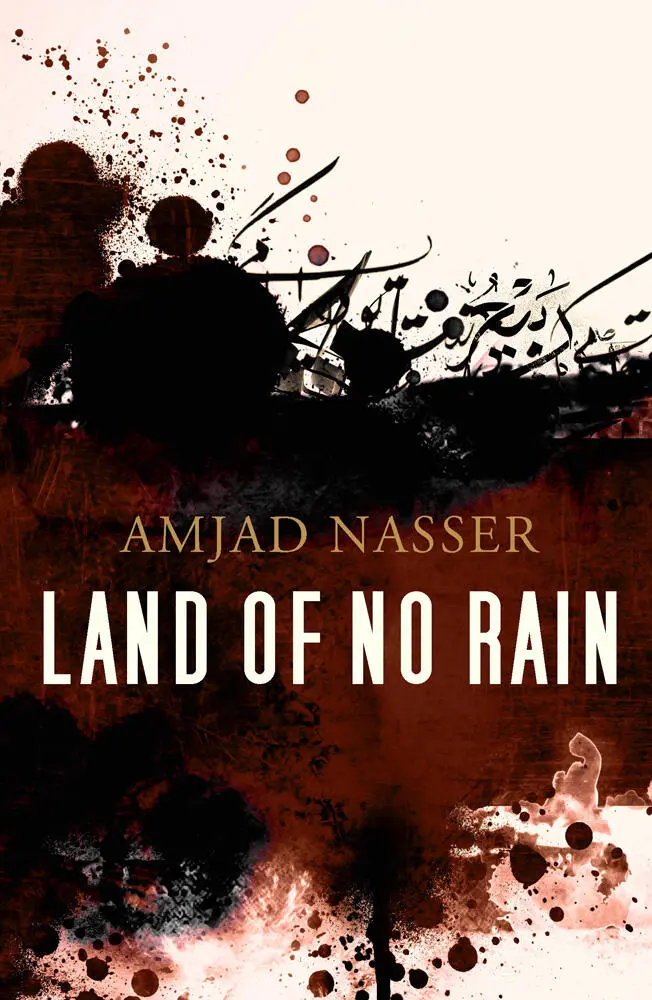
- Название:Land of No Rain
- Автор:
- Издательство:Bloomsbury Qatar Foundation Publishing
- Жанр:
- Год:2014
- ISBN:нет данных
- Рейтинг книги:4 / 5. Голосов: 1
-
Избранное:Добавить в избранное
- Отзывы:
-
Ваша оценка:
Land of No Rain: краткое содержание, описание и аннотация
Предлагаем к чтению аннотацию, описание, краткое содержание или предисловие (зависит от того, что написал сам автор книги «Land of No Rain»). Если вы не нашли необходимую информацию о книге — напишите в комментариях, мы постараемся отыскать её.
Land of No Rain — читать онлайн бесплатно полную книгу (весь текст) целиком
Ниже представлен текст книги, разбитый по страницам. Система сохранения места последней прочитанной страницы, позволяет с удобством читать онлайн бесплатно книгу «Land of No Rain», без необходимости каждый раз заново искать на чём Вы остановились. Поставьте закладку, и сможете в любой момент перейти на страницу, на которой закончили чтение.
Интервал:
Закладка:
When he decided to make this visit, he didn’t say to me, ‘Hey Younis, let’s go,’ as he did when he visited his friend Salem, who had had a tumour removed from his brain several years ago and lost a considerable part of his memory. His old friend had recognised him briefly, then a moment later asked him who he was. He had also suggested we visit another friend called Wahid, who owns a workshop making metal parts. He’s the person who appears in the photograph of the hunting expedition with Khalaf and Salem, the one he didn’t recognise at first. He spent longer than I expected with this friend of his. As soon as the man saw him, he said, ‘I didn’t know that when we daubed horseshit on the governor’s car it would become an epic chapter in your book Hamiya and the Bridg e!’ Then, after that quickfire opening, his friend the metal man laughed, revealing teeth decayed by sweet tea and tobacco. The man who had come back to his birthplace also laughed heartily. This was the first carefree laugh I had heard from him since he came back. He laughed until he broke into a protracted coughing fit from deep in his lungs and almost fainted. He likes Wahid. He likes him as much as he liked Khalaf, because they both had reserves of goodwill and loyalty that were impervious to change and unlikely to run out, as if these traits were inseparable parts of their temperament. Something organic that they were born with and would die with. Like hands, heads, noses, hearts and arteries. These two childhood friends of his had not opened a book since they left middle school. Is it books that corrupt, that change and alter deep-rooted nature?
This time he didn’t say to me, ‘Hey, Younis, let’s go.’ He took young Younis with him. He asked the boy, ‘Do you know where they are?’ Without needing to ask his uncle what he meant, the boy said, ‘I know. I visit them every Friday and recite the first chapter of the Quran at their graves.’
The cemetery they finally reached hadn’t existed before. He didn’t recognise it. He knew the old one, which was now in the middle of their neighbourhood. Perhaps he thought that in his time there were fewer dead. Death really had been less familiar, less ordinary than it is today. It was a rare event that brought the whole neighbourhood together. The night after a death was frightening for children, and especially for him. What troubled him most was abandoning the dead after the burial. That communal severance from someone who was alive a few hours earlier. Complete severance. Disengagement. Leaving the body in a hole covered with soil. The worst part is what awaits the dead after that communal severance. An interrogation in which the two angels leave no stone unturned. Various forms of torture if the dead has been undutiful to his parents or has neglected his prayers or fasting. I think he thought of that, because I thought of it, and as long as I thought of it, he must have thought of it too. I began to feel exactly what he felt as soon as he surveyed the large dusty cemetery with its wire fence. The caretaker came out of a wooden hut at the entrance when he saw them pushing the metal gate with the annoying squeak. Young Younis pointed inside the cemetery. When the caretaker shook his head and waved his hands he realised the man couldn’t speak. It was clear that the caretaker knew the boy. The sign language that the child used and the caretaker’s response certainly looked primitive to the returnee. In the City of Red and Grey, where the person who was me twenty years ago had lived, there had clearly been great progress in sign language. And, of course, even among the deaf there are educated people and illiterates. The caretaker of our cemetery, with his tattered scarf thrown any old how round his neck, might count as a sign-language illiterate. But why would the deaf caretaker of a cemetery, in a place at the mercy of relentless dust, need words beyond those he exchanged with the child? Those few primitive gestures were enough for him to know what the child said, or more precisely what he meant.
The man who had come home couldn’t understand the system on which the cemetery was based. The graves, some of them made of earth raised a little above ground level and others on which the family of the dead had had concrete platforms built, took up all the space available. They were cheek by jowl, like the houses in the neighbourhood. But the burials were apparently in chronological order, from the oldest to the most recent. He thought about how the cemetery had become a copy of the very neighbourhoods where he ran through the lanes in his childhood and that remained almost as they were in the past, with the difference that curved aluminium dishes had sprouted on the roofs of houses, like desert mushrooms after abundant rainfall.
At last the boy reached the grave, three steps ahead of his uncle. As soon as his little feet touched the ground in the cemetery, he tried not to step on any of the tightly packed graves, as if picking his way between the arms and legs of a sleeping body he was frightened of awakening from its sacred slumber. The grave was like all the graves around it. Apart from the stone marker, the only thing that distinguished it was an olive tree that received regular doses of water. It was luxuriant. Green, despite the dust that inevitably coated its leaves and branches. In comparison with the olive tree, the other cemetery plants seemed to be yellowing or wilting under a determined sun.
The boy, three paces ahead, looked back with round eyes that said, ‘We’ve arrived!’ Then he raised his open hands to the sides of his face and started to mumble. The man who had come home told himself that the boy had been taught the same lessons he had been taught when he was young.
Time can repeat itself.
People can repeat themselves, one way or another.
He noticed that some wild plants with small bright red flowers had sprouted on the grave. Their thin roots had spread inside it. He also noticed that the words inscribed on the tombstone in familiar thuluth script were slightly faded, but he could easily read these words: Here Lies the Late Fatima. . May She Rest in Peace . His mother’s voice rang in his ears. He remembered that phrase she would use whenever she saw him put a blanket around his shoulders to join his friends for a night out she didn’t approve of: ‘You’ll have a blanket around your shoulders, like a nomad, for the rest of your life.’ He remembered what his mother said about devils dancing around him. About his bottom, which wouldn’t stay still when he was sitting down, as if he were sitting on a spike or hot coals. Sometimes his mother would sing songs addressed to the birds. He remembered part of a song in which she asked the birds to bring her news of absent loved ones. He didn’t know which absent loved ones. Because he hadn’t left the nest yet, and Sanad hadn’t gone off to the Land of Palm Trees and Oil. He thought that confiding in birds was just a singing tradition his mother had heard from others. Like the introductory lament over abandoned encampments in ancient Arabic poetry. Because in our world birds are associated with travel, perhaps with letters too, and people in our country love to be maudlin for no obvious reason. He remembered other birds, his father’s birds, or rather the birds in his books or in his imagination. He had heard the story about them from his father, before reading it later. The birds in which his mother confided had nothing in common with his father’s birds. But one thing, as usual, reminds you of something else. That’s how wily the memory is, and also one of its disadvantages. At one of those miserable Thursday sessions he heard his father tell his friends the story of the thirty birds and their journey to find themselves a king on Mount Qaf. It was the hoopoe who told the birds where they might find the bird king called the Simorgh: ‘He’s close to us, and we are far from him. His throne is at the top of a tree that’s too tall to see, and no tongue ceases to repeat his name. He is surrounded by a thousand veils, some of light and others of darkness, and no one in creation can grasp his essence!’ But the rigours of the journey, which the hoopoe had understated, frightened off the bird that sang, the bird that boasted of its feathers and the bird that relied on its strength, and they all backed out. The birds that agreed to undertake the impossible journey were the least known and the most insignificant in the bird kingdom. Only thirty birds arrive, exhausted and featherless, at Mount Qaf. But the Simorgh, the venerable king of the birds, turns out to be none other than the birds themselves. When the thirty birds look at the Simorgh, he turns out to be the group of thirty birds, and when the birds look at themselves they see the Simorgh.
Читать дальшеИнтервал:
Закладка:
Похожие книги на «Land of No Rain»
Представляем Вашему вниманию похожие книги на «Land of No Rain» списком для выбора. Мы отобрали схожую по названию и смыслу литературу в надежде предоставить читателям больше вариантов отыскать новые, интересные, ещё непрочитанные произведения.





Обсуждение, отзывы о книге «Land of No Rain» и просто собственные мнения читателей. Оставьте ваши комментарии, напишите, что Вы думаете о произведении, его смысле или главных героях. Укажите что конкретно понравилось, а что нет, и почему Вы так считаете.