Ervin Krause - You Will Never See Any God - Stories
Здесь есть возможность читать онлайн «Ervin Krause - You Will Never See Any God - Stories» весь текст электронной книги совершенно бесплатно (целиком полную версию без сокращений). В некоторых случаях можно слушать аудио, скачать через торрент в формате fb2 и присутствует краткое содержание. Год выпуска: 2014, ISBN: 2014, Издательство: UNP - Bison Original, Жанр: Современная проза, на английском языке. Описание произведения, (предисловие) а так же отзывы посетителей доступны на портале библиотеки ЛибКат.
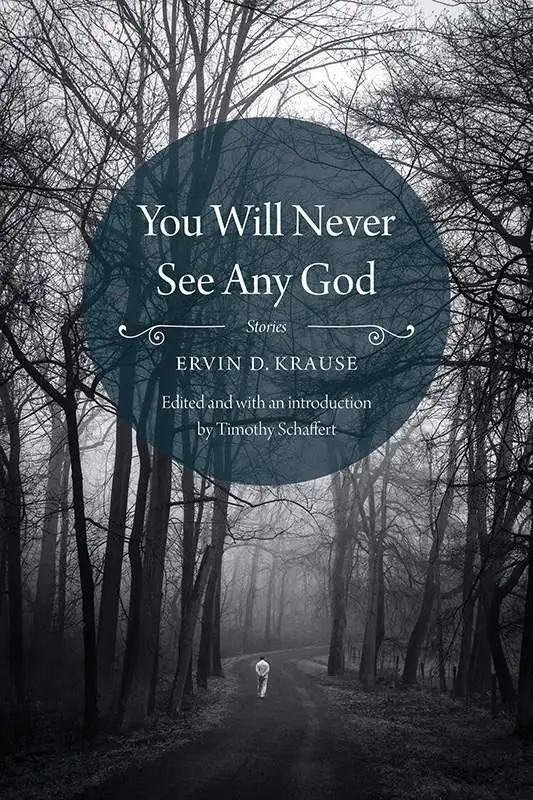
- Название:You Will Never See Any God: Stories
- Автор:
- Издательство:UNP - Bison Original
- Жанр:
- Год:2014
- ISBN:9780803254091
- Рейтинг книги:4 / 5. Голосов: 1
-
Избранное:Добавить в избранное
- Отзывы:
-
Ваша оценка:
You Will Never See Any God: Stories: краткое содержание, описание и аннотация
Предлагаем к чтению аннотацию, описание, краткое содержание или предисловие (зависит от того, что написал сам автор книги «You Will Never See Any God: Stories»). Если вы не нашли необходимую информацию о книге — напишите в комментариях, мы постараемся отыскать её.
This collection includes award-winning stories like “The Snake” and “The Quick and the Dead” as well as the previously unpublished “Anniversary,” which stirred a national controversy when it was censored by the University of Nebraska and barred from appearing in
. Krause’s portrayal of the matter-of-fact cruelty and hopeful fragility of humanity is a critical addition to the canon of twentieth-century American literature.
You Will Never See Any God: Stories — читать онлайн бесплатно полную книгу (весь текст) целиком
Ниже представлен текст книги, разбитый по страницам. Система сохранения места последней прочитанной страницы, позволяет с удобством читать онлайн бесплатно книгу «You Will Never See Any God: Stories», без необходимости каждый раз заново искать на чём Вы остановились. Поставьте закладку, и сможете в любой момент перейти на страницу, на которой закончили чтение.
Интервал:
Закладка:
He did not go down to the Stark place for several days after that, but finally something drove him back; it was a curiosity, a compulsion. He wanted to know about Stark, about the lighted backroom; he wanted to see again and watch again and he wanted to feel the fear and tenseness and the terror. He knew he wanted that — the terror and the disgust, and yet somehow he hated it too; he wanted to feel the hatred and shuddering disgust burn through him, and still he wanted to destroy it. It was this that drew him back; it was something like the pleasure of hunting, of fearing to kill something and still wanting very much to kill; it was like the sweet feeling of bringing death — death to something that shouldn’t or needn’t live except as a target for a rifle.
He chose his vantage point differently this time, moving between two box elder trees, protected from the yard by the battered sway-sided hump of a collapsed garage, but still able to see the yard quite clearly. He was only a few yards from the backroom where the light came on and then, that evening, the front door slammed and he saw Stark moving, lantern and pail in hand, to the barn, his legs throwing great grotesque shadows as he moved.
After he had passed out of sight, the boy moved, with the lightness of smoke, across the weed-patch yard to beside the yellow window. He tried the window but it was tight, locked from the inside. The boy hesitated. He knew he must see the room, see what was there. Again he felt the swift thrill of terror and excitement, if he should be seen or if he should get caught, come face to face with the lavender scar and the redrimmed eye. He circled the house and waited to see if Stark was anywhere in sight, but then he saw the lantern swaying down in the yards. The boy moved soundlessly across the porch and swung open the screen door. The kitchen was dark; he knew it was the kitchen by the soured odor of the cream separator and by the heavy smell of fried potatoes. He went quickly through the room and through another one to the room with the lamp. He stopped and looked about him. It was only a bedroom, quite neat and clean, with a bed and a dresser and a chest of drawers. The lamp stood on the dresser and beside it were some slender books, a half dozen or so, with titles the boy had never seen before, and there was a picture, too, of a family. The boy looked at it; it was the only thing to look at in the room. It was an old picture, taken years before, quite yellow now. The man sitting rigidly in the straight chair with arms folded across his chest had on a stiff celluloid collar, and the woman had a frowzy, tormented look on her face. In the picture, too, were a boy and a girl, the boy younger, both plain, vacant-faced children, like any other boy and girl. And on the picture, written very faintly, but carefully, too, as if it had been written a long time before, above the man’s head were the words “Ezra Stark, Sr., died 1938,” and above the woman’s “Mathilda Stark, died 1943,” and “Carl” beside the boy, and “Harriet” beside the girl. He did not know why the picture was there, and he did not really care.
The boy surveyed the room again. He was genuinely disappointed. He had expected something of a purpose perhaps, overwhelming and evil, a mad old woman, an opium den, a room full of glowering icons, but instead there was only the single dull picture. He turned to go when he caught the swift light sound of a step on the porch. The boy felt a swift clutch of fear — the windows were no good, the bed too low. Now that he was inside, in a strange room, he felt trapped and confused — outside, with space and movement, he could think and act, but here, here he did not know where to turn. He pulled the closet curtain back and stepped inside, burrowing beneath some coats hung on the bar above his head. The curtain trembled after his movement and he tried to still it, but there was the faint vibration as he heard Stark come slowly from the kitchen into the room. The boy held his breath; he dared not breathe, for he could hear every breath, every movement of Stark. Now that he needed to hold his breath, every second demanded a new one. The blood flooded his temples, there was a filled choking feeling in his throat, he had to breathe but Stark was still there, and he did not breathe. He saw the silhouette of Stark against the curtain, saw Stark move across the room, and then slowly turn and go away again, and still the boy did not breathe, even with the blood pounding in his temples and his hands like ice. He heard the footsteps move away, heard the creaking of the floor in the other room and then the half-musical sprongging sound of the screen door opening and closing, and yet the boy waited, breath drawn in, until the stillness settled again, dropped with that heavy silence that could be only the silence of one alone. He moved then, looking carefully past the edge of the curtain into the lamp-lit yellow room, and then he crossed the room to the dresser. He shielded his eyes against the lamp and looked out into the late half light, half darkness, and then he turned the lock on the window and opened it. The window was very dusty and had not been cleaned for a long time. There was no screen and he shoved the window up and prepared to go out when his arm touched the lamp and jarred it and he had a quick breathless moment catching it, keeping it from falling, and then suddenly, quickly, quite deliberately, he flung the lamp on the floor, smashing it, sending kerosene and the flame eating after the kerosene across the floor and beneath the bed. It was a small blue-yellow flame at first as he watched it, growing yellowly, with a faint fuzzy orange color as the flames caught at the blankets overhanging the bed. The boy slid out the window and moved in a crouched half-run across the yard. He did not look back until he reached the hilltop in the cornfield and then the whole house was a rich cherry glow in the valley, the flames licking the roof and the sides of the house like cherry drippings on chocolate, and the boy watched, feeling the tightness in his chest from running or from fear, he did not know which.
He walked now, carefully, mocking the sounds of the late-evening doves from the trees in the pasture. He thought someday he would go hunting them. There was no one around the place when he got there; even the mother was gone. The boy slipped up to the porch, drifting in perfectly soundlessly, so that even the sleeping dog did not awaken until the boy was already in the kitchen door. The boy went into the living room and sat down in the straight chair by the lamp and opened his catechism and waited. He heard the cars go by the place, all going down towards Ezra Stark’s place, and much later even a fire truck from town, and then the cars began coming back, and the mother came in the house, and looked at him, with some excitement and some surprise, and she asked where he had been; there was a fire at that old bachelor’s, Stark’s place, and the boy said he wondered why all the cars went by, down there.
A long while later the father and the brothers came back, and the father took off his soot-covered cap and sat down.
“It was awful,” he said. “I never seen anything so awful.”
“What?” the boy said.
“Wasn’t you there too, boy?”
“I was studying my catechism.”
The father nodded. “The fire at Stark’s — it was terrible. Stark must have gone into the shack after something, I don’t know what, and we found him in what used to be the bedroom. We could smell him a hundred yards away.”
“Was he dead?” the boy asked, leaning forward suddenly.
“There was hardly anything left of him,” the father said, “or of the house either. It was awful.”
The boy felt a great warmness ride him, cover him as if honey or an anointment bathed him, as if some great evil had lifted from him, from everyone now. He would not need to go down there again; it was all finished, there was no longer anything for him to do. He closed his eyes and luxuriated in the rich, good feeling it gave him.
Читать дальшеИнтервал:
Закладка:
Похожие книги на «You Will Never See Any God: Stories»
Представляем Вашему вниманию похожие книги на «You Will Never See Any God: Stories» списком для выбора. Мы отобрали схожую по названию и смыслу литературу в надежде предоставить читателям больше вариантов отыскать новые, интересные, ещё непрочитанные произведения.









Обсуждение, отзывы о книге «You Will Never See Any God: Stories» и просто собственные мнения читателей. Оставьте ваши комментарии, напишите, что Вы думаете о произведении, его смысле или главных героях. Укажите что конкретно понравилось, а что нет, и почему Вы так считаете.