Pearl Buck - The Living Reed
Здесь есть возможность читать онлайн «Pearl Buck - The Living Reed» весь текст электронной книги совершенно бесплатно (целиком полную версию без сокращений). В некоторых случаях можно слушать аудио, скачать через торрент в формате fb2 и присутствует краткое содержание. Год выпуска: 2012, Издательство: Open Road Media, Жанр: Современная проза, на английском языке. Описание произведения, (предисловие) а так же отзывы посетителей доступны на портале библиотеки ЛибКат.
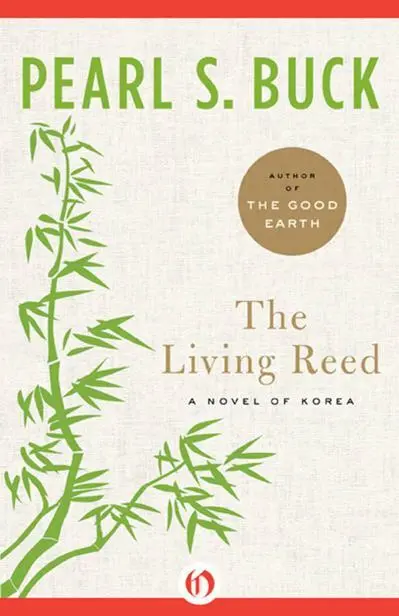
- Название:The Living Reed
- Автор:
- Издательство:Open Road Media
- Жанр:
- Год:2012
- ISBN:нет данных
- Рейтинг книги:4 / 5. Голосов: 1
-
Избранное:Добавить в избранное
- Отзывы:
-
Ваша оценка:
The Living Reed: краткое содержание, описание и аннотация
Предлагаем к чтению аннотацию, описание, краткое содержание или предисловие (зависит от того, что написал сам автор книги «The Living Reed»). Если вы не нашли необходимую информацию о книге — напишите в комментариях, мы постараемся отыскать её.
, Pearl S. Buck’s epic historical novel about four generations of one aristocratic family in Korea. Through the story of the Kims, Buck traces the country’s journey from the late nineteenth century through the end of the Second World War. The chronicle begins as the Kims live comfortably as advisors to the Korean royal family. That world is torn apart with the Japanese invasion, when the queen is killed and the Kims are thrust into hiding. Regarded by Buck as “the best among my Asian books,”
is a gripping account of a nation’s fight for survival, and a detailed portrait of one family’s entanglement in the ebb and flow of history.
The Living Reed — читать онлайн бесплатно полную книгу (весь текст) целиком
Ниже представлен текст книги, разбитый по страницам. Система сохранения места последней прочитанной страницы, позволяет с удобством читать онлайн бесплатно книгу «The Living Reed», без необходимости каждый раз заново искать на чём Вы остановились. Поставьте закладку, и сможете в любой момент перейти на страницу, на которой закончили чтение.
Интервал:
Закладка:
More talk passed between them, small talk, questions of this old friend and that, while the restaurant grew empty.
“Have you a class?” Yul-han inquired then.
Sung-man shook his head and tipped his bowl to empty the last of the soup into his wide mouth. He set the bowl down, wiped his greasy mouth on his sleeve and folded his arms and leaned forward.
“Do you know the American Woodrow Wilson?” Yul-han asked next in a low voice.
“Who does not?” Sung-man replied. “He is our one hope, a man of peace, alone in the world, who has power. He will save us all, if he can stop the war.”
“Have you a book about Wilson?” Yul-han asked next.
“Come to my room,” Sung-man replied.
Yul-han went with him then to his bedroom in the school building and Sung-man gave him a small thick book, printed on cheap paper. The title was one word, Wilson .
“Read it,” Sung-man said, “but always in secret. Then become one of us.”
One of us? Yul-han would not ask the meaning of such words. He put the book in his sleeve and went home and read the book all night. Out of dim blotted words he began to see, face to face, the figure of a man, a lonely, brave man, a man too sure of himself at times, but a man who tried always to do right. Could there be such a man anywhere in the world in these times? There was this one.
… Under his grass roof Il-han, too, was learning of Wilson. The sheets thrust under his door had continued, stopping sometimes as though the one who put them there might be in prison or killed, but before many days they were always there again. Now they told of Woodrow Wilson, Woodrow Wilson and the war, Woodrow Wilson and his own people, Woodrow Wilson and the subject peoples of the world.
Il-han read these pages again and again, pondering their meaning. His memories of America, once so clear and warm, had cooled when he conceived a deep contempt for that Roosevelt who had understood nothing of the significance of Korea in the world. Korea, this country, this gem of rock and earth, its mountains rich in mineral treasure, its rivers running gold, this flame of human fire thrusting itself even into the sea, surely it was one of the treasure countries of the globe. There were a few such places which, because of their strategic position, became the centers of human whirlpools, small in themselves but each an axis about which other nations revolved. Theodore Roosevelt could not comprehend the importance of such a country and in ignorance, admiring the courage of a small Japan over a vast Russia, he had ignored the very means by which Japan had won the victory, which was Korea. Was this Woodrow Wilson a wiser man?
Slowly, pondering every line, gazing at a dim photograph, Il-han created for himself the man Wilson. He was a scholar and this went to Il-han’s heart and to his mind. Scholars could understand one another everywhere in the world. Roosevelt had been only a rider of horses, a hunter of wild animals, a lover of violence. Even Sunia had exclaimed when, his office over, he had left his home to hunt savage beasts in Africa.
“Poor wife of his,” Sunia had said. “After seeing nothing of him during the years of his office, she must lose him altogether to the wild animals! You, at least, when the Queen was dead, retired here to our grass roof. In this way my true life began.”
He had dismissed this as woman talk when he heard it, but her words came back to him now. And Wilson was more than a scholar. He was also a man of deep feeling for his wife and children, the head of his house as well as of his nation. Did not Confucius say that a man’s responsibility was first to his own house? In many ways Woodrow Wilson was Confucian and could therefore be understood. He was a man of ideals and conviction, a man of peace. This Il-han concluded for on one sheet the writer had taken pains to put down certain sayings from Wilson. Thus when Wilson decreed a day of prayer for peace, in the midst of war, he had declared:
“I, Woodrow Wilson, President of the United States of America, do designate Sunday, the fourth day of October next, a day of prayer and supplication, and do request all God-fearing persons to repair on that day to their places of worship, there to unite their petitions to Almighty God that He vouchsafe His children healing peace and restore once more concord among men and nations.”
And again: “The example of America must be a special example. It must be the example not merely of peace because it will not fight but of peace because peace is the healing and elevating influence of the world and strife is not. There is such a thing as a nation being so right that it does not need to convince others by force that it is right. There is such a thing as a man being too proud to fight.”
Beneath these remarkable words Il-han drew a line with his inked brush. He did not understand them fully and he pondered them in the night. What man was this who could speak words so strong that they became weapons for peace? Sword-sharp, bold and clear, the words struck into his own heart, accustomed to the love of peace, and into his mind, trained by the classic discipline of Confucius that the superior man leads not by violence or by coarse physical acts but by the pure intelligence of a wise mind.
From such meditation Il-han slowly created the image of a man ruling a great western country with calm conviction and high righteousness, maintaining peace in a world of war and evil. He began at first to trust this American, and then to idolize him.
Yul-han’s second child, a daughter, was born in the early spring before the sun had warmed the earth, when the first plum blossoms appeared on the bare branches of the plum tree, a time which should have been a happy one, with ceremony to be observed. Alas, it was also the time when the great American Woodrow Wilson had after all taken his country into the war, in the fourth month of the solar year 1917. The Japanese rulers had forbidden the use of the lunar year, saying that none cared what year it was in Korean history and from thenceforth all must use the solar year, which was the modern system of counting time. The year therefore was 1917.
The newspapers during these times had printed much of what Wilson said, and as people read his words all Koreans had grown to think of him as saint and savior and a man who would never descend to making war. For months Yul-han, too, had read everything he could find that the Americans said, and he met often with his father to consult on the meaning of what was said, and whether the Americans in the end must fight. For slowly and against his first confidence and his own inclination, Il-han had come to believe that though peace was the proper way of life, it might now be necessary for the Americans to enter the war, lest far away in Europe a center of tyranny, conceived in the mind of an angry man, a man born with a withered arm and a slight body often ill, could light a fire that in some future time, joined with other minds, even such as ruled now and here in Korea, would put the whole world into darkness.
Il-han believed but Yul-han could not believe the necessity. “Father,” he exclaimed, “how can Wilson persuade his people to war when all his persuasion has been for peace?”
Il-han shook his head and stroked his graying beard. “Do you not observe that these Germans mistake his words of peace for words of fear? What is their answer? While Wilson speaks of peace they declare that they will fight an unrestricted war by sea. Is this to be endured?”
Yul-han looked at his father curiously. “Why is it that you, sitting here under this quiet grass roof, are concerned at what happens halfway around the world?”
“I have learned that no grass roof can hide me or any of us,” Il-han replied. “We are not like the crabs of the sea. We have no shell into which we can creep. Our ancestors spent themselves and grew frantic and quarrelsome seeking for such a shell. All in vain! The enemy sought us and found us, and we are without shelter or hope unless we become part of the world, as indeed we are, though unknowing, for it is only in the safety of a safe world that we can be safe. Who can rid us of these alien rulers? Not we, not our friends, not even their enemies. We have no hope from any except from all. This Woodrow Wilson is the one man who understands that this is true for his country, too, and in his shadow we must follow. When the war is won, he will prevail, and we shall be given our independence and under his leadership we shall have the freedom we long for and have never had, for all will be free.”
Читать дальшеИнтервал:
Закладка:
Похожие книги на «The Living Reed»
Представляем Вашему вниманию похожие книги на «The Living Reed» списком для выбора. Мы отобрали схожую по названию и смыслу литературу в надежде предоставить читателям больше вариантов отыскать новые, интересные, ещё непрочитанные произведения.


Обсуждение, отзывы о книге «The Living Reed» и просто собственные мнения читателей. Оставьте ваши комментарии, напишите, что Вы думаете о произведении, его смысле или главных героях. Укажите что конкретно понравилось, а что нет, и почему Вы так считаете.