Pearl Buck - The Living Reed
Здесь есть возможность читать онлайн «Pearl Buck - The Living Reed» весь текст электронной книги совершенно бесплатно (целиком полную версию без сокращений). В некоторых случаях можно слушать аудио, скачать через торрент в формате fb2 и присутствует краткое содержание. Год выпуска: 2012, Издательство: Open Road Media, Жанр: Современная проза, на английском языке. Описание произведения, (предисловие) а так же отзывы посетителей доступны на портале библиотеки ЛибКат.
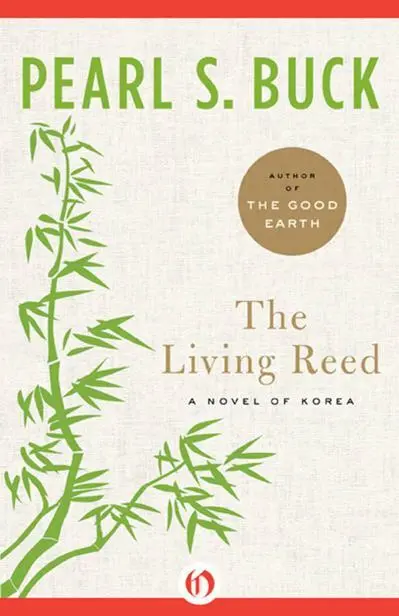
- Название:The Living Reed
- Автор:
- Издательство:Open Road Media
- Жанр:
- Год:2012
- ISBN:нет данных
- Рейтинг книги:4 / 5. Голосов: 1
-
Избранное:Добавить в избранное
- Отзывы:
-
Ваша оценка:
The Living Reed: краткое содержание, описание и аннотация
Предлагаем к чтению аннотацию, описание, краткое содержание или предисловие (зависит от того, что написал сам автор книги «The Living Reed»). Если вы не нашли необходимую информацию о книге — напишите в комментариях, мы постараемся отыскать её.
, Pearl S. Buck’s epic historical novel about four generations of one aristocratic family in Korea. Through the story of the Kims, Buck traces the country’s journey from the late nineteenth century through the end of the Second World War. The chronicle begins as the Kims live comfortably as advisors to the Korean royal family. That world is torn apart with the Japanese invasion, when the queen is killed and the Kims are thrust into hiding. Regarded by Buck as “the best among my Asian books,”
is a gripping account of a nation’s fight for survival, and a detailed portrait of one family’s entanglement in the ebb and flow of history.
The Living Reed — читать онлайн бесплатно полную книгу (весь текст) целиком
Ниже представлен текст книги, разбитый по страницам. Система сохранения места последней прочитанной страницы, позволяет с удобством читать онлайн бесплатно книгу «The Living Reed», без необходимости каждый раз заново искать на чём Вы остановились. Поставьте закладку, и сможете в любой момент перейти на страницу, на которой закончили чтение.
Интервал:
Закладка:
“I do not forget,” Yul-han said, “but I have another duty. First I must go to my father.”
Induk’s hands flew to her cheeks. “What is wrong? Has something happened?”
“Baron Yun was tried yesterday,” Yul-han said. “He is in prison and he is my father’s old friend. I must tell him — and I must tell him that I am Christian now. I trust it is not too much for one day.”
… He found his father watering a young apple tree in the east garden. His mother held a hoe with which she loosened the earth so that the roots could drink.
“You two, my parents,” Yul-han said when he had given greeting. “Do you expect to get fruit from this little tree?”
“You will get it,” Il-han said, “you and your children. And I am glad you have come. I have a matter to discuss with you.”
He put down the watering pot and led the way into the house and to his accustomed place. Then he waited, as though he did not know how to begin.
“Speak, Father,” Yul-han said, when they had sat down.
“You speak first,” Il-han directed. “What I have to say may have some connection with you.”
Yul-han took a breath. “Father,” he said. “I have become a Christian.”
Rain had begun to fall, a slow autumnal rain. It dripped from the eaves and trickled in rills over the stones of the footpath in the garden. Sunia was running toward the kitchen, her apron over her head. Meanwhile Yul-han waited for his father’s anger and with such foreboding that he was almost frightened when he heard his father’s voice come not angrily but with unusual mildness.
“Had you told me this a short time ago, I would have reproached you for bringing our family into danger. But I have seen such sights and heard such words—”
And he told of the trials of the Christians, of their wit and courage. Each one he described, young and old, until Yul-han interrupted.
“Add to the noble list one more name, Father,” he said. “Add the name of Baron Yun.”
Il-han’s jaw hung ajar. “Not my old friend!”
“Even he.”
Il-han hesitated, inquiring of himself whether he should not tell Yul-han of his older brother.
“That man they call the Living Reed,” Yul-han said, as though he read his father’s mind.”
Il-han did not move or lift his eyes. “What of him?”
“Do any guess who he is?”
“Do you?”
“I was not there. I did not see his face.”
Ah, Yul-han did not know! Let him remain unknowing and safe.
“Why should I know when you do not?” Il-han said. “And for the rest,” he added with pretended impatience, “if you wish to be Christian, then be one.”
This was all that was left of his anger against his second son.
The winter of that year passed in dire deep cold. Cold was to be expected but this cold was the chill of death. Each morning the gendarmes collected the bodies of those who had frozen during the night, men, women, and children, and threw them into trucks and carried them away. The earth was too solid to bury them and they were stored in empty barracks or piled and covered with mats until the spring came. Nor were those who lived better off, for a long drought in the autumn had dried the mountain slopes, the grass was scanty and the rulers would not allow trees to be cut. The mountains, they said, must be covered with trees again as they had been in past centuries, and if a man were caught cutting a tree in the night he was flogged and put in jail. In every house the ondul floors were cold, except for the two brief times, morning and afternoon, when food must be cooked, and since in the past the people had depended upon warm floors upon which they could spread their mattresses and therefore needed no heavy quilts, they were cold as they had never been before.
The long winter passed into a scanty spring and the time drew near for Induk to give birth to the child, and her mother begged Yul-han to allow her to come to her family home for this event. Yul-han did not know how to reply. If he refused Induk’s mother, that one would be wounded. If he agreed, then Sunia would be displeased. Indeed she was already displeased, for somehow she had wind of the request, and she laid hold of Yul-han one day when he was on his way to school.
“What!” Sunia exclaimed. “I suppose you think I cannot help my grandchild to be born? I suppose only a Christian will serve?”
“Mother, I pray you,” Yul-han exclaimed. “Is it a matter for me to decide? Let it be as Induk wishes.”
This Induk heard from an open window and she came hurrying out.
“Good Mother,” she said, coaxing Sunia. “The birth is not so important as the hundred-day feast. Will you let us celebrate the feast with you and the grandfather?”
Sunia, having made protest, was willing to be mollified, and so it was decided. On a stormy night in early spring, Induk went into labor, her mother and her sisters about her. Outside in the main room Yul-han awaited the birth with eagerness and also with mild amusement for Induk had said she wished the first child to be a girl.
“I am praying God for a daughter,” she told Yul-han one night as they lay side by side in bed in married talk.
He gave a shout of laughter.
“Now here is confusion,” he exclaimed. “I am praying for a son!”
Induk did not know what to say. At first she was inclined to be somewhat peevish. Then she thought better of it and smiled.
“Let us both stop praying and accept what God sends,” she said.
The birth was not easy for Induk. The hours were many and Yul-han was about to be fearful when, as the early sun climbed over the eastern mountain, his mother-in-law came to the door and beckoned him with her forefinger. He went to her at once and she gave him a sly look, for Induk had told her of their conflicting prayers.
“You have prevailed,” she said. “God has given you a son.”
He went to Induk then and knelt on the floor beside her bed. There, resting on her arm, he saw a sturdy child whose eyes were already open. It was his son! He felt a strange new pride in himself, a conviction of achievement, an upsurge of life and hope. Then he looked at Induk.
“Next time, since I am so strong in prayer, I shall pray for you a daughter,” he said, and weary as she was, she laughed.
… At first Yul-han thought of the child only as his son, a part of himself, a third with Induk. As time passed, however, a most strange prescience took hold of his mind and spirit. Babe though he was, he perceived that the child possessed an old soul. It was not to be put into words, this meaning of an old soul. Yul-han, observing the child, saw in his behavior a reasonableness, a patience, a comprehension, that was totally unchildlike. He did not scream when his food was delayed, as other infants do. Instead, his eyes calm and contemplative, he seemed to understand and was able to wait. These eyes, quietly alive, moved from Yul-han’s face to Induk’s when they talked, as though he knew what his parents said. He was a large child, strong and healthy, and he had presence. Yul-han, watching, felt a certain awe, a hesitancy in calling him “my son,” as though the claim were presumption.
“If I were Buddhist,” he told Induk one day, “I would say that this child is an incarnation of some former great soul.”
They were together of an evening, and Induk was preparing for the child’s hundredth day after birth, which was to be celebrated the next day. She was baking small cakes and while they were in the oven, she arranged upon a low table the objects for the child’s choosing tomorrow. According to tradition whatever the child chose was a prophecy of his future.
She paused when Yul-han spoke. “I feel it, too,” she replied quietly. “What it means I cannot say. I only know that this child will lead and we must follow. We must not try to shape him, though we are his parents. He will know what he is, and we must wait until he tells us.”
Читать дальшеИнтервал:
Закладка:
Похожие книги на «The Living Reed»
Представляем Вашему вниманию похожие книги на «The Living Reed» списком для выбора. Мы отобрали схожую по названию и смыслу литературу в надежде предоставить читателям больше вариантов отыскать новые, интересные, ещё непрочитанные произведения.


Обсуждение, отзывы о книге «The Living Reed» и просто собственные мнения читателей. Оставьте ваши комментарии, напишите, что Вы думаете о произведении, его смысле или главных героях. Укажите что конкретно понравилось, а что нет, и почему Вы так считаете.