Pearl Buck - The Living Reed
Здесь есть возможность читать онлайн «Pearl Buck - The Living Reed» весь текст электронной книги совершенно бесплатно (целиком полную версию без сокращений). В некоторых случаях можно слушать аудио, скачать через торрент в формате fb2 и присутствует краткое содержание. Год выпуска: 2012, Издательство: Open Road Media, Жанр: Современная проза, на английском языке. Описание произведения, (предисловие) а так же отзывы посетителей доступны на портале библиотеки ЛибКат.
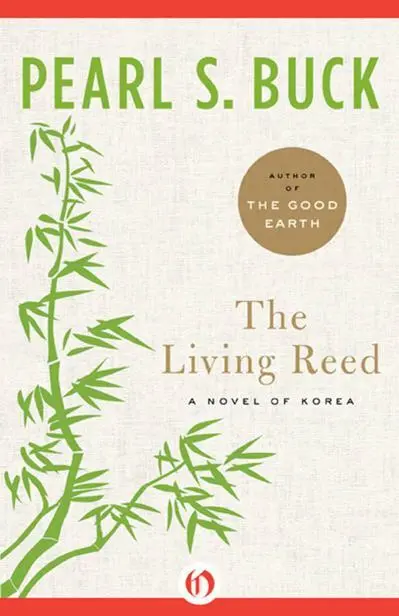
- Название:The Living Reed
- Автор:
- Издательство:Open Road Media
- Жанр:
- Год:2012
- ISBN:нет данных
- Рейтинг книги:4 / 5. Голосов: 1
-
Избранное:Добавить в избранное
- Отзывы:
-
Ваша оценка:
The Living Reed: краткое содержание, описание и аннотация
Предлагаем к чтению аннотацию, описание, краткое содержание или предисловие (зависит от того, что написал сам автор книги «The Living Reed»). Если вы не нашли необходимую информацию о книге — напишите в комментариях, мы постараемся отыскать её.
, Pearl S. Buck’s epic historical novel about four generations of one aristocratic family in Korea. Through the story of the Kims, Buck traces the country’s journey from the late nineteenth century through the end of the Second World War. The chronicle begins as the Kims live comfortably as advisors to the Korean royal family. That world is torn apart with the Japanese invasion, when the queen is killed and the Kims are thrust into hiding. Regarded by Buck as “the best among my Asian books,”
is a gripping account of a nation’s fight for survival, and a detailed portrait of one family’s entanglement in the ebb and flow of history.
The Living Reed — читать онлайн бесплатно полную книгу (весь текст) целиком
Ниже представлен текст книги, разбитый по страницам. Система сохранения места последней прочитанной страницы, позволяет с удобством читать онлайн бесплатно книгу «The Living Reed», без необходимости каждый раз заново искать на чём Вы остановились. Поставьте закладку, и сможете в любой момент перейти на страницу, на которой закончили чтение.
Интервал:
Закладка:
“You look like a mountain ghost! What is wrong?”
“Ask me nothing,” he said. “It is better for you not to know.”
And however she begged him and scolded him and argued with him, he would not tell her.
“It is better for you not to know,” he said.
The trials ended and many prisoners were kept in prisons for long years, even for the rest of their lives, but some were beheaded. Whether Yul-chun was among these Il-han did not know, nor could he find out unless he asked Yul-han’s help. This he would not do, for Yul-han was in danger, too, now that he had married a Christian. He bore the burden of his secret alone and continued so to do.
… Summer passed again, and Yul-han had nearly finished his house, the maid Ippun working like any man carrying rock and mixing cement and digging the ground under the ondul floor. Once more the time had come for school to open and Yul-han must return to his teaching. This year Induk was not to teach. She had conceived and Yul-han wished her to remain at home, and home now was this small new house. He would go alone to the city for his teaching days, and return here for holidays, and she could stay with Ippun, near his parents but independent There remained only to tell the news to his parents, the expectation of a grandson for them, the plan that Induk would remain near them with Ippun. But above all, he must tell them that he had decided to become a Christian, that he was to be baptized, and that he had accepted the headship of the Christian school in the city. This was the one demand that Induk had made of him when he told her that he wished to be Christian.
“I beg you then to leave the Japanese school and stay with the Christians. Among them you will be safe: but alone, one Christian among the Japanese, you will be searched and examined and questioned and watched, wherever you are.”
She had already inquired of the missionary, who gladly had offered Yul-han the headship of the school since the present head had a consumption in his lungs and should rest in bed for many months. Yul-han therefore sent his resignation by letter to the Japanese school and when he was called to the office of the Bureau of Education, he gave the true reason for his change of work
The chief of this bureau was a young man, once an assistant professor in the University at Tokyo, and he had come because the salary here was three times what he had received there and since he had his old parents to support he had not been able to refuse. Now he sat behind a high western desk in an office barren of decoration, but with western chairs and a desk. He wore civilian clothes, western in style, and his hair was cut short and he had gold spectacles with thick lenses. He was courteous when Yul-han came in and invited him to be seated. Then he opened a document which lay on the desk.
“I note,” he said, “that you have resigned your post at the city middle school. Have you a complaint?”
“I have no complaint,” Yul-han replied. He hesitated and then said, with a slight smile on his round good-natured face, “I have changed my work because I am about to change myself. I have decided to be a Christian.”
The young man continued to study the document. “You have been baptized?” he inquired.
“No,” Yul-han said, “but I shall be baptized on the first day of next month.”
“By immersion or sprinkling?” the young Japanese asked, still not lifting his eyes.
Yul-han was surprised. “Does it make a difference?”
“There is a difference,” the young man said.
Yul-han summoned his courage and asked a question for himself. “Can it be, sir, that you also are Christian?”
“I attended a Christian school before I went to the university,” the young man said. “You understand—” Here he pushed the documents aside and lifted his head to look at Yul-han. “You understand that we are not opposed to Christianity, in principle. It is only when rebels hide among the Christians that we must be severe.”
“I understand,” Yul-han said quietly.
“You appear to be a sensible man,” the Japanese said. “Therefore I will allow you to transfer your post.” He drew the papers toward him again and with his fountain pen wrote something quickly on the top. “Of course,” he continued as he folded the papers and fitted them into the envelope, “I shall count on you to let me know whether you discover rebels among the Christians. You may report to me in secret and safely.”
Yul-han heard this and debated with himself as to what he should answer. He decided to answer nothing, for though he had not attended the trials, he knew that Christians had suffered the heaviest judgments. He put out his hand and took the envelope and bowing, he went away.
On the next Sunday he was baptized. The day was cloudy and cold, the winds of late autumn blew leaves from the trees and wrenched persimmons from their stalks. Children in ragged garments ran to save the fruit and stood under dripping eaves sucking the sweet juice and shivering in the chilly air. The reek of fresh kimchee hung like an atmosphere over city and country.
Yul-han walked through the streets to the church, Induk following decorously behind. He saw everything with new intensity this morning, as though his entire being were alive and aware as it had never been, as though he were separating himself from all that had gone before, all that now was. The dusty street, the sad-faced people, the children merry in spite of cold and poverty and even in spite of the ubiquitous police ready to rebuke them whatever they did, and behind the crowded busy city the mountains soaring into a darker gray against the gray sky, barren and beautiful — all this pressed upon his mind and heart. As he entered the church, he knew that he would come out of that door a different man for he was taking his place today among those who were separate. No longer would he be only a Korean. He would be a Korean Christian and which would be the greater part of him, Korean or Christian, he did not know, or perhaps there would not be two parts in him, but one whole, a Korean permeated with the new religion.
He did not wish to speak and in silence he went to the men’s side and Induk went to the women’s side. Among the men he sat, a stranger to himself. He was giving himself away to a God he had not seen and yet he felt a dedication he had never known. The ceremony was beginning now and as usual with music. A man played upon a small western organ, and he played well. Yul-han loved music as all his people did, and he was easily moved by it, as they all were. Music was woven into the texture of their souls and some of the attraction for them in the new religion was the part that music had in worship, the grave organ music and the communal singing. Already Yul-han knew the hymns they sang and he recognized the one the man was playing—“Just as I am, without one plea, but that Thy blood was shed for me, Oh Lamb of God, I come to Thee—” Mystic words, symbolizing what he was about to do!
The missionary came into the church from the vestry and above his long black robes, his upstanding red hair flamed like a burning crown upon his head. He prayed silently before the gold cross under the window. Prayer — that Yul-han had not yet achieved. He had made tentative efforts when he was alone to come into this communication, but he had not found the way. No one answered.
“Do not expect to hear a voice,” the missionary had told him when he inquired as to whether he had prayed properly. “Simply cultivate the habit of prayer and after a while you will find answer in the content it brings to your heart and the direction it brings to your mind. Wait upon the Lord.”
“These are also the instructions of the Lord Buddha,” Yul-han had said, remembering what his father had told him of the monks in the monasteries of the Diamond Mountains.
Читать дальшеИнтервал:
Закладка:
Похожие книги на «The Living Reed»
Представляем Вашему вниманию похожие книги на «The Living Reed» списком для выбора. Мы отобрали схожую по названию и смыслу литературу в надежде предоставить читателям больше вариантов отыскать новые, интересные, ещё непрочитанные произведения.








Обсуждение, отзывы о книге «The Living Reed» и просто собственные мнения читателей. Оставьте ваши комментарии, напишите, что Вы думаете о произведении, его смысле или главных героях. Укажите что конкретно понравилось, а что нет, и почему Вы так считаете.