Pearl Buck - The Living Reed
Здесь есть возможность читать онлайн «Pearl Buck - The Living Reed» весь текст электронной книги совершенно бесплатно (целиком полную версию без сокращений). В некоторых случаях можно слушать аудио, скачать через торрент в формате fb2 и присутствует краткое содержание. Год выпуска: 2012, Издательство: Open Road Media, Жанр: Современная проза, на английском языке. Описание произведения, (предисловие) а так же отзывы посетителей доступны на портале библиотеки ЛибКат.
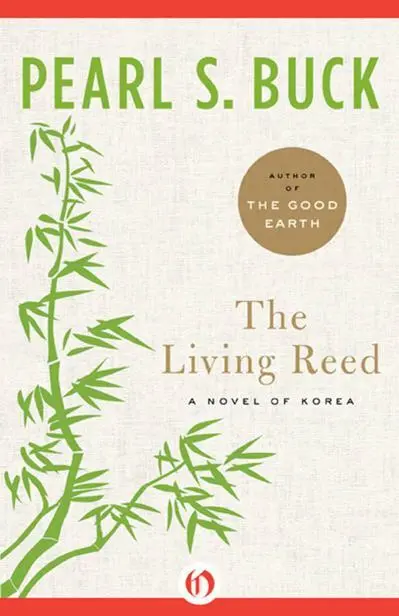
- Название:The Living Reed
- Автор:
- Издательство:Open Road Media
- Жанр:
- Год:2012
- ISBN:нет данных
- Рейтинг книги:4 / 5. Голосов: 1
-
Избранное:Добавить в избранное
- Отзывы:
-
Ваша оценка:
The Living Reed: краткое содержание, описание и аннотация
Предлагаем к чтению аннотацию, описание, краткое содержание или предисловие (зависит от того, что написал сам автор книги «The Living Reed»). Если вы не нашли необходимую информацию о книге — напишите в комментариях, мы постараемся отыскать её.
, Pearl S. Buck’s epic historical novel about four generations of one aristocratic family in Korea. Through the story of the Kims, Buck traces the country’s journey from the late nineteenth century through the end of the Second World War. The chronicle begins as the Kims live comfortably as advisors to the Korean royal family. That world is torn apart with the Japanese invasion, when the queen is killed and the Kims are thrust into hiding. Regarded by Buck as “the best among my Asian books,”
is a gripping account of a nation’s fight for survival, and a detailed portrait of one family’s entanglement in the ebb and flow of history.
The Living Reed — читать онлайн бесплатно полную книгу (весь текст) целиком
Ниже представлен текст книги, разбитый по страницам. Система сохранения места последней прочитанной страницы, позволяет с удобством читать онлайн бесплатно книгу «The Living Reed», без необходимости каждый раз заново искать на чём Вы остановились. Поставьте закладку, и сможете в любой момент перейти на страницу, на которой закончили чтение.
Интервал:
Закладка:
So went the questions and answers, the prisoner standing in dogged patience until the questioner for the Court grew more and more loud in his demands. He pointed to a large box on the platform.
“Do you not know that this box was kept in the Christian school and in it were hidden revolvers?”
“I only went to the school to teach gymnastics. I know nothing else,” the prisoner replied.
The judge now lost patience and shouted.
“Next prisoner!”
The next prisoner, a squat, sturdy fellow who said he was thirty-eight years old and a farmer, answered all questions in the same fashion as had the first prisoner. He knew nothing of the New Peoples Society, nothing of the alleged meetings in the Christian schools; nothing of the purchase of revolvers or of assassination. He had never given money to buy revolvers, nor had he heard speeches against the Governor-General. Neither did he know whether the missionary headmaster had told the story of David and Goliath, and he knew nothing about the story, or about David or Goliath; no, he did not know which was the brave man, David or Goliath, yes, he had before confessed that he knew all these matters, but his confession was false and made under extreme torture.
The judge now became grim. He ordered the prisoner dismissed and the next man brought forward. Il-han had fully recovered his wits and he listened with both ears and his entire attention. The pattern of the trials was becoming clear. Under his son’s instruction, for who but Yul-chun could conceive so clever a plan, each prisoner denied every charge to which he had before confessed, saying that he had confessed only under extreme torture. The judges, the entire Court, also perceived the pattern, and the trials went on in ominous calm until evening. Then the Court adjourned until the next morning.
“I will not go home,” Il-han said to his servant. “Find me a bed in an inn and tell the mother of my sons that here I stay until the trials are concluded.”
The man obeyed, and Il-han ate a hearty meal at the inn and laid himself down on a mattress in a room with three traveling merchants. Pulling his quilt to his neck, he reviewed the day and marveled again at his son’s cleverness, and laughed under his beard, and then slept as he had not slept for many a night.
The second day of the trials proceeded exactly as the first, except that Il-han overslept and arrived too late to seat himself close to the barrier. He could not tell, therefore, where Yul-chun sat, and he could only stretch his head high to watch for his son’s appearance in the prisoners’ dock. All day he waited, listening to each prisoner deny the confession made before under torture. Most of these prisoners were young men, teachers or pupils from Christian schools, and the more he heard the more alarmed Il-han became for his second son lest he, too, become Christian. Fourteen men were examined on this second day. David and Goliath were also discussed, but all fourteen prisoners denied knowing these characters, although one young man of weak intellect said that he believed David was considered the braver of the two. Nothing else did the fourteen know. So ended the second day of the trial, and Il-han returned in high spirit to the inn, where his servant waited with a dish of kimchee from Sunia, who said the kimchee at the inn doubtless was not fit to eat.
The third day was not different from the first and the second. To the questions asked before, only a few new questions were added.
“Did the American Christian headmaster address the students, urging them to be bold and undertake a great effort?”
“Did you go to the railway station disguised as a Christian student?”
“Did you not see American Christian missionaries signal their pupils as the Governor-General walked along the platform?”
“Did you tell the students at the Taiyong Christian School to inspire one another with the same ideas that were declared by the assassin of Prince Ito in Harbin?”
“Do you not remember the names of the men to whom revolvers were given?”
“Do you not know that a man came from Pyongyang to Syun-chun to warn the members of the New Peoples Society that the Governor-General was coming?”
To all these questions the answer was no, and to the charge of previous confessions, the plea was duress under torture.
So it went until the eighth day. Nor were the prisoners only students. Some were Christian pastors, some were merchants, but all denied any part in the conspiracy. At last on the evening of the eighth day Il-han saw Yul-chun on the stand. He wore the same rags, but around his head he had wound a towel to hide his cropped hair. Now Il-han strained his attention to hear every word. He had come this eighth day at dawn, so that he might be as close as possible to the stand, knowing that this must be the day for which he had waited so long. His heart beat heavily in his bosom and he felt half choked as he heard the first question.
“What is your name?”
“I am called The Living Reed.”
“In the eighth month two years ago you went to Kwaksan to tell the local members of the New Peoples Society of the arrival of the Governor-General whom it had first been decided to assassinate at Chanyon-kwan. Is this true?”
“I admitted it under torture but it is not true.”
“You bought revolvers in Manchuria with money given you by the merchant Oh Hwei-wen. Is this true?”
“I admitted it under torture but it is not true.”
“You went with others also to Wiju to assassinate the Governor-General there.”
“I admitted it under torture, but it cannot be true. The platform at Wiju is too small — we would have been noticed.”
“In the spring of 1909, when Prince Ito accompanied the King of Korea on a tour of inspection, did you not determine to attack the Prince at Chanyon-kwan? Then as the imperial train did not stop there, you took the next train and followed Prince Ito to another station. Is this true?”
“I admitted it under torture but it is not true.”
“Do you know that the object of the New Peoples Society is to build a military school, to assassinate high officials, and to wage a war to establish the independence of Korea if war breaks out with China or America?”
“I do not know such a thing. If I admitted it under torture when I was half conscious it is not true.”
At this moment the judge, a Japanese general of high rank, lost his temper. He pounded the table before him with his clenched fists.
“Torture — torture! What is this torture?”
In the same steady voice with which he answered all questions, Yul-chun replied.
“My arms were bound behind my back with ropes of silk. They cut into my flesh. Two sticks were put between my legs, which were then bound tightly together at my knees and ankles. Two policemen twisted these sticks. Pieces of bamboo, three-cornered, were tied between my fingers and tied so tightly that my flesh was torn from my bones. Day after day I was pulled out flat on the floor and beaten with split bamboo until my back was raw. Each night I was thrown into an underground dungeon where I lay in wet and slime. Each day I was taken out for torture again. I do not know how many days. I was not always conscious.”
The spell of the clear steady voice, the strong simple words telling of terrors worse than death, fell upon all alike. When Yul-chun finished speaking, he turned his head and looked at his father. His face did not change, he made no sign of recognition, but, father and son, the two men met.
“Next prisoner!” the judge shouted.
When Yul-chun came down from the stand Il-han rose from his place and left the hall. He had seen what he came to see, he had heard what he must know, and he walked the long road home to his grass roof. Behind him his servant followed, and in silence. Slowly and steadily the two men plodded their way home in the twilight. The evening air was still and hot, and the miles were many and seemed longer than they were. Il-han reached home at last and Sunia met him at the door and cried out in fright
Читать дальшеИнтервал:
Закладка:
Похожие книги на «The Living Reed»
Представляем Вашему вниманию похожие книги на «The Living Reed» списком для выбора. Мы отобрали схожую по названию и смыслу литературу в надежде предоставить читателям больше вариантов отыскать новые, интересные, ещё непрочитанные произведения.








Обсуждение, отзывы о книге «The Living Reed» и просто собственные мнения читателей. Оставьте ваши комментарии, напишите, что Вы думаете о произведении, его смысле или главных героях. Укажите что конкретно понравилось, а что нет, и почему Вы так считаете.