Pearl Buck - The Living Reed
Здесь есть возможность читать онлайн «Pearl Buck - The Living Reed» весь текст электронной книги совершенно бесплатно (целиком полную версию без сокращений). В некоторых случаях можно слушать аудио, скачать через торрент в формате fb2 и присутствует краткое содержание. Год выпуска: 2012, Издательство: Open Road Media, Жанр: Современная проза, на английском языке. Описание произведения, (предисловие) а так же отзывы посетителей доступны на портале библиотеки ЛибКат.
- Название:The Living Reed
- Автор:
- Издательство:Open Road Media
- Жанр:
- Год:2012
- ISBN:нет данных
- Рейтинг книги:4 / 5. Голосов: 1
-
Избранное:Добавить в избранное
- Отзывы:
-
Ваша оценка:
The Living Reed: краткое содержание, описание и аннотация
Предлагаем к чтению аннотацию, описание, краткое содержание или предисловие (зависит от того, что написал сам автор книги «The Living Reed»). Если вы не нашли необходимую информацию о книге — напишите в комментариях, мы постараемся отыскать её.
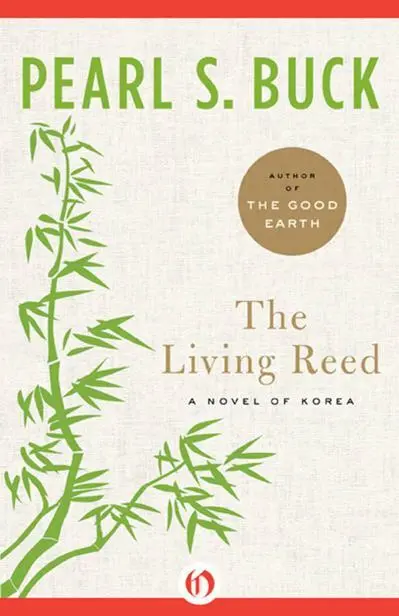
, Pearl S. Buck’s epic historical novel about four generations of one aristocratic family in Korea. Through the story of the Kims, Buck traces the country’s journey from the late nineteenth century through the end of the Second World War. The chronicle begins as the Kims live comfortably as advisors to the Korean royal family. That world is torn apart with the Japanese invasion, when the queen is killed and the Kims are thrust into hiding. Regarded by Buck as “the best among my Asian books,”
is a gripping account of a nation’s fight for survival, and a detailed portrait of one family’s entanglement in the ebb and flow of history.
The Living Reed — читать онлайн бесплатно полную книгу (весь текст) целиком
Ниже представлен текст книги, разбитый по страницам. Система сохранения места последней прочитанной страницы, позволяет с удобством читать онлайн бесплатно книгу «The Living Reed», без необходимости каждый раз заново искать на чём Вы остановились. Поставьте закладку, и сможете в любой момент перейти на страницу, на которой закончили чтение.
Интервал:
Закладка:
The man turned to her and she heard his voice subdued and deep.
“O-man-ee!”
Not since her sons were children had she heard herself thus called “Mother.”
“You — you—” She pushed the screen open wildly, it caught and she could not get through the narrow space and she began to sob. “Son — my son — Yul-chun—”
“Hush,” he whispered.
He lifted the screen from its runway and set it to one side, and took her in his arms. She clung to him.
“So tall,” she murmured, distracted, “so much taller — your bones sticking out — and you are in rags—”
She drew him into the house, crying and talking under her breath.
“Where have you been? No, wait, say nothing — I must call your father — here, drink some tea — still hot — no, it is cold — I will heat some food—”
He took her by the shoulders and shook her. “Mother, listen to me! I have no time. I must leave before sunrise. I took a risk — dangerous for me and for you both, you and my father. I have been sent here to our country — I cannot tell you why — or where I shall be — I must not come home — perhaps never again — Nobody knows what will happen.”
She was immediately calm. “Why have you not written to us?”
“I dared not write.”
“Where have you been these many years?”
“In China.”
China! She breathed the name of that unhappy country. She had seldom heard it spoken after the murder of the Queen.
“You must tell your father,” she said resolutely and drawing him by the hand she led him into the room where Il-han still slept.
She hated to wake him, yet she must for he would not forgive her if he were not waked. She began with slow soothing touches on his forehead, his cheeks, his hands. He stirred, he opened his eyes. She leaned close to his ear.
“Our son is here — our elder son!”
His face, bewildered, changed to consciousness. He sat upright in his bed. “What — where—”
“I am here, my father,” Yul-chun said. He knelt beside his father and Il-han looked into his face.
“Where have you been?” he asked as Sunia had.
“In China, Father — with the revolutionists.”
Il-han rubbed his face with his hands and stared afresh at his son. “You,” he said at last—“had you anything to do with the death of the old Empress? Was she murdered there as the Queen was murdered here?”
“No, Father. She died of old age.”
“They overthrew the Dragon Throne, those revolutionists!”
“Father, it had to be overthrown. The dynasty was dead. The rulers were corrupt. The old Empress held the empire together by her two hands.”
“Who are the rulers now?”
“The revolutionists will set up a republic like the American republic. The people will choose their rulers.”
Il-han was suddenly sharply awake and angry. “Folly! How can people choose a ruler when they are ignorant of such matters? I have been in America and you have not. Their people know how to choose — they vote — they — they—”
Sunia interrupted. “You two men, you have not seen each other, father and son, for how many years? Yet you quarrel over governments! Il-han, this son of ours has only a little while to stay with us. He must be on his way—”
“Where?” Il-han demanded.
“I cannot tell you, Father.”
“You are a spy?”
“I have a mission.”
“Then you are a spy!”
“Call me what you wish,” Yul-chun said. “I work for Korea.”
Il-han got out of bed and tied his robe about him and coiled his hair as he went on talking. “You will be caught and killed. Do you think you are more clever than these rogues who have spies in every winehouse? Count yourself dead.”
“I have stayed alive all these years, Father.”
“I do not know how,” Sunia put in. “You look starved.”
With this she hurried out of the room and to the kitchen to heat food.
“Come into the other room,” Il-han said. He led the way to his library and took his usual place on the floor cushion behind the low desk table.
“Now,” he said. “Tell me all that you will.”
Yul-chun knelt on the opposite floor cushion, his knees bare through his rags.
“Father,” he said in the low hurried half-whisper which seemed now his habit, “I cannot tell you anything. It is better for you to know nothing. If one day you are asked if I am your son, say that you have never seen me.”
Il-han’s eyes opened wide. “That I will never do!”
The haggard, troubled face, the face of his son, softened. For a moment Yul-chun looked as young as he was. He forgot to whisper.
“Do you remember how we used to walk in the bamboo grove, you and I, Father, when I was so small that you held my hand?”
“I remember,” Il-han said, and his throat tightened with pain. How had that soft childish face changed to this man’s face? He tried to clear his throat. “That was long ago — you can scarcely remember.”
“I do remember,” Yul-chun said. “I remember the day my brother was born, and I broke the bamboo shoots, and you told me they would never come up again. You were right, of course, those broken shoots did not grow again. Hollow reeds, you called them. I felt my heart ready to break at what I had done. But then you told me that other reeds would come up to take their place. And every spring I went to the bamboo grove to see if what you said was true. It was always true.”
Yul-chun rose to his feet and Il-han rose, too. Face to face, at the same height, they gazed into each other’s eyes.
“What do you tell me?” Il-han demanded.
“This,” Yul-chun said, “that if you never see me again, or never hear my name again, remember — I am only a hollow reed. Yet if I am broken, hundreds take my place — living reeds!”
He hesitated, looking at his father as if he had something to say and would not say it. Then suddenly he did speak, but leaning forward close to his father and in the half-whisper.
“I cannot come again — not soon, perhaps never. But sometimes you will find under the door in the morning a printed sheet — read it and burn it.”
He looked about him uncertainly then and muttered to himself. “The sun is rising. I must be gone.”
The sun was indeed creeping over the earthen wall, and with these few words Yul-chun was gone.
A moment later Sunia came in weeping. “I had his food hot and ready for him, but he went away hungry. Oh Buddha, why was I born in these times?”
Who could answer the question? Il-han could only summon her to his side, and there they sat, hand in hand, an aging man and woman whose children had been swept away from them. They were alone in a world they did not know.
A dry hot summer after the rainy season led into autumn. The grass on the mountains ripened and the land people cut it with short-handled sickles and bound it into sheaves for winter fuel. Against the shorn flanks of the mountains again the tall narrow poplar trees burned like golden candles. Under their grass roof Il-han and Sunia lived each day like the one before, and each night Il-han taught his pupils. He seldom saw his second son, for Yul-han and Induk returned to the city during their days of teaching.
“Shall we not tell our second son that his elder brother returned to us?” Sunia asked.
Il-han had already asked himself the question and his answer was ready. “We do not know this woman he has married. A Christian? She is like a foreigner. No. It is better if no one knows that our elder son is alive. Let him be forgotten by all except his parents. He is safe with us.”
In silence then Il-han and Sunia lived their lives, and when Yul-han came to visit them in duty they were courteous and made inquiry of how he felt and how he liked his work in his new school, and when he inquired of their health they said they were well and as for happiness, who could have happiness now?
Читать дальшеИнтервал:
Закладка:
Похожие книги на «The Living Reed»
Представляем Вашему вниманию похожие книги на «The Living Reed» списком для выбора. Мы отобрали схожую по названию и смыслу литературу в надежде предоставить читателям больше вариантов отыскать новые, интересные, ещё непрочитанные произведения.

Обсуждение, отзывы о книге «The Living Reed» и просто собственные мнения читателей. Оставьте ваши комментарии, напишите, что Вы думаете о произведении, его смысле или главных героях. Укажите что конкретно понравилось, а что нет, и почему Вы так считаете.