Pearl Buck - The Living Reed
Здесь есть возможность читать онлайн «Pearl Buck - The Living Reed» весь текст электронной книги совершенно бесплатно (целиком полную версию без сокращений). В некоторых случаях можно слушать аудио, скачать через торрент в формате fb2 и присутствует краткое содержание. Год выпуска: 2012, Издательство: Open Road Media, Жанр: Современная проза, на английском языке. Описание произведения, (предисловие) а так же отзывы посетителей доступны на портале библиотеки ЛибКат.
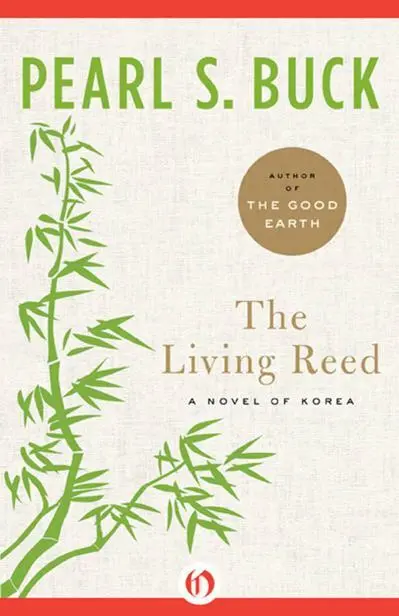
- Название:The Living Reed
- Автор:
- Издательство:Open Road Media
- Жанр:
- Год:2012
- ISBN:нет данных
- Рейтинг книги:4 / 5. Голосов: 1
-
Избранное:Добавить в избранное
- Отзывы:
-
Ваша оценка:
The Living Reed: краткое содержание, описание и аннотация
Предлагаем к чтению аннотацию, описание, краткое содержание или предисловие (зависит от того, что написал сам автор книги «The Living Reed»). Если вы не нашли необходимую информацию о книге — напишите в комментариях, мы постараемся отыскать её.
, Pearl S. Buck’s epic historical novel about four generations of one aristocratic family in Korea. Through the story of the Kims, Buck traces the country’s journey from the late nineteenth century through the end of the Second World War. The chronicle begins as the Kims live comfortably as advisors to the Korean royal family. That world is torn apart with the Japanese invasion, when the queen is killed and the Kims are thrust into hiding. Regarded by Buck as “the best among my Asian books,”
is a gripping account of a nation’s fight for survival, and a detailed portrait of one family’s entanglement in the ebb and flow of history.
The Living Reed — читать онлайн бесплатно полную книгу (весь текст) целиком
Ниже представлен текст книги, разбитый по страницам. Система сохранения места последней прочитанной страницы, позволяет с удобством читать онлайн бесплатно книгу «The Living Reed», без необходимости каждый раз заново искать на чём Вы остановились. Поставьте закладку, и сможете в любой момент перейти на страницу, на которой закончили чтение.
Интервал:
Закладка:
What he heard were the sobbing words repeated again and again, “O-man-ee, O-man-ee, save me!”
Someone, a girl, was calling on her mother. He listened and then he went to find Induk. She was in the small porch outside the kitchen, pounding his clean clothes smooth on the polished ironing stone. Beside her was a jar of heated charcoal, upon which rested her small, long-handled, pointed iron. He paused to enjoy the picture she made, kneeling on the wooden floor in the light of a paper lantern, the wind blowing her hair as she pounded with two wooden clubs, one in each hand, the folded garment, his shirt as he could see. This wife of his, when she was about her housewifery, could seem the simplest of women. The sound of women pounding the garments smooth was the rhythm and the beat of the Korean countryside.
Without seeing him, Induk lifted the iron from its bed of hot ashes and he spoke.
“A woman is wailing in the village. Something is wrong.”
She put aside the hardwood ironing clubs and the iron. “Let us go,” she exclaimed.
Here was her difference. Where a usual woman would have said it might be dangerous to interfere in another’s troubles and thereby bring down trouble on one’s own house, her thought was only to go and help.
They walked down the road quietly but quickly. The screams had subsided to low moans and these came from one of the village winehouses. Small as the village was, there were three winehouses in it where, before the invaders came, there had been none. These winehouses were places where men came to drink and to seek women. In the deep poverty of the landfolk it was easy to buy girls for such places and few indeed were the girls who dared to rebel when such employment was all that kept their families from starving.
“Let me go in alone,” Induk said when they reached the door of this lowly house of pleasure.
“I will not let you enter such a place alone,” Yul-han declared.
Together then they went in. A slatternly old woman came toward them from behind the gate.
“We are neighbors,” Induk explained, “and we heard someone wailing and we thought you might need help.”
The old woman peered at them from smoke-blinded eyes and replied not a word. Before Induk could go further a young girl ran out of the house, her garments half torn from her body, her hair in disarray and her face scratched and bleeding. A man ran after her. Induk put out her arms and caught the girl, and Yul-han stood between her and the man.
This man did not at first recognize Yul-han since he had lived in the city for the later years of his life and the man pushed up his sleeves and made as if to attack Yul-han.
“Take care of yourself,” Yul-han said to him with calm. “I am her husband.”
The man was taken aback by this and he stared at the two of them.
“Then why are you here?” he demanded.
Induk stepped in front of the girl and it was she who answered. “We heard a cry for help.”
The man looked at her insolently. “You must be Christians!”
“I am a Christian,” Induk said quietly.
The man sneered at her, showing his teeth like a dog. “You Christians! You are everywhere that you should not be. One of these days something will happen to all of you.”
“Are you Korean?” Yul-han demanded. “How is it that you speak like a Japanese?”
The man looked at him sullenly. “I paid money for this girl. She belongs to me.”
The girl now spoke for herself. “I belong to no one. I was cheated! You told me I had only kitchen work to do — not that — ha, I spit on you!”
With this she spat on the man full face, and he bellowed at her and lunged for her but Yul-han pushed him aside and he fell to the ground.
“Do not forget that I am the son of my father,” he said sternly.
The man clambered out of the dust and stepped back. “One of these days,” he muttered. “One of these days …”
He brushed his clothes and turned his back on them and Yul-han led the way out of the gate and to his own house, in silence. He was too prudent not to inquire of himself what they should do with this girl. She was the daughter of a farmer, he supposed, perhaps even of a man on their own land, and he knew that this incident might bring trouble down on him from the capital. The Kim family was too famous to escape notice, whatever they did. Only his father’s continued absence from the city and from the King had made them safe. Now he, Yul-han, had married a Christian, and it could not be imagined that this was not known to the authorities, for they knew everything and penetrated to the smallest village and to the last corner of every house. Even the man at the winehouse might be in the pay of the authorities, for there were many spies among the Koreans, low fellows who would do anything for money.
When they reached the house, Induk bade the girl wash herself and smooth her hair.
“What shall I do now?” the girl asked.
“Wait for me in the kitchen,” Induk told her.
With this Yul-han and Induk went aside into the bedroom to consider what they had done. Neither knew how to begin. It was Yul-han who spoke first.
“The time has come,” he said thoughtfully. “I must declare myself on one side or the other. Either I am a Christian or I am not a Christian. If I am to follow you into every trouble where your religion guides you, then I must share your religion. When we are summoned, as sometime we shall be, I cannot say that you are Christian and I am not. They will ask me why I allow you to interfere in the lives of others, for you will continue to interfere, I can see that.”
Tears came into Induk’s eyes. “But we are told — it is the command of Christ that we must bear the burdens of the weak!”
“So we will bear them,” Yul-han said resolutely. “Otherwise we shall be parted, you and I — you driven by your conscience in one direction and I — what? Prudently staying at home, I suppose! Then sooner or later you will hate me — or I may hate you. This is a Christian marriage. You make it so by being what you are.
“You are not to be Christian because I am,” she insisted.
“I am Christian because I must be, if I am your husband,” he retorted. “Otherwise our paths diverge, and that I cannot accept.”
She let tears fall now. “You make a monster of me,” she sobbed.
He took her hand and put the palm to his lips. “Not a monster,” he said, “only a Christian.”
He drew her to him by this hand. “I shall not enter blindly into your religion, I will study and understand. I must be convinced as well as converted. Now cease these tears. You should be happy.”
“I want to be a good wife,” she whispered against his breast. “I would die before I bring you into danger.”
He did not reply for awhile as he smoothed her dark hair. Both knew what she meant. In the last few days they had heard fresh news of the increasing harshness of the ruling government toward the Christians. Whenever Christians sought to work against some evil circumstance, the rulers declared that by so doing they rebelled against the authorities, until all over the country helpless simple Christians were seized and accused of rebellion when what they did was only against an evil which, according to their doctrines, they must oppose, whatever the government.
“It is better if we face danger together,” Yul-han said.
At this moment a voice spoke from the door. It was the girl, who had grown weary of waiting. She stood there, her two feet planted widely apart, her bare arms hanging at her sides, her hair neat and her sun-browned face red with scrubbing.
“What do you want me to do next, mistress?” she demanded.
Yul-han and Induk parted and Yul-han turned his back properly on the girl.
Читать дальшеИнтервал:
Закладка:
Похожие книги на «The Living Reed»
Представляем Вашему вниманию похожие книги на «The Living Reed» списком для выбора. Мы отобрали схожую по названию и смыслу литературу в надежде предоставить читателям больше вариантов отыскать новые, интересные, ещё непрочитанные произведения.




Обсуждение, отзывы о книге «The Living Reed» и просто собственные мнения читателей. Оставьте ваши комментарии, напишите, что Вы думаете о произведении, его смысле или главных героях. Укажите что конкретно понравилось, а что нет, и почему Вы так считаете.