Pearl Buck - The Living Reed
Здесь есть возможность читать онлайн «Pearl Buck - The Living Reed» весь текст электронной книги совершенно бесплатно (целиком полную версию без сокращений). В некоторых случаях можно слушать аудио, скачать через торрент в формате fb2 и присутствует краткое содержание. Год выпуска: 2012, Издательство: Open Road Media, Жанр: Современная проза, на английском языке. Описание произведения, (предисловие) а так же отзывы посетителей доступны на портале библиотеки ЛибКат.
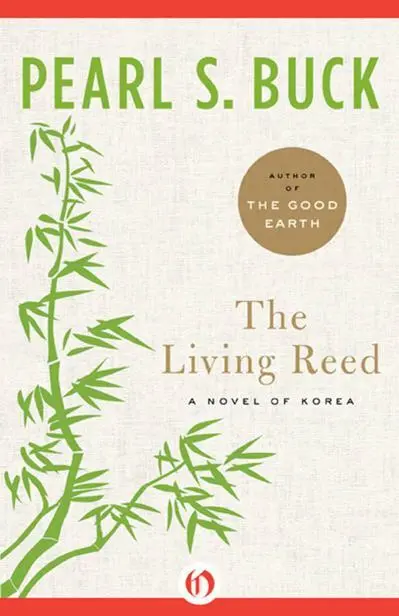
- Название:The Living Reed
- Автор:
- Издательство:Open Road Media
- Жанр:
- Год:2012
- ISBN:нет данных
- Рейтинг книги:4 / 5. Голосов: 1
-
Избранное:Добавить в избранное
- Отзывы:
-
Ваша оценка:
The Living Reed: краткое содержание, описание и аннотация
Предлагаем к чтению аннотацию, описание, краткое содержание или предисловие (зависит от того, что написал сам автор книги «The Living Reed»). Если вы не нашли необходимую информацию о книге — напишите в комментариях, мы постараемся отыскать её.
, Pearl S. Buck’s epic historical novel about four generations of one aristocratic family in Korea. Through the story of the Kims, Buck traces the country’s journey from the late nineteenth century through the end of the Second World War. The chronicle begins as the Kims live comfortably as advisors to the Korean royal family. That world is torn apart with the Japanese invasion, when the queen is killed and the Kims are thrust into hiding. Regarded by Buck as “the best among my Asian books,”
is a gripping account of a nation’s fight for survival, and a detailed portrait of one family’s entanglement in the ebb and flow of history.
The Living Reed — читать онлайн бесплатно полную книгу (весь текст) целиком
Ниже представлен текст книги, разбитый по страницам. Система сохранения места последней прочитанной страницы, позволяет с удобством читать онлайн бесплатно книгу «The Living Reed», без необходимости каждый раз заново искать на чём Вы остановились. Поставьте закладку, и сможете в любой момент перейти на страницу, на которой закончили чтение.
Интервал:
Закладка:
“Do you like teaching girls?” A stupid question he knew as soon as he had asked it, for whom would she teach if not girls?
“I like teaching,” she said.
“So do I.”
They had paused. Then it was she who began.
“Do not be a Christian unless you wish. One should follow his own heart.”
“What is the advantage of being Christian?” he asked.
She hesitated. “It is hard to say. My family is Christian, and I have grown up Christian. We believe in God, and we are comforted. In the church we meet with others who believe.”
“What are the doctrines?”
“I cannot explain to you in a few minutes. Have you read the New Testament?”
“I have read nothing Christian. To me Christianity is a foreign religion.”
“Nothing that teaches us about God can be foreign. I will bring my New Testament to school tomorrow and you can read it. Then we will talk. Now we must go.”
She rose and he could only follow. When they parted at the door, he walked away in a daze, and was already dreaming of tomorrow. Yet the next day he did not see her. On his desk was a small parcel addressed to him. He opened it and found the book. There was no letter with it.
He began to read it that same evening and now was nearly at its end. One more evening, he told himself as he came to the city gate, and tomorrow he would find her and tell her.
“I have read the book,” he would tell her. “Now we must talk.”
When their son was gone, Sunia turned to Il-han. “You must go privately into the city and see for yourself this family of Choi. See where they live, what sort of house it is, what the neighbors say — and which Choi it is. Choi is a name of the North. Shall we of the South accept a daughter-in-law of the North?”
Il-han had been deeply disturbed by all that Yul-han had said before she came in. He could not forget the accusations that his mild son had made against his father’s generation, and he longed to make even small amends.
“Sunia,” he said, “I will go. I will look at the house. I will consult the neighbors. But it is time to forget who is from the North and who is from the South. Let us only remember, North or South, that we are Koreans.”
Since Sunia gave him no peace once her mind was set on some goal, he went three days later to the city where for so long he had not been. It was as Yul-han had said. The streets were new and clean, and there were many changes. Everywhere he saw new shops where Japanese merchants sold their goods, and this he had heard was true throughout the country in town and village. But what he saw first was that of all parts of the city the quarter where the Japanese lived was the most prosperous and that it had grown from a cluster of houses to a city within a city. And when he asked of passersby, he was told that the Japanese Legation was now the house where the Governor-General lived, the gardens enlarged and made beautiful, as he could see when he looked into the open gates, but guarded by Japanese soldiers.
“Pass on, old man,” the soldiers cried when he lingered. “No one is allowed to stop at these gates.”
He went on. Opposite to this new-made palace other new buildings were built on a low hill and here he lingered again.
“What are these new buildings?” he inquired of the guard.
“These are the offices and headquarters of the Governor-General, the noble Count Terauchi,” the guard replied. “Do you not know the Tokanfu when you see it? You must be a countryman.”
Il-han did not reply. What the ignorant guardsman himself did not know was that this place where the center of government now was, a foreign government established by invaders, had once before been the site of a castle belonging to these same invaders.
In the time of Hideyoshi during the invasion of Taiko Sama, one Kato Kyomasu, his most able lieutenant, had built a castle here. The castle had been destroyed when the invaders were repulsed, but they had returned and now here again was the seat of that same government over a proud people but subject, his own people.
Could this be accident or was it fate?
… “How could you see so little?” Sunia inquired when he returned.
Her eyes sparkled with indignation. “You go to the city and stay away for hours and then come back only to say that the house looks like every other house, and though the neighbors speak well of this Choi family, you forget to ask where they came from—”
“I told you, they said the family has lived in the same house for six generations,” Il-han replied.
He was very weary but he knew he could have no rest until he satisfied Sunia’s questions.
“Did you see no one of them?” she asked next.
“You said I was not to ask to enter.”
“You could have looked in the gate.”
“I did look in the gate. I saw two servants and a young woman cutting some flowers.”
“It might have been she,” Sunia exclaimed.
“It might have been,” he agreed.
“Was she pretty?”
“Now, Sunia,” he remonstrated. “What can I say to that? If I say yes you will not be pleased with my sharp eyesight. If I say no you will blame me for seeing nothing. I can only say that she looked cheerful and healthy.”
“Round face or long face?”
“I cannot tell you. It was a face with the necessary features.”
“Oh me,” Sunia sighed, “am I to have a daughter-in-law who has only a face with necessary features?”
He laughed and then, because he was so weary and worried with matters which he could not explain to her, he kept on laughing until she was alarmed.
“Did you drink while you were in the city?” she demanded.
“No, no,” he said, wiping away tears. “I am only laughing.”
“At me, I’ll swear!”
“At women,” he said. “Man’s eternal laughter at woman! That is all — that is all.”
Sunia sighed. “However long I live with you, I do not understand you!”
She looked at him earnestly for a moment, and quizzically as if to appraise him. Then she too began to laugh.
“And what are you laughing at?” he inquired, surprised.
“At you,” she said. “Am I not allowed to laugh?”
“Certainly,” he said. “Laugh your woman’s laughter. Why not?”
He was not pleased, nevertheless, although he did not know why, and he took up his book as a sign that she was dismissed, which sign she obeyed still smiling, and her lively eyes were mischievous.
Early spring gave way to full spring. Plum trees bloomed and their petals fell and cherry and peach, apple and pomegranate followed, blossom producing fruit, and Yul-han walked in dreams. No longer did he make pretense of accident when he met Induk, and she did not pretend. They met with their eyes when they were in the company of others, but when they met alone they spoke from their hearts. Neither used words of love for none were necessary. Each knew that they had but one thought and it was marriage. He knew that in the West it was the custom for a man to offer himself to the woman, but this was a way too foreign for him and, he was sure, for her. Were the approach so naked, would she not, in modesty, be repelled by him? He thought day and night of what he could say or do to express his love and desire. The new way was too foreign but the old way was too public. A professional matchmaker was only a coarse old woman. Nor did he want his parents to approach her family. The bustle of mothers, the formality of fathers, belonged to a past age. And Induk was Christian and would want a Christian ceremony. It was a grave danger, this marrying a Christian. The Japanese rulers did not like the missionaries or their religion; missionaries were sympathetic with the Koreans, they said, and the religion in itself was revolutionary in content.
Читать дальшеИнтервал:
Закладка:
Похожие книги на «The Living Reed»
Представляем Вашему вниманию похожие книги на «The Living Reed» списком для выбора. Мы отобрали схожую по названию и смыслу литературу в надежде предоставить читателям больше вариантов отыскать новые, интересные, ещё непрочитанные произведения.






Обсуждение, отзывы о книге «The Living Reed» и просто собственные мнения читателей. Оставьте ваши комментарии, напишите, что Вы думаете о произведении, его смысле или главных героях. Укажите что конкретно понравилось, а что нет, и почему Вы так считаете.