Pearl Buck - The Living Reed
Здесь есть возможность читать онлайн «Pearl Buck - The Living Reed» весь текст электронной книги совершенно бесплатно (целиком полную версию без сокращений). В некоторых случаях можно слушать аудио, скачать через торрент в формате fb2 и присутствует краткое содержание. Год выпуска: 2012, Издательство: Open Road Media, Жанр: Современная проза, на английском языке. Описание произведения, (предисловие) а так же отзывы посетителей доступны на портале библиотеки ЛибКат.
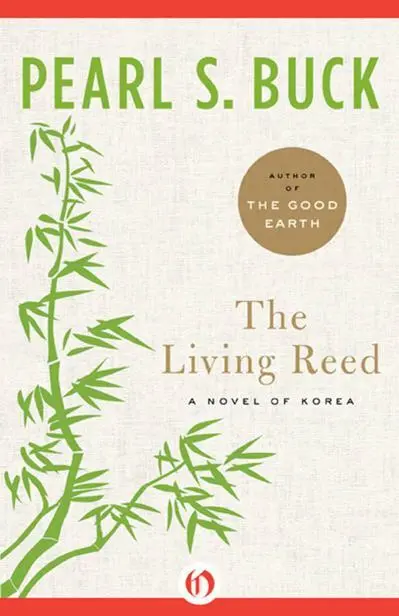
- Название:The Living Reed
- Автор:
- Издательство:Open Road Media
- Жанр:
- Год:2012
- ISBN:нет данных
- Рейтинг книги:4 / 5. Голосов: 1
-
Избранное:Добавить в избранное
- Отзывы:
-
Ваша оценка:
The Living Reed: краткое содержание, описание и аннотация
Предлагаем к чтению аннотацию, описание, краткое содержание или предисловие (зависит от того, что написал сам автор книги «The Living Reed»). Если вы не нашли необходимую информацию о книге — напишите в комментариях, мы постараемся отыскать её.
, Pearl S. Buck’s epic historical novel about four generations of one aristocratic family in Korea. Through the story of the Kims, Buck traces the country’s journey from the late nineteenth century through the end of the Second World War. The chronicle begins as the Kims live comfortably as advisors to the Korean royal family. That world is torn apart with the Japanese invasion, when the queen is killed and the Kims are thrust into hiding. Regarded by Buck as “the best among my Asian books,”
is a gripping account of a nation’s fight for survival, and a detailed portrait of one family’s entanglement in the ebb and flow of history.
The Living Reed — читать онлайн бесплатно полную книгу (весь текст) целиком
Ниже представлен текст книги, разбитый по страницам. Система сохранения места последней прочитанной страницы, позволяет с удобством читать онлайн бесплатно книгу «The Living Reed», без необходимости каждый раз заново искать на чём Вы остановились. Поставьте закладку, и сможете в любой момент перейти на страницу, на которой закончили чтение.
Интервал:
Закладка:
“I do not intend to travel,” Il-han replied, “so why should I pay for roads? I say again I have no money.”
“At any rate, money will be worth more, whenever you have it,” Yul-han urged. “The currency reform—”
“I beg you will not speak to me of such reforms,” Il-han said coldly. “I had rather live with muddy roads and ill-spent taxes and all the old evils than live as we now do, crushed under the oppression of the invader, who is stealing lands from our people—”
“Not stealing, exactly,” Yul-han said.
“I call it stealing when I give up my land under compulsion.”
“Could you not borrow?” Yul-han suggested.
“No,” Il-han said strongly. “I will not step into that pitfall. You know how our people are. They are always ready to borrow money; even when they do not need it they will accept an offered loan, with no thought of how it is to be paid. Then, when it must be paid, they lose their land.”
“Yet this is the old way of the yangban,” Yul-han retorted. “Can you deny that our own ancestors did so procure our land? How else could we inherit so much?”
Since he could not deny, Il-han could only be angry. “At least our ancestors were our own yangban nobility and not dwarfs from foreign islands!”
“Stop!”
Yul-han looked left and right as he spoke. He leaned forward. “Father, you think me a traitor. I am no traitor. I — we — my friends and I — when the present rulers have made the reforms we need, some day we will take our country back again. We must use them now — use these men, learn from them how to run a modern nation — and when we have learned …”
Father and son stared into each other’s eyes, but before either could speak Sunia came into the room, carrying a tray with two bowls of steaming rice gruel. She set it down on the table between them.
“Have you told your father?” she inquired of Yul-han.
“No, we have spoken first of other matters.”
“What else is there to speak of?” she retorted. She stood up, wiping her hands on her apron. “Il-han, he is ready to be married now, this son of ours! At last he is ready to be married.”
Here was Sunia’s complaint in these times. The Japanese Governor-General had commanded that the early marriages common to the Korean people must be delayed. Early marriages, he declared, made weak children. Therefore Yul-han had steadfastly refused to be married.
“What,” Sunia had cried, when he first refused, “are we to have no grandchildren? Am I to have no daughter-in-law to help me in the house? And who will care for you, pray, when you yourself are old?”
“Mother,” Yul-han had replied with his usual patience. “Your grandchildren will be the stronger and better for not being born of parents too young.”
“You have an answer for everything now, you young men,” Sunia had said bitterly.
“He is ready to be married at last,” she repeated now. “Yet who will have him at his age? Twenty-nine! We should already have grandsons ten years old. Indeed we should be thinking of great-grandsons.”
Neither man spoke. They exchanged glances in mutual male comprehension. Why was it that women could think only of giving birth to children and more children, their whole concern intent upon their one creative function? Even Sunia!
She stooped to pull a floor cushion nearer.
“Eat, you two! While you eat I will talk. Now whom shall we find for this son? I have in mind—”
Yul-han had taken up his chopsticks but he put them down again.
“Mother, you need not busy yourself. I have found the woman I want for my wife.”
Sunia let her jaw drop. “You,” she exclaimed. “How can you—”
“I can, Mother,” Yul-han said in his pleasant way. “And you will like her. She is a teacher too, but in the girls’ school.”
“I will not like her,” Sunia declared. “A teacher! What I wish is a good daughter-in-law here in this house. How can I take care of your children if you live in the city?”
Yul-han laughed. “What haste! I am not married yet. And perhaps she will not have me. I have not spoken to her.”
This only brought fresh indignation for Sunia. “How dare she not have my son! Where does she live?” she cried. “What is her name? I will see to it.”
“She lives in the capital,” Yul-han said. “Her family name is Choi. Her name is—”
“Do not speak her personal name — not yet,” Sunia commanded. “Time enough when she is my daughter-in-law.”
Yul-han yielded, smiling, and took up his chopsticks again.
“I shall be late for school,” he said, and he ate his rice and kimchee quickly and bade them farewell.
He walked quickly and gaily along the country road toward the city. In spite of the evil times he felt lighthearted. The truth had been told. His parents knew that he had chosen his own wife. Until they knew, he had not felt free to break with tradition and approach Induk for himself. They had never even been alone, but in the teachers’ meetings they had spoken to each other, and then, when he found out that her family was Christian, he had on several Sunday mornings gone to the Christian temple on the main street of the city. Men and women sat separately but he discovered that the Choi ladies sat in the second row from the front and he went early to sit as near Induk as possible. He saw only her smooth nape and the coil of her dark hair. Yet when she sang the hymns, sometimes he saw her profile, the small straight nose, the parted lips, the round, cream-white chin. She was tall for a woman, but slender, and she always wore Korean dress. Last Sunday he had lingered at the church door, watching for her, and had been waylaid by the American missionary. This man, a rugged priest, his hair and eyebrows and beard a rusty red, had taken him by the hand and then had spoken in a booming voice.
“Friend, you have been here several times. You are welcome. Do you want to know Jesus?”
Yul-han had been embarrassed by the question and he could only smile. At this moment Induk herself came out of the door and seeing what was happening, she approached and introduced him.
“Dr. Maclane, this is Kim Yul-han, a teacher in the boys’ school.”
“Does he want to be a Christian?” the missionary boomed again.
Induk laughed. “Let me find out,” she said.
Her eyes, dark and lively, exchanged a look with Yul-han’s.
“Good — good,” the missionary said heartily, his small blue eyes already following other persons, and he released Yul-han and hastened away.
From this moment of understanding, the two had moved quickly to meeting alone one afternoon in a deserted classroom. By chance Induk was walking through a corridor on her way home and Yul-han, seeing her in the distance, had followed her.
“Miss Choi!”
She turned, saw him, and waited.
“Should you not begin to make me a Christian?” he inquired with mischief.
He enjoyed her fresh free laugh.
“Do you want to be a Christian?” she asked.
“Do you think it would improve me?” he countered.
“I do not know how good you are, as you are,” she replied, teasing.
He liked her frankness, her humor, and he had walked with her, both of them self-conscious in their determination to be modern. It was not easy to break down the wall of tradition between man and woman. He was too aware of Induk as a woman, dazzled by the whiteness of her skin, the sheen of her dark hair, the loveliness of her small ears close set against the handsome head, her lithe body moving gracefully in step with him, her fragrance, the sweetness of her breath. Everything about her was feminine, warm and strong.
They halted involuntarily at the open door of an empty classroom and moved by the same impulse, they went in and sat down in the back of the room. The door was open but anyone passing could not see them. Dangerous it still was, but they could not part, not yet in this their first enchantment. What they had said in those few minutes alone was simple, even inconsequential, and yet he remembered every word.
Читать дальшеИнтервал:
Закладка:
Похожие книги на «The Living Reed»
Представляем Вашему вниманию похожие книги на «The Living Reed» списком для выбора. Мы отобрали схожую по названию и смыслу литературу в надежде предоставить читателям больше вариантов отыскать новые, интересные, ещё непрочитанные произведения.


Обсуждение, отзывы о книге «The Living Reed» и просто собственные мнения читателей. Оставьте ваши комментарии, напишите, что Вы думаете о произведении, его смысле или главных героях. Укажите что конкретно понравилось, а что нет, и почему Вы так считаете.