Pearl Buck - The Living Reed
Здесь есть возможность читать онлайн «Pearl Buck - The Living Reed» весь текст электронной книги совершенно бесплатно (целиком полную версию без сокращений). В некоторых случаях можно слушать аудио, скачать через торрент в формате fb2 и присутствует краткое содержание. Год выпуска: 2012, Издательство: Open Road Media, Жанр: Современная проза, на английском языке. Описание произведения, (предисловие) а так же отзывы посетителей доступны на портале библиотеки ЛибКат.
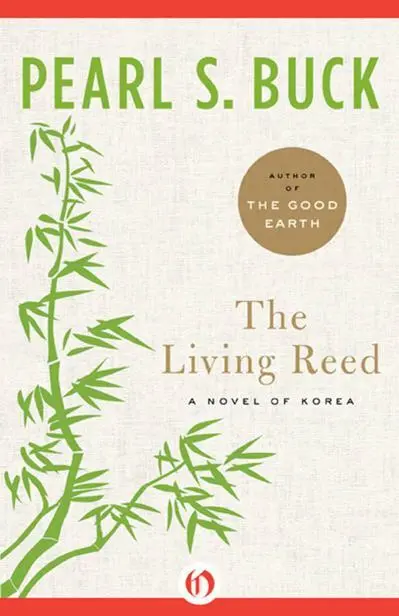
- Название:The Living Reed
- Автор:
- Издательство:Open Road Media
- Жанр:
- Год:2012
- ISBN:нет данных
- Рейтинг книги:4 / 5. Голосов: 1
-
Избранное:Добавить в избранное
- Отзывы:
-
Ваша оценка:
The Living Reed: краткое содержание, описание и аннотация
Предлагаем к чтению аннотацию, описание, краткое содержание или предисловие (зависит от того, что написал сам автор книги «The Living Reed»). Если вы не нашли необходимую информацию о книге — напишите в комментариях, мы постараемся отыскать её.
, Pearl S. Buck’s epic historical novel about four generations of one aristocratic family in Korea. Through the story of the Kims, Buck traces the country’s journey from the late nineteenth century through the end of the Second World War. The chronicle begins as the Kims live comfortably as advisors to the Korean royal family. That world is torn apart with the Japanese invasion, when the queen is killed and the Kims are thrust into hiding. Regarded by Buck as “the best among my Asian books,”
is a gripping account of a nation’s fight for survival, and a detailed portrait of one family’s entanglement in the ebb and flow of history.
The Living Reed — читать онлайн бесплатно полную книгу (весь текст) целиком
Ниже представлен текст книги, разбитый по страницам. Система сохранения места последней прочитанной страницы, позволяет с удобством читать онлайн бесплатно книгу «The Living Reed», без необходимости каждый раз заново искать на чём Вы остановились. Поставьте закладку, и сможете в любой момент перейти на страницу, на которой закончили чтение.
Интервал:
Закладка:
He slid open the doors now and looked out into the night. A slight mist of rain was falling and the darkness was deep. He lit the stone lantern that stood by the door, and he waited until he saw those whom he expected. A man came out of the night leading some twenty children of different ages, all boys. They walked in silence until they reached him. The man looked left and right and then spoke in a low voice.
“We saw a distant light.”
“In what direction?” Il-han asked in the same low voice.
“To the north.”
“A moving light?”
“Yes, but only one. Yet one spy is enough.”
“I will keep the children here until dawn. Then I will send them away separately,” Il-han said.
The man nodded and disappeared again into the mist. Il-han led the children into the house, looking into each face. Accustomed to silence, they walked gravely past him and into the room. He followed them, first putting out the light in the stone lantern. Then he drew the doors shut and barred them fast. By now the boys were seated on the floor. He took his place before them on his floor cushion and opened his book and began to speak, his voice still low.
“You will remember,” he said, “that last night I spoke of King Sejong. I told you of his greatness, and how under his beneficent rule our country grew strong.”
He continued to speak of history for half an hour. Then he closed his book and recited poetry. For tonight he had chosen a famous poem of the late Koryo times, written in the Sijo style.
“And this,” he explained to his pupils, “is a special style because those times were like our own, troubled times when poets could not write long poems in the ancient Kyonggi style. Therefore they put their feelings into short intense form. There are only about ten of these Sijo poems left to us, and among them I have chosen the one written by Chong Mungju, who was a minister of Koryo, loyal to his King. Listen to me, children! I will chant the poem for you, and then line by line you will chant after me.” He closed his eyes and folded his hands and began to chant:
“Though this frame should die and die,
Though I die a hundred deaths,
My bleached bones becoming dust,
My soul dead or living on,
Naught can make this heart of mine
Divide itself against my King.”
He opened his eyes and repeated the poem line by line, the fresh young voices repeated them after him, and he observed how muted these voices were from the habit of fear. For what he now did was forbidden. The alien rulers had changed the schools so that even the language was no longer Korean but Japanese, and the books were Japanese. Unless scholars like Il-han taught the children in secret in the darkness of the night they would grow up ignorant of their own language and their own past and cease at last to be Korean.
When they had learned the poem, which they soon did, each child intent to learn what was forbidden, he expounded the meaning of the poem and how they all, like that minister in the past, must be loyal to the King, even though he lived now in duress and was only King in name.
“Our King’s heart is still with us,” he told them, “and the proof of his being with us is in the disbanding of our army. The Resident-General of the Japanese Imperial Army commanded our army to be disbanded in a very rude and dishonorable manner as you know, and our King was forced to sign the order for the disbandment. Yet only a few days later our King appeared at his Japanese coronation, wearing the uniform of the disbanded army. Meanwhile our disbanded soldiers are wandering everywhere telling the people of their dishonor, which some day we must erase.
“Remember, children, lest it be not written down. Two years ago our army, seventy thousand men, was dismissed by the invaders. Each man was given ten yen and told to go home. Most of them went to other countries to wait until the time comes for our freedom and many thousands went to Manchuria, where there is land.”
In this way Il-han, and many like him, informed the young of the greatness of their ancestors and the disgrace of their present, and how they, the young, must not cease to rebel in their hearts against the island invaders who had seized the country.
“We are far higher than these petty foreign rulers,” Il-han went on. “Though they treat us as serfs and slaves, we are not what they hold us to be. Nor should we in justice believe that all Japanese are as small as these who rule us. They have not men enough to govern their own country with greatness and they cannot spare us their highest men. Here we have the low fellows, the ignorant, the greedy, and we must suffer them, but the day will come when they will be cast out.”
“By what means?” a lad inquired.
“That is for you to decide,” Il-han replied.
“Why should they come here and take our country?” another lad inquired.
He was a rebel born but Il-han was too just a teacher not to present to such a lad the other side of truth.
“Alas,” he said, “there is always another face to everything. Imagine yourself a lad in Japan. Then you would be taught that it is essential for Japan to control Korea, else our country is like a dagger pointed to her heart. Russia, too, wants Korea — Russia has always wanted Korea, you remember. Ah, but you are a Japanese lad, imagine, and so your teacher would be saying, ‘We Japanese cannot tolerate the Russians so near us in Korea and that is why we fought the war with Russia, we Japanese, and we won, and all the world acclaimed us. It was necessary in that time of war to send our armies across Korea!’”
“They could have taken them away again when the victory was won,” a lad interrupted.
Il-han put up his hand. “Remember now, we are Japanese for the moment. The Japanese teacher says, ‘Had we taken our armies out of Korea, Russia would have come back in secret ways. No, we must hold Korea as our fort. And besides, we need more land for our growing people, and we need new markets.’”
He broke off and gave a great sigh. “I cannot go on with such imagining. We are Korean patriots!”
“Why did we not fight the Japanese?” a bold lad demanded.
“Alas,” Il-han said again, “our sin was in our many divisions. We quarreled over how to defeat our enemies, how to keep our freedom. One family clan against another has divided our nation and for centuries. Divided we fell. Our own people rose against our own corruption. Well, it is over. Gone are the great families, the Yi, the Min, the Pak, the Kim, the Choi, and besides them the Silhak, the Tonghak and every other such division. Now we are united in our longing for our lost independence high and low, and we have only the Japanese to hate instead of one another. Perhaps it will be easier.”
So the hours sped on. Listening always for unknown footsteps, his eyes watching the door, Il-han taught them the Korean language and its hangul writing until dawn stole across the foothills and the mountains and the sun rose. He had meant to let them sleep for a while at least but the day came too soon. Sunia was astir in the kitchen and one of the two old servants left to them put in his head at the door to warn Il-han of sunrise. Il-han looked up, surprised.
“I have kept you all night, my children,” he said, “and you will not do well in school today. Tonight do not come. Sleep, and we will meet again the night after. Now go, one by one, a little space between so that you do not seem a crowd.”
He stood by then and let them leave, each alone and walking in different directions, so that none would suspect he had taught them in secret. When the sun rose high enough to shine on the mountains the last pupil was gone and he was suddenly weary, although it was Sunia who made him know it. She came in brisk and neatly dressed for the day.
Читать дальшеИнтервал:
Закладка:
Похожие книги на «The Living Reed»
Представляем Вашему вниманию похожие книги на «The Living Reed» списком для выбора. Мы отобрали схожую по названию и смыслу литературу в надежде предоставить читателям больше вариантов отыскать новые, интересные, ещё непрочитанные произведения.


Обсуждение, отзывы о книге «The Living Reed» и просто собственные мнения читателей. Оставьте ваши комментарии, напишите, что Вы думаете о произведении, его смысле или главных героях. Укажите что конкретно понравилось, а что нет, и почему Вы так считаете.