Pearl Buck - The Living Reed
Здесь есть возможность читать онлайн «Pearl Buck - The Living Reed» весь текст электронной книги совершенно бесплатно (целиком полную версию без сокращений). В некоторых случаях можно слушать аудио, скачать через торрент в формате fb2 и присутствует краткое содержание. Год выпуска: 2012, Издательство: Open Road Media, Жанр: Современная проза, на английском языке. Описание произведения, (предисловие) а так же отзывы посетителей доступны на портале библиотеки ЛибКат.
- Название:The Living Reed
- Автор:
- Издательство:Open Road Media
- Жанр:
- Год:2012
- ISBN:нет данных
- Рейтинг книги:4 / 5. Голосов: 1
-
Избранное:Добавить в избранное
- Отзывы:
-
Ваша оценка:
The Living Reed: краткое содержание, описание и аннотация
Предлагаем к чтению аннотацию, описание, краткое содержание или предисловие (зависит от того, что написал сам автор книги «The Living Reed»). Если вы не нашли необходимую информацию о книге — напишите в комментариях, мы постараемся отыскать её.
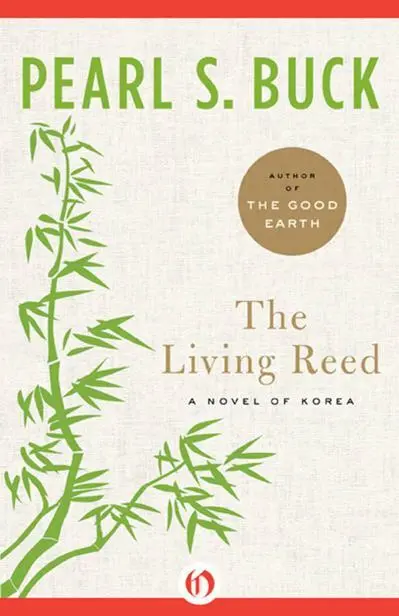
, Pearl S. Buck’s epic historical novel about four generations of one aristocratic family in Korea. Through the story of the Kims, Buck traces the country’s journey from the late nineteenth century through the end of the Second World War. The chronicle begins as the Kims live comfortably as advisors to the Korean royal family. That world is torn apart with the Japanese invasion, when the queen is killed and the Kims are thrust into hiding. Regarded by Buck as “the best among my Asian books,”
is a gripping account of a nation’s fight for survival, and a detailed portrait of one family’s entanglement in the ebb and flow of history.
The Living Reed — читать онлайн бесплатно полную книгу (весь текст) целиком
Ниже представлен текст книги, разбитый по страницам. Система сохранения места последней прочитанной страницы, позволяет с удобством читать онлайн бесплатно книгу «The Living Reed», без необходимости каждый раз заново искать на чём Вы остановились. Поставьте закладку, и сможете в любой момент перейти на страницу, на которой закончили чтение.
Интервал:
Закладка:
“It is all very well to have new learning, but this does not mean the old is without importance.”
His son replied insolently. “We have had enough of this old stuff!”
Il-han forgot himself. His right hand raised itself by instinct and he struck his son a blow on the cheek. The boy’s face grew red, his great eyes flashed. He rose, bowed and left the room.
Il-han heaved deep sighs. He felt suddenly faint and his heart beat too fast. This son — as he strode out of the room he had looked a man, shoulders broad, long legs — ah, he should not have struck his son! What could be done now? Impossible for a father to repent to a son! The elder generation does not ask forgiveness of the younger. And what if the son was right and he was no longer a fit teacher for this time of confusion? What indeed did he himself know now of the world beyond this grass roof?
He pushed aside the book wherein he had been writing a poem. Of late he had found refuge for his troubled spirit in poetry — Oh, heaven, had not his father also taken to writing poetry, and what of the village poet in the grass-roof hut where the Queen had hidden from her enemies? Poetry was a drug, a vice, a cover for helplessness, or perhaps only indolence. He sat for a long time in meditation, searching his soul, accusing himself, submitting his spirit to a humility difficult indeed for a man so proud.
For days after that he did not speak to his son. He conducted the lessons for both sons as usual. The elder son took no part, asked no question, did not look at his father, but he came and took his place and remained in silence. After ten days Il-han told the younger son to leave the room, for he had something to say to the elder. The younger son obeyed and Il-han was left alone with his elder son. He called him by name now, for the first time.
“Yul-chun, I have considered your wish to go to a school in the city. You know I am in exile here in my own house. Is it not dangerous for you in the city when it is known you are my son?”
“No, Father,” Yul-chun said. “I have friends there.”
Il-han was amazed. “How can you have friends when I have none?”
“I have friends,” Yul-chun repeated stubbornly.
The two gazed at each other. It was Il-han who yielded. So his son had friends of whom he knew nothing! A generation earlier a father would have insisted on knowing who his son’s friends were and how they had been made. But this, this was a new generation, one very far from the past, and he did not ask. He could not, for what if the son refused to tell the father? What force had the father now to compel obedience?
“Well enough,” he said at last. “Then go.”
“I shall live with my friends,” Yul-chun said.
“Well enough,” Il-han replied again. “Only let your mother know where the house is. And you will need money.”
He opened the secret drawer of his desk and took out a small leather bag where he kept money for daily needs and gave the bag to his son. “Let me know when you need more.”
He held back the grim words in his mind — with all his independence he takes money from me. There was a bitter comfort in the knowledge and he needed any comfort.
When his son had left the room Il-han went in search of Sunia and found her in the storehouse, standing by the scales to watch the measuring of rice for the household. Her dark hair was powdered with the white dust of the rice, and her eyebrows and eyelashes were white. It is how she will look when she is old, he thought, and for a moment he was saddened. Then he spoke to her in a low voice.
“Will you come aside? I have something to tell you.”
She lingered until the tenant had called out the weight of the grain and then she followed Il-han into the garden where they sat down upon a stone seat in the shade of the bamboo grove.
“Our elder son wants to go to school in the city,” he told her.
She was wiping the rice dust from her face with her kerchief and she did not reply.
“Are you not surprised?” he asked.
“No,” she said. “I knew that he would go.”
“And did not tell me?”
“I told him he must wait a year,” she said. “I told him he was not to trouble you while he was too young to leave home.”
“And you think he is not too young?”
“I think he is too old to stay,” she said.
“So,” he said slowly, “so you have known all along! You have kept it secret from me. How many such secrets have you?”
She laughed and then was grave. “I have only one purpose in all I do. It is to keep you at peace. If I told you every vagary and whim and ardor that these two sons of ours have, you would be in turmoil. You could not work.”
“Work,” he repeated sadly. “I am not sure I have a work. An occupation, say!”
“Work,” she repeated firmly. “Some day all that you write down in your books will be of use. Who else is keeping the record?”
She had a way, most comforting, of making him value himself.
“I pray you are right,” he said. “So then, we are to let him go?”
“Yes, because we cannot keep him.”
He mused for a moment. “What has happened that the young no longer obey their elders as we did?”
“They see the havoc around about them,” she replied. “They know that we have failed. They no longer respect us.”
She spoke the cruel words with such calm that he was afraid of her. Then he rose.
“You are right. We must let him go, or he will leave us forever.”
With that he went to his lonely room and took up his pen to brush the characters of a poem now rising to the surface of his mind. It was strange how these poems came to him nowadays, the distillation of his private emotions, of his disillusionment, of his solitude, of his yearning for a future in which, nevertheless, he could not believe. Nothing now could stay the doom he foresaw for his people and his country.
He was surprised that his household could so easily settle itself into a life without the elder son. Peace became its atmosphere, a peace sometimes too deep, Sunia said, for the younger son gave her no trouble.
“I miss that elder son’s naughty ways,” she told Il-han. “Nothing happens now that he has gone. Nothing is broken, no wild animals are brought in from the field, the floors are not dirtied, clothes are not torn, shoes are not lost. I hear no complaints about food. I am not used to such peace!”
“I trust he is not making a commotion in the city,” Il-han said.
Yet he too was secretly pleased to see Yul-chun once or twice a month when he came home with all his garments soiled and needing to be washed, and with his pockets empty of money.
“I daresay you are full of new learning,” Il-han remarked in his dry way.
“Your hair wants cutting,” Sunia said briskly, and went to fetch her scissors.
Yul-chun shouted after her. “I will not have you cut my hair, Mother! They’ll say I have a country haircut.”
“I will cut it!” she called back.
And cut it she did, holding him by the ears and hooking his head under her arm, he half laughing, half angry.
“I will never come home any more if you treat me like this,” he cried while he looked ruefully into the mirror on the wall.
“Then cut your hair before you come,” she told him.
She knew very well that he came back for money from his father and for love from her. He still could not do without her tender scolding and teasing love, and he liked to have her examine his clothes and sew on missing buttons and cry how filthy his socks were and how worn his shoes. In short, he needed to know that however far he went away, she was still his mother. And Il-han watched half sadly, and pondered the difference between father love and mother love. With all his teaching and his concern for his son’s mind and character, Yul-chun did not love him as he loved the mother whose concern was all for his body. Body love was deepest of all love perhaps — woman love in mother and in wife. Yet was it not this love that kept men forever children? Though for that matter, how could he himself live without Sunia? Who would feed him, keep him clean and tended and free of care if he had not her? In his son he saw himself again, and he did not like what he saw.
Читать дальшеИнтервал:
Закладка:
Похожие книги на «The Living Reed»
Представляем Вашему вниманию похожие книги на «The Living Reed» списком для выбора. Мы отобрали схожую по названию и смыслу литературу в надежде предоставить читателям больше вариантов отыскать новые, интересные, ещё непрочитанные произведения.

Обсуждение, отзывы о книге «The Living Reed» и просто собственные мнения читателей. Оставьте ваши комментарии, напишите, что Вы думаете о произведении, его смысле или главных героях. Укажите что конкретно понравилось, а что нет, и почему Вы так считаете.