Lily King - The English Teacher
Здесь есть возможность читать онлайн «Lily King - The English Teacher» весь текст электронной книги совершенно бесплатно (целиком полную версию без сокращений). В некоторых случаях можно слушать аудио, скачать через торрент в формате fb2 и присутствует краткое содержание. Год выпуска: 2006, Издательство: Grove Press, Жанр: Современная проза, на английском языке. Описание произведения, (предисловие) а так же отзывы посетителей доступны на портале библиотеки ЛибКат.
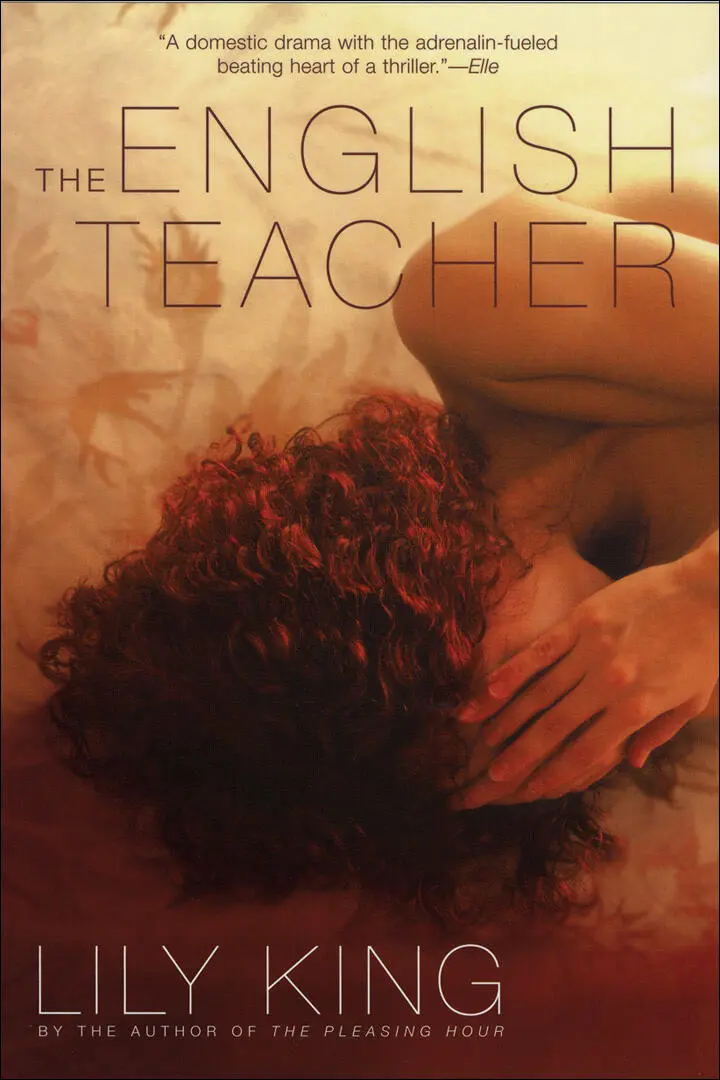
- Название:The English Teacher
- Автор:
- Издательство:Grove Press
- Жанр:
- Год:2006
- ISBN:нет данных
- Рейтинг книги:5 / 5. Голосов: 1
-
Избранное:Добавить в избранное
- Отзывы:
-
Ваша оценка:
The English Teacher: краткое содержание, описание и аннотация
Предлагаем к чтению аннотацию, описание, краткое содержание или предисловие (зависит от того, что написал сам автор книги «The English Teacher»). Если вы не нашли необходимую информацию о книге — напишите в комментариях, мы постараемся отыскать её.
and
as one of the Best Novels of 2005, Lily King's new novel is a story about an independent woman and her fifteen-year-old son, and the truth she has long concealed from him. Fifteen years ago Vida Avery arrived alone and pregnant at elite Fayer Academy. She has since become a fixture and one of the best teachers Fayer has ever had. By living on campus, on an island off the New England coast, Vida has cocooned herself and her son, Peter, from the outside world and from an inside secret. For years she has lived largely through the books she teaches, but when she accepts the impulsive marriage proposal of ardent widower Tom Belou, the prescribed life Vida has constructed is swiftly dismantled.
This is a passionate tale of a mother and son's vital bond and a provocative look at our notions of intimacy, honesty, loyalty, and the real meaning of home. A triumphant and masterful follow-up to her multi-award-winning debut,
confirms Lily King as one of the most accomplished and vibrant young voices of today.
The English Teacher — читать онлайн бесплатно полную книгу (весь текст) целиком
Ниже представлен текст книги, разбитый по страницам. Система сохранения места последней прочитанной страницы, позволяет с удобством читать онлайн бесплатно книгу «The English Teacher», без необходимости каждый раз заново искать на чём Вы остановились. Поставьте закладку, и сможете в любой момент перейти на страницу, на которой закончили чтение.
Интервал:
Закладка:
“They couldn’t. They’d be bringing those people home in body bags if they tried.”
“That is so naive, Dad. If we wanted them out we’d get them out. This is all about oil.”
“Oil?”
“Yes. Don’t you even read the paper? We need that oil. We don’t want to jeopardize the sweet oil deal we have with them. That’s why we’ve supported the Shah and his brutal regime for so many years. That’s why we had to take him in last month.”
“We took in the Shah because he needed medical treatment.”
“Spare me the sob story. A lot of people say he’s faking it. And would we take in Pol Pot or Idi Amin if they needed treatment? No. We only take in the mass murderers who are selling us oil at a good price.”
“Say you were head of the U.S. military, Stuart. How would you rescue those hostages? How would you go into the center of the capital and get inside that building without being seen? Because once you are seen, everybody’s dead. What would you do, take an invisibility pill?” He was angry now.
They went on and on. Eventually Stuart put up two hands in mock surrender.
“Speech which enables argument is not worthy,” he said.
“What?”
“These aren’t the important things.”
“What are the important things?” Vida heard herself ask. He was such a coward, the way he ducked at the last minute behind his mystic baloney.
Stuart put his hands in his lap. “The true self, the inner life, a harmony between heaven and earth.”
This last surprised her. “Do you believe in heaven?”
“In a metaphorical sense.”
“How is heaven metaphorical? Either it exists or it doesn’t.” He was like one of her weakest students, tossing up a big word and hoping it landed in the right place.
“Its existence is not the point.”
“What is the point?”
“The point is”—he paused to look at each of them in turn, and it angered her to see how worshipfully Peter looked back—“not to care about the point.”
“Spoken by a true Sophist.”
“Sticks and stones, Vida.”
“I’m not trying to insult you. I just think it’s too easy to believe in nothing.”
“It’s not nothing. It’s the opposite of nothing.”
“But every time I try to coax a declarative sentence out of you, you twist away in a puff of smoke.”
She saw how calmly he sifted through the words in his head. “To you it appears as smoke.”
“But to you it’s the truth?” She was aware of the absence of sifting in hers.
He nodded.
“Describe what it is you believe. In your words.”
“That which is nameable is not the Tao.”
“Those are not your words. But let me name it for you. Crock of Crap. ”
Tom was hushing her but she didn’t care. Someone had to stand up to this Buddhist bully.
“What do you believe in, Vida? In your words.”
So he could get angry. She was glad to see she’d cracked the surface. She felt her own creed assemble easily. “I am a humanist. I believe in man’s creative—”
“And woman’s?”
“That’s a semantic argument for another day.”
“Are we having an argument?”
“Are you interested in my answer?”
Stuart bowed his head.
“I believe in the imagination and its striving toward truth and beauty, toward the ideal, through accurate and penetrating representations of our world.”
“Our world? What is our world? We’re here for two seconds. Blip. Blip. Then we’re gone forever.”
“I believe”—she was surprised by the pleasure she took from saying those two words—“there is a transcendence through acts of creation.”
“You mean writers and artists can achieve immortality if they’re good enough?”
“Not just them. When I pick up Tolstoy, for example, I am instantly connected with his world, his mind, and therefore both of us have transcended. And my world has become richer for the new layer his perceptions have added to it.”
“The goal of the Tao is to detach from this world.”
“Why on earth would you want to do that?”
“Because our attachments to it prevent us from seeing beyond it.”
“You know, Stuart, I’ve heard a lot of stupid theories in my life, but that really takes the cake. If you want to believe that, be my—”
“What’s so special about your world, Vida?” He had a way of saying her name that made it sound like she’d made it up. “Teaching books your students will never remember? Keeping them pinned to chairs they ache to get out of? Does that have meaning? Driving home. Making lousy dinners.” He pointed to her glass. “Measuring out your precious bourbon. Fucking my father while you’re—”
“Stuart, that’s enough,” Tom barked.
Stuart looked at his father and finished: “shit-faced. Is that the height of existence, of consciousness?”
A teacher needed at all times a face impervious to shock or insult, but twice in her career, a student had done or said something so unexpectedly awful that her skin reddened. Each time was a surprise — the prickling in her cheeks, then the pulsing heat — and she had resented it deeply. She felt it now; within a few seconds her face would be a flaming carnation. Far more than his words, what angered her was that he was going to make her blush.
“You’re not going to find your mother this way, Stuart,” she said.
True to his convictions, Stuart seemed perfectly detached. “I’m not trying to find her, Vida. I’m trying to let her go.”
She watched Tom close up the white boxes of leftover rice and lo mein and carry them by their perfect wire handles to the fridge. He slid her plate out from beneath her without a word. He was pursing his lips, a sure sign that he was upset. She wondered why he didn’t go have a talk with Stuart. He usually scampered so quickly back to the children’s hallway if there was any tension at dinner. She hoped when he did that he wouldn’t be too hard on the boy. An apology to her would suffice.
He was at the sink now, scraping and rinsing. She heard a huge plop into the garbage disposal. Someone had hardly touched the food. She wondered if it was her. Or Peter. Where had Peter gone? She couldn’t even remember him sitting at the table. She collected what remained on the table and brought it to Tom. He dropped the forks he was rinsing and wheeled around to her.
“Where does all that anger of yours come from?” He grabbed the bottle from the pantry closet. “From inside here?” He shook it at her. She was surprised by how little was left. “Or is it in here”—he poked her in the bone between her breasts—“all the time, crouching, waiting?”
Vida was stunned. The scene was like the nightmare in which one of her best-behaved students hurls obscenities at her. The poke on her chest stung and spread.
“The boy is simply trying to cope.”
“But he’s filling himself with illusions.”
“We’re all filled with illusions.”
“No we’re not.”
“Taoism is one hell of a lot less harmful than practically all the other ways of dealing with grief he could have latched onto.”
“I’m not so sure. Actionless action. Blankety blank. He’s negating himself from his own life. He’s disappearing.”
“Why does it upset you so much? It’s just a way of looking at the world.”
“It’s a way of not looking at the world. You heard him. He wants to detach. You might as well give him a shotgun so he can blow his head off.”
“Jesus Christ, Vida.”
There it was finally, the glare, the tone of voice he’d been denying himself. He saw her now for what she truly was; he saw the waste within. She needed to get out of the house. She threw on a coat and whistled for Walt.
Читать дальшеИнтервал:
Закладка:
Похожие книги на «The English Teacher»
Представляем Вашему вниманию похожие книги на «The English Teacher» списком для выбора. Мы отобрали схожую по названию и смыслу литературу в надежде предоставить читателям больше вариантов отыскать новые, интересные, ещё непрочитанные произведения.





Обсуждение, отзывы о книге «The English Teacher» и просто собственные мнения читателей. Оставьте ваши комментарии, напишите, что Вы думаете о произведении, его смысле или главных героях. Укажите что конкретно понравилось, а что нет, и почему Вы так считаете.