Lily King - The English Teacher
Здесь есть возможность читать онлайн «Lily King - The English Teacher» весь текст электронной книги совершенно бесплатно (целиком полную версию без сокращений). В некоторых случаях можно слушать аудио, скачать через торрент в формате fb2 и присутствует краткое содержание. Год выпуска: 2006, Издательство: Grove Press, Жанр: Современная проза, на английском языке. Описание произведения, (предисловие) а так же отзывы посетителей доступны на портале библиотеки ЛибКат.
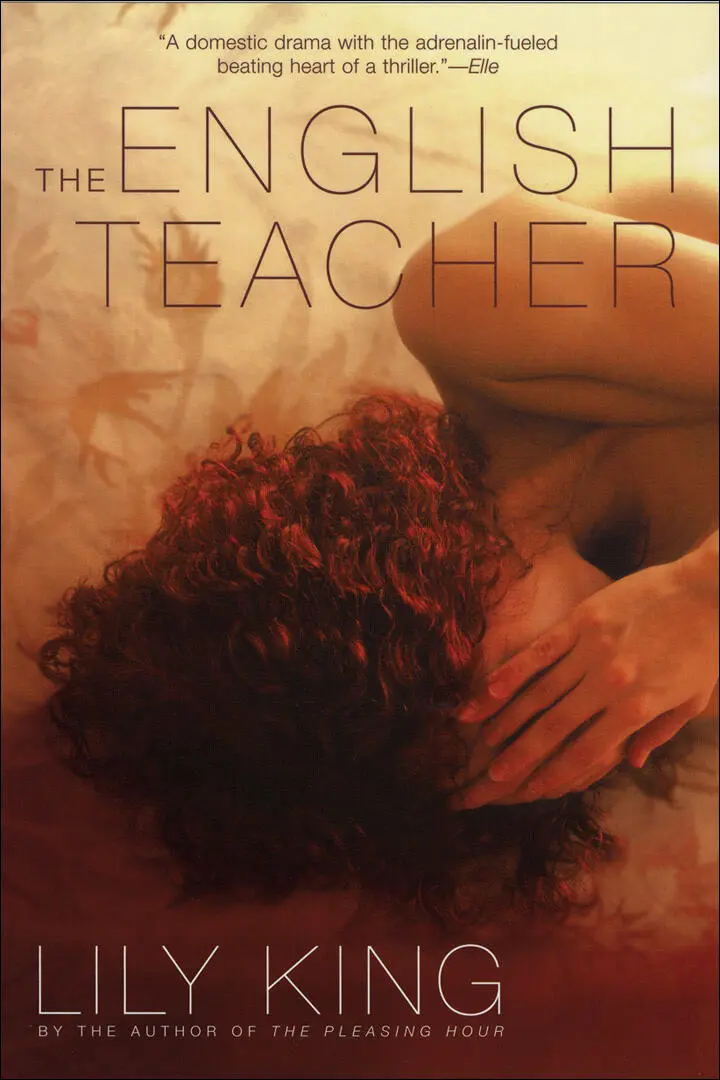
- Название:The English Teacher
- Автор:
- Издательство:Grove Press
- Жанр:
- Год:2006
- ISBN:нет данных
- Рейтинг книги:5 / 5. Голосов: 1
-
Избранное:Добавить в избранное
- Отзывы:
-
Ваша оценка:
The English Teacher: краткое содержание, описание и аннотация
Предлагаем к чтению аннотацию, описание, краткое содержание или предисловие (зависит от того, что написал сам автор книги «The English Teacher»). Если вы не нашли необходимую информацию о книге — напишите в комментариях, мы постараемся отыскать её.
and
as one of the Best Novels of 2005, Lily King's new novel is a story about an independent woman and her fifteen-year-old son, and the truth she has long concealed from him. Fifteen years ago Vida Avery arrived alone and pregnant at elite Fayer Academy. She has since become a fixture and one of the best teachers Fayer has ever had. By living on campus, on an island off the New England coast, Vida has cocooned herself and her son, Peter, from the outside world and from an inside secret. For years she has lived largely through the books she teaches, but when she accepts the impulsive marriage proposal of ardent widower Tom Belou, the prescribed life Vida has constructed is swiftly dismantled.
This is a passionate tale of a mother and son's vital bond and a provocative look at our notions of intimacy, honesty, loyalty, and the real meaning of home. A triumphant and masterful follow-up to her multi-award-winning debut,
confirms Lily King as one of the most accomplished and vibrant young voices of today.
The English Teacher — читать онлайн бесплатно полную книгу (весь текст) целиком
Ниже представлен текст книги, разбитый по страницам. Система сохранения места последней прочитанной страницы, позволяет с удобством читать онлайн бесплатно книгу «The English Teacher», без необходимости каждый раз заново искать на чём Вы остановились. Поставьте закладку, и сможете в любой момент перейти на страницу, на которой закончили чтение.
Интервал:
Закладка:
Then they were asked to divide up into their departments. The math, science, and history departments should all take seats at the computers; the arts and languages should find their own classrooms in order to brainstorm ways in which they could use their weekly lab time. This transition was as difficult and bitter as if they had all been third graders. Jose Costa refused to give up his seat: he’d been the first to arrive. And Leon, the frail Latin teacher, put up an equally impressive fight on the other side of the room. The art teachers seemed to have a difficult time simply identifying each other. When she and the rest of her department finally settled around the thick walnut table in the conference room, Vida added nothing to the list her colleagues chirped out, as she had absolutely no plans to ever bring her students into that awful place.
When her department was called back to the smelly, roaring room, Mark assigned them a computer and asked them to simply type onto the screen a paragraph. “You could begin a letter, a short story, or,” he said looking specifically at Vida, Lydia, and Liz, the three women in the English department, “a recipe. Anything. Then we’ll go from there.”
The first thing that came to her mind was Shakespeare. Even though it had been several years since she’d pulled her college typewriter out of the closet, her hands knew the keys immediately.
If it were now to die
’Twere now to be most happy; for, I fear
My soul hath her content so absolute,
That not another comfort like to this
Succeeds in unknown fate.
How ludicrous to see poor Othello in fluorescent yellow on a little TV screen in front of her. After a few minutes, Mark explained how to check the paragraph for mistakes. Vida’s computer bleeped seven times. It had opinions about not only spelling, but grammar and syntax as well.
Mark Stratton moved quickly toward her and nestled his upper body on top of her monitor. “Stumped already?”
“Mr. Computer’s style is pretty rigid.”
“It will only accept the best configuration.”
“You can’t expect a machine to have a sensitivity to the rhythms and nuances of the English language. Sometimes the least grammatically correct sentence is the best choice. I don’t want a computer holding back my students’ creativity.”
Mark laughed. “In fifty years, these babies are going to be writing better books than anything you’ve ever taught them.”
“You can’t believe that.”
“I don’t have to believe it. I know it, my friend.”
Before the creation of this room. Mark had been a part-time geography teacher. Vida watched him now, pacing the length of his royal-blue carpet, gazing with possessive pleasure at his hot droning monsters. She thought of the threshing machine, Hardy’s symbol for the Industrial Age, that despotic contraption that forced an inhuman pace on fieldworkers, separating their souls from the land forever. Her chest tightened. She felt it, right here, right now, what Hardy had felt, the ache of modernism.
They had left it that Tom would make dinner, but when Vida got home just before six, the house was empty. She called out into the darkness. Only Walt came, slowly, his back legs reluctant to separate after hours of napping. He sniffed her pants, then snorted out the smell, as if he, too, were disgusted by Mark Stratton and his machines. She called out again. Nothing.
She’d never been in this house alone. She tossed her shoes down the hall toward her room and sat in one of the wing chairs facing the sofa. When she shut her eyes, the head and neck of a computer monitor lunged at her. Brick had drained the scholarship fund to pay for the lab. The board of trustees had just stood back and let him do it. And now she was expected to take each of her classes down there once a week. They wanted her to become the engine man, the half-human, coal-grimed creature who kept the threshing machine running. The undersides of her arms burned with anger. It was time for a drink. But she could wait a little longer, wait until everybody got home.
The mud-gray screen of the TV gaped at her. Had she ever been in this room when it was not on, when it was not blaring its garbage? The hostages. The hostages. How much more could we take of the hostages? Every now and then a few were trotted out onto the embassy steps, a tattered white rag tied tight around each face, beards growing in clumps like bad grass on their necks. Every day the newscasters seemed shocked anew that it was still going on. It irked her how they had begun to count, numbering the days since the takeover and her wedding. Today was Day 33. She didn’t even know how she knew. They had programmed her, like a computer. These babies are going to be writing better books than anything you’ve ever taught them. What kind of viper would want to believe that? And where was everybody? Fran and Caleb, she remembered now, were at friends’ houses for the night, but Peter, Tom, and Stuart? It was too dark to see out to the driveway now. Should she start making something? The thought of making another damn dinner pinned her to her seat. She hadn’t realized how good she’d had it on campus. Every meal had been made for them. Except for the first and last weeks of summer and a fortnight at Christmas, she’d never had to cook. And when she did, Peter had expected so little — a bowl of soup, scrambled eggs, he didn’t care. But the Belous were different. They asked at breakfast what she’d be making that night. They came in while dinner was cooking to lift up the lids and smell. They had begun to make suggestions, one at a time, choreographed hints about what to cook and how to cook it. They liked to set the table. They enjoyed, in fact, all rituals. They were like some prehistoric tribe, the way they found meaning in the repetition of acts. Once Vida had read “Annabel Lee” to Caleb before bed and now he wanted a poem read to him every night. She had driven Fran to the mall last Friday afternoon and now the girl wanted to go shopping on the first Friday afternoon of every month. Stuart still wanted nothing to do with her, but even that had its own pattern. He always sat in the chair farthest from her, and was sure to be out of the house on Saturday mornings and Sunday evenings when she did her grading in the kitchen. She felt grateful to Stuart for one reason: his presence in Peter’s bedroom. If she had that dream, he’d be there — and most likely awake — to stop her from hurting Peter.
She had planned to just turn on a light or two and sit back in the wing chair, but her legs kept moving, into the kitchen, into the pantry closet. She brought out the bourbon, the glass, the ice, then shoved them all away. She sat down at the green table, not in the seat at the far end where she did her grading, and not to the left of Tom’s place where she usually sat at dinner, but to the right of him, Mary’s old seat. It was an odd choice, pressed in close to the wall. Vida felt a little suffocated in it even without the kids on all sides. Mary, she imagined, was part Mrs. Ramsay and part Marmee March, intoxicated by her role as Mother.
The red hands above the stove were clutched at six-thirty. Where the hell was everyone? She imagined the station wagon skidding into the headlights of a monstrous truck. I’m sorry, ma’am, the cop at the door would say. Her heart raced at the thought of a man at the door with a gun.
She pulled out a saucepan, remembering As if her soul had shrunk and died, / And left a waste within and Tom’s fake-earnest question “Which one?” As if he knew the title to even one of Hardy’s poems. Opening a can of tomato paste she had that feeling again that this was not the real moment, that she hadn’t married him, that she and Peter didn’t actually live here. It startled her, how easily reality could slip off her shoulders. She put down the opener and poured herself the damn drink.
Читать дальшеИнтервал:
Закладка:
Похожие книги на «The English Teacher»
Представляем Вашему вниманию похожие книги на «The English Teacher» списком для выбора. Мы отобрали схожую по названию и смыслу литературу в надежде предоставить читателям больше вариантов отыскать новые, интересные, ещё непрочитанные произведения.








Обсуждение, отзывы о книге «The English Teacher» и просто собственные мнения читателей. Оставьте ваши комментарии, напишите, что Вы думаете о произведении, его смысле или главных героях. Укажите что конкретно понравилось, а что нет, и почему Вы так считаете.