Эрнест Хорнунг - A Bride from The Bush
Здесь есть возможность читать онлайн «Эрнест Хорнунг - A Bride from The Bush» весь текст электронной книги совершенно бесплатно (целиком полную версию без сокращений). В некоторых случаях можно слушать аудио, скачать через торрент в формате fb2 и присутствует краткое содержание. Год выпуска: 2018, Издательство: epubBooks Classics, Жанр: Классическая проза, на английском языке. Описание произведения, (предисловие) а так же отзывы посетителей доступны на портале библиотеки ЛибКат.
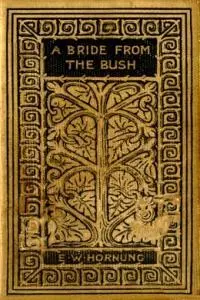
- Название:A Bride from The Bush
- Автор:
- Издательство:epubBooks Classics
- Жанр:
- Год:2018
- ISBN:нет данных
- Рейтинг книги:3 / 5. Голосов: 1
-
Избранное:Добавить в избранное
- Отзывы:
-
Ваша оценка:
A Bride from The Bush: краткое содержание, описание и аннотация
Предлагаем к чтению аннотацию, описание, краткое содержание или предисловие (зависит от того, что написал сам автор книги «A Bride from The Bush»). Если вы не нашли необходимую информацию о книге — напишите в комментариях, мы постараемся отыскать её.
A Bride from The Bush — читать онлайн бесплатно полную книгу (весь текст) целиком
Ниже представлен текст книги, разбитый по страницам. Система сохранения места последней прочитанной страницы, позволяет с удобством читать онлайн бесплатно книгу «A Bride from The Bush», без необходимости каждый раз заново искать на чём Вы остановились. Поставьте закладку, и сможете в любой момент перейти на страницу, на которой закончили чтение.
Интервал:
Закладка:
"But it's too good to last," was that young man's constant consolation. "It's a record, so far; but she'll break out before the day is over; she'll entertain us yet—or I'll know the reason why!" he may have added in his most secret soul. At all events, as he sat next her at dinner, when the Lady Lettice Dunlop—his right–hand neighbour—remarked in a whisper the Bride's silence, Granville was particularly prompt to whisper back:—
"Try her about Australia. Sound her on the comparative merits of their races out there and Ascot. Talk in front of me, if you like; I don't mind; and she'll like it."
So Lady Lettice Dunlop leant over gracefully, and said she had heard of a race called the Melbourne Cup; and how did it compare with the Gold Cup at Ascot?
The Bride shook her head conclusively, and a quick light came into her eyes. "There is no comparison."
"You mean, of course, that your race does not compare with ours? Well, it hardly would, you know!" Lady Lettice smiled compassionately.
"Not a bit of it!" was the brusque and astonishing retort. "I mean that the Melbourne Cup knocks spots—I mean to say, is ten thousand times better than what we saw to–day!"
The Lady Lettice sat upright again and manipulated her fan. And it was Granville's opening.
"I can quite believe it," chimed in Gran. "I always did hear that that race of yours was the race of the world. Englishmen say so who have been out there, Lady Lettice. But you should tell us wherein the superiority lies, Gladys."
The Bride complied with alacrity.
"Why, the course is ever so much nicer; there are ever so many more people, but ever so much less crowding; the management of everything is ever so much better; and the dresses are gayer— ever so much!"
"Ever so much" was a recent reform suggested by Alfred. It was an undoubted improvement upon "a jolly sight," which it replaced; but, like most reforms, it was apt to be too much en evidence just at first.
She rattled off the points at a reckless rate, and paused fairly breathless. Her speaking looks and silent tongue no longer presented their curious contradiction; she not only looked excited, but spoke excitedly now. Lady Lettice smiled faintly, with elevated eyes and eyebrows, as she listened—till the comparison between Colonial and English dress, at which home–touch Lady Lettice was momentarily overcome behind her fan. But the Bride had other hearers besides Lady Lettice; and those who heard listened for more; and those who listened for more heard Granville remark pleasantly:—
"You used to come down from the Bush for the Melbourne Cup, then?"
"Did once," Gladys was heard to reply.
"Have a good time?"
"Did so ."
"Old gentleman in luck, then?"
"Pretty well. No; not altogether, I think."
"Didn't care about going again, eh?"
"No; but that was because he knocked up when we got back."
The conversation had become entirely confidential between the two. Lady Lettice was out of it, and looked as though she were glad of that, though in reality she was listening with quite a fierce interest. Others were listening too, and not a few were watching the Bride with a thorough fascination: the good humour and high spirits with which she was now brimming over enhanced her beauty to a remarkable degree.
"What was it that knocked him up?" inquired Granville softly, but in distinct tones.
She smiled at him. "Never you mind!"
"But I am interested." He looked it.
She smiled at him again, not dreaming that any other eye was upon her; then she raised her champagne glass two inches from the table and set it down again; and her smile broadened, as though it were the best joke in the world.
The refined tale was told. The action was understood by all who had listened to what went before.
The Judge was one of those who both saw and heard; and he spoke to Granville on the subject afterwards, and with some severity. But Gran's defence was convincing enough.
"Upon my honour, sir," he protested, "I had no kind of idea what was coming."
"Well," said the Judge, grimly, "I hope everybody did not take it in. Her own father, too! Apart from the offensiveness of the revelation, there was a filial disrespect in it which, to me, was the worst part of it all."
Granville looked at his father humorously through his eyeglass.
"I fear, sir, she is like our noble Profession—no Respecter of Persons!"
But the Judge saw nothing to smile at. "It is nothing to joke about, my boy," he observed. "It has provoked me more than I can say. It is enough to frighten one out of asking people to the house. It forces me to do what I am very unwilling to do: I shall speak seriously to Alfred before we go to bed."
Chapter 9
E Tenebris Lux
Wild weather set in after Ascot. The break–up was sudden; in England it generally is. In a single night the wind flew into the east, and clouds swept into the sky, and thermometers and barometers went down with a run together. One went to bed on a warm, still, oppressive night in June; one got up four months later, in the rough October weather. The Bride came down shivering and aggrieved; the whims and frailties of the English climate were new to her, and sufficiently disagreeable. She happened to be down before any one else, moreover; and there were no fires in the rooms, which were filled with a cheerless, pallid light; while outside the prospect was dismal indeed.
The rain beat violently upon the windows facing the river, and the blurred panes distorted a picture that was already melancholy enough. The sodden leaves, darkened and discoloured by the rain, swung heavily and nervelessly in the wind; the strip of river behind the trees was leaden, like the sky, and separable from it only by the narrow, formless smear that marked the Surrey shore. In the garden, the paths were flanked with yellow, turbid runnels; the lawn alone looked happy and healthy; the life seemed drowned out of everything else—in this single night after Ascot. Gladys shivered afresh, and turned her back on the windows in miserable spirits. And, indeed, in downright depressing spectacles, a hopeless summer's day in the Thames Valley is exceptionally rich.
The Bride, however, had no monopoly of bad spirits that morning. This became plain at breakfast, but it was not so plain that the dejection of the others arose from the same simple cause as her own. Vaguely, she felt that it did not. At once she asked herself if aught that she had done or said unwittingly could be connected in any way with the general silence and queer looks; and then she questioned herself closely on every incident of the previous day and her own conduct therein—a style of self–examination to which Gladys was becoming sadly used. But no, she could remember nothing that she had done or said amiss yesterday. With respect to that day, at least, her conscience was clear. She could say the same of no other day, perhaps; but yesterday morning she had promised her husband golden behaviour; and she honestly believed, this morning, that she had kept her promise well. Yet his manner was strangest of all this morning, and particularly strange towards her, his wife. It was as though he had heard something against her. He barely looked at her. He only spoke to her to tell her that he must go up to town on business, and therefore alone; and he left without any tenderness in bidding her good–bye, though it was the first time he had gone up without her.
Gladys was distressed and apprehensive. What had she done? She did not know; nor could she guess. But she did know that the longer she stood in the empty rooms, and drummed with her fingers upon the cold, bleared panes, gazing out at the wretched day, the more she yearned for one little glimpse of the sunlit bush. The barest sand–hill on her father's run would have satisfied her so long as its contour came with a sharp edge against the glorious dark–blue sky; the worst bit of mallee scrub in all Riverina—with the fierce sun gilding the leaves—would have presented a more cheery prospect than this one on the banks of the renowned (but overrated) Thames. So thought Gladys; and her morning passed without aim or occupation, but with many sad reflections and bewildering conjectures, and in complete solitude; for Lady Bligh was upstairs in her little room, and everybody else was in town. Nor did luncheon enliven matters in the least. It was virtually a silent, as it was certainly a disagreeable, tête–à–tête .
Читать дальшеИнтервал:
Закладка:
Похожие книги на «A Bride from The Bush»
Представляем Вашему вниманию похожие книги на «A Bride from The Bush» списком для выбора. Мы отобрали схожую по названию и смыслу литературу в надежде предоставить читателям больше вариантов отыскать новые, интересные, ещё непрочитанные произведения.

Обсуждение, отзывы о книге «A Bride from The Bush» и просто собственные мнения читателей. Оставьте ваши комментарии, напишите, что Вы думаете о произведении, его смысле или главных героях. Укажите что конкретно понравилось, а что нет, и почему Вы так считаете.