Magnus MacFarlane-Barrow - The Shed That Fed a Million Children - The Mary’s Meals Story
Здесь есть возможность читать онлайн «Magnus MacFarlane-Barrow - The Shed That Fed a Million Children - The Mary’s Meals Story» — ознакомительный отрывок электронной книги совершенно бесплатно, а после прочтения отрывка купить полную версию. В некоторых случаях можно слушать аудио, скачать через торрент в формате fb2 и присутствует краткое содержание. Жанр: unrecognised, на английском языке. Описание произведения, (предисловие) а так же отзывы посетителей доступны на портале библиотеки ЛибКат.
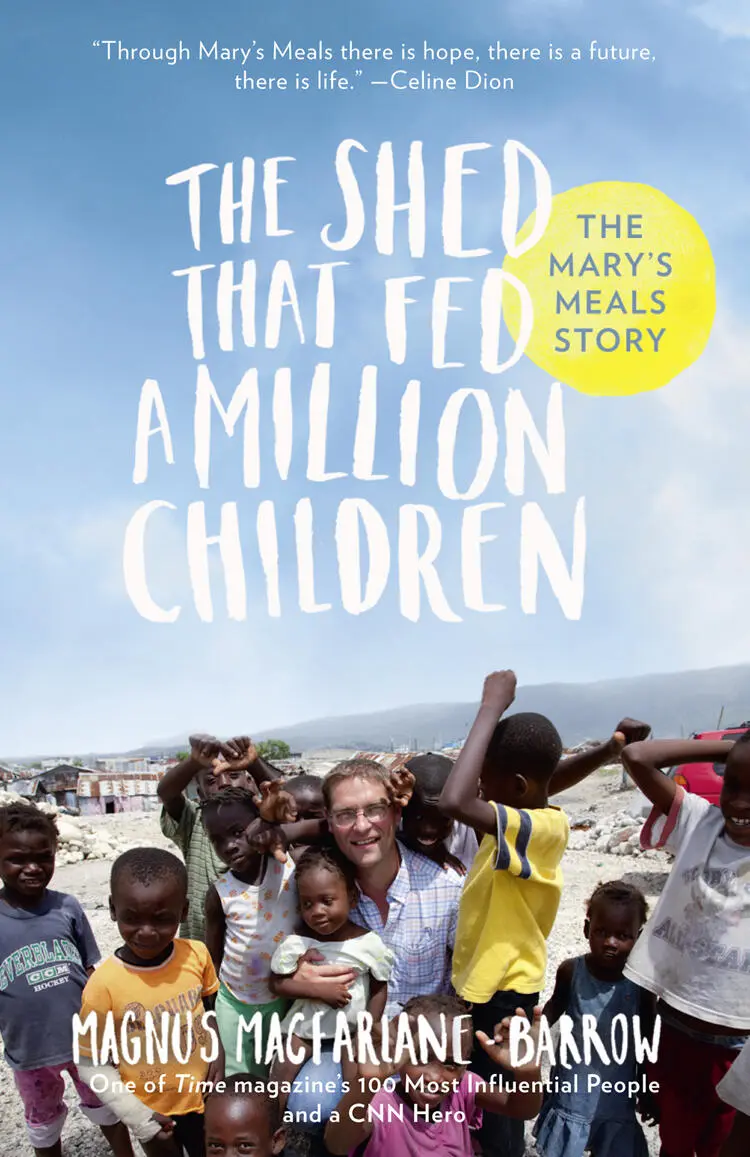
- Название:The Shed That Fed a Million Children: The Mary’s Meals Story
- Автор:
- Жанр:
- Год:неизвестен
- ISBN:нет данных
- Рейтинг книги:4 / 5. Голосов: 1
-
Избранное:Добавить в избранное
- Отзывы:
-
Ваша оценка:
The Shed That Fed a Million Children: The Mary’s Meals Story: краткое содержание, описание и аннотация
Предлагаем к чтению аннотацию, описание, краткое содержание или предисловие (зависит от того, что написал сам автор книги «The Shed That Fed a Million Children: The Mary’s Meals Story»). Если вы не нашли необходимую информацию о книге — напишите в комментариях, мы постараемся отыскать её.
The Shed That Fed a Million Children: The Mary’s Meals Story — читать онлайн ознакомительный отрывок
Ниже представлен текст книги, разбитый по страницам. Система сохранения места последней прочитанной страницы, позволяет с удобством читать онлайн бесплатно книгу «The Shed That Fed a Million Children: The Mary’s Meals Story», без необходимости каждый раз заново искать на чём Вы остановились. Поставьте закладку, и сможете в любой момент перейти на страницу, на которой закончили чтение.
Интервал:
Закладка:
‘We were just working in the fields like normal,’ Suad explained. ‘Shooting just started. There was tension in the village. We all knew what was happening in other parts of Bosnia-Herzegovina. But even one week before we had been invited to a party at the house of our Serb neighbours. The shots were coming from near that neighbour’s house, beside our field. My father and my brother Mersad fell. They were bleeding. I was hit too.’ He pointed to the scars on his withered arm.
‘My brother Mersad took a long time to die. He kept shouting “Suad, help me,” but I couldn’t. I was all bloody too.’
‘We were watching it all happen from our house,’ Zlata said quietly. ‘We wanted to run out to them in the field but the Serb was shooting from some bushes nearby. He would have killed us. Edin, Mersad’s son, was ten. He kept on trying to run out to his dad and we had to hold him back. Eventually when it became dark Suad managed to crawl home.’
The next day they squeezed on to overcrowded buses provided by the UN to evacuate them to Zagreb. They were shot at by Serbs and endured an appalling journey in the heat, without food or water.
‘I had to use my shirt as a nappy for Zlatan – he was still a baby then,’ Zlata told us through tears.
By 1995, the fortunes of war began to change and the Serbs had largely lost control of that part of Bosnia-Herzegovina. We were able to begin sending trucks of aid into the city of Bihac, which had endured a horrific three-year siege, and then to our friends’ hometown of Bosanski Petrovac. Suad began to receive messages from people who had already returned home to their town, urging them to come back too. And so, despite having no savings, no paid employment opportunities there, no assurance of safety, only a badly damaged home and some fields that might now have mines in them, they decided to go home. And we decided to go with them. We filled a large truck with all the belongings they had accumulated in Glasgow, as well as various other goods and tools to help them begin their lives again from scratch. Meanwhile, we had also been donated a minibus for a psychiatric hospital in Croatia to which we regularly delivered aid, and so we formed a plan for me to drive the group home in that minibus and then leave it at the hospital before flying home. The BBC heard of our plan and decided to make a documentary about our journey. And so, for the benefit of the cameramen, we waved goodbye to the bulging truck as it departed ahead of us from our Glasgow warehouse, and climbed into our bus. The group ranged from a two-year-old to an elderly granny. We headed south towards the ferry and Europe.
On arrival in Belgium we stopped at the customs post to show our passports. The police studied the Bosnians’ papers and were clearly unhappy. They asked questions and made phone calls. They told us the papers were valid for entry into Croatia and Bosnia-Herzegovina only, but not for transiting the European countries in between. They decided to deport us back to the UK. We also asked questions and made phone calls, but to no avail, and later we found ourselves travelling back on the boat to England. I realized the Bosnians had no homes to return to in Glasgow and that their belongings were already well on their way to Bosnia-Herzegovina, along with the BBC film crew. I phoned Julie to check what money we had left in our bank account and what flights from Heathrow would cost. We calculated that we had just enough to fly the whole group to Zagreb. So I drove them to Heathrow Airport from the ferry terminal and put them on their plane. I then headed south again, catching my third cross-Channel ferry in two days, and pointed my bus towards Zagreb. By now I could drive to our various destinations in the former Yugoslavia without needing a map, and this time it was pleasing to see just how quickly I was transiting countries compared to the slower pace of progress I had become used to in the lorry. Meanwhile Julie arranged for the Bosnian families to be met by Marijo on their arrival in Zagreb, who took them home to stay with them while waiting for me to catch up. When I finally did arrive the next day, they all climbed back in the bus for the final leg of their emotional journey over the border into Bosnia-Herzegovina. It amazed me, when I finally watched the documentary broadcast by the BBC about this journey, to see how skilfully they pieced together the footage so there was no hint of the deportations and flights that had occurred in between the Glasgow departure and the arrival into Bosnia-Herzegovina!
After the usual checking of papers at the Bosnian border we were finally waved through. As we entered Bosnia-Herzegovina, Zlata broke the silence with a cry.
‘We are no longer refugees!’
Everyone in the bus was crying. And the sobs grew louder when we finally reached Bosanski Petrovac, which was in ruins. Every building was covered in bullet holes and many houses had been reduced to pitiful piles of rubble.
The welcome they received from dear friends they had not seen for over three years was full of raw emotion. There was so much news to exchange. So many terrible things experienced that they had never had a chance to discuss and to try and understand. So many changes, too, in their old town. The Serbs were now gone. The town was now Muslim in a way it never had been before. A new mosque was being built even while many of the houses still lay in ruins. For Muslims like those I had just arrived with, their religion had not been something they previously practised. In fact I had met some young Muslims during the war who told me they never even knew they were Muslim before the war. Only their surname denoted their religion and sometimes sealed their fate. Bosnanski Petrovac might be home, and their hearts rejoiced at being back, but in some ways it was an alien land. I felt a little awkward. These encounters and exchanges that I found myself in the midst of were so personal and intimate that I wanted to leave them to work through it without me, however they could.
I left Bosanski Petrovac very early the next morning, leaving Suad and his family sleeping in their own home. I should have felt elated, but my drive was not a comfortable one. I travelled for many miles through a countryside and villages utterly devoid of people. Wild dogs, the only other sign of life, roamed amid the rubble and rubbish. This was part of the krajina , an area occupied by the Serbs for most of the war. They had only recently been defeated here and I became increasingly scared as I drove through this wasteland on my own. I began to doubt whether those in Bosnanski Petrovac, only recently returned themselves, had been well-informed when they advised me it would be safe to drive this route to Croatia and the Adriatic coast, where the hospital was awaiting the minibus. And given the lack of road signs, and any other way of checking I was on the right road, I began to fear I would drive into an area where I should not be welcome. The hours went past without seeing a human. As well as fear, a new overwhelming loathing for war and its futility rose in me. I wondered what would become of all the Serbs who had now been forced to flee the empty houses by the side of road and the villages to which they had belonged for generations. It was clear there were no winners in this war, only people taking their turn to lose in very horrible ways.
Eventually, I did find my way out of the mountains of Bosnia-Herzegovina and that same evening I found myself in a different world, eating delicious fish by the sparkling Adriatic with some friends from the hospital, who rejoiced over their new bus.
It was only on the flight home that I remembered our bank account. The £4,200 we had spent on plane tickets to Zagreb had left us with almost nothing. The aid donations would be piling up. I began to wonder how we would pay some outstanding bills and find a way to finance the next delivery. When I arrived back, a smiling Julie could not wait to tell me her news.
Читать дальшеИнтервал:
Закладка:
Похожие книги на «The Shed That Fed a Million Children: The Mary’s Meals Story»
Представляем Вашему вниманию похожие книги на «The Shed That Fed a Million Children: The Mary’s Meals Story» списком для выбора. Мы отобрали схожую по названию и смыслу литературу в надежде предоставить читателям больше вариантов отыскать новые, интересные, ещё непрочитанные произведения.






Обсуждение, отзывы о книге «The Shed That Fed a Million Children: The Mary’s Meals Story» и просто собственные мнения читателей. Оставьте ваши комментарии, напишите, что Вы думаете о произведении, его смысле или главных героях. Укажите что конкретно понравилось, а что нет, и почему Вы так считаете.