Alexandre Dumas - Essential Novelists - Alexandre Dumas
Здесь есть возможность читать онлайн «Alexandre Dumas - Essential Novelists - Alexandre Dumas» — ознакомительный отрывок электронной книги совершенно бесплатно, а после прочтения отрывка купить полную версию. В некоторых случаях можно слушать аудио, скачать через торрент в формате fb2 и присутствует краткое содержание. Жанр: unrecognised, на английском языке. Описание произведения, (предисловие) а так же отзывы посетителей доступны на портале библиотеки ЛибКат.
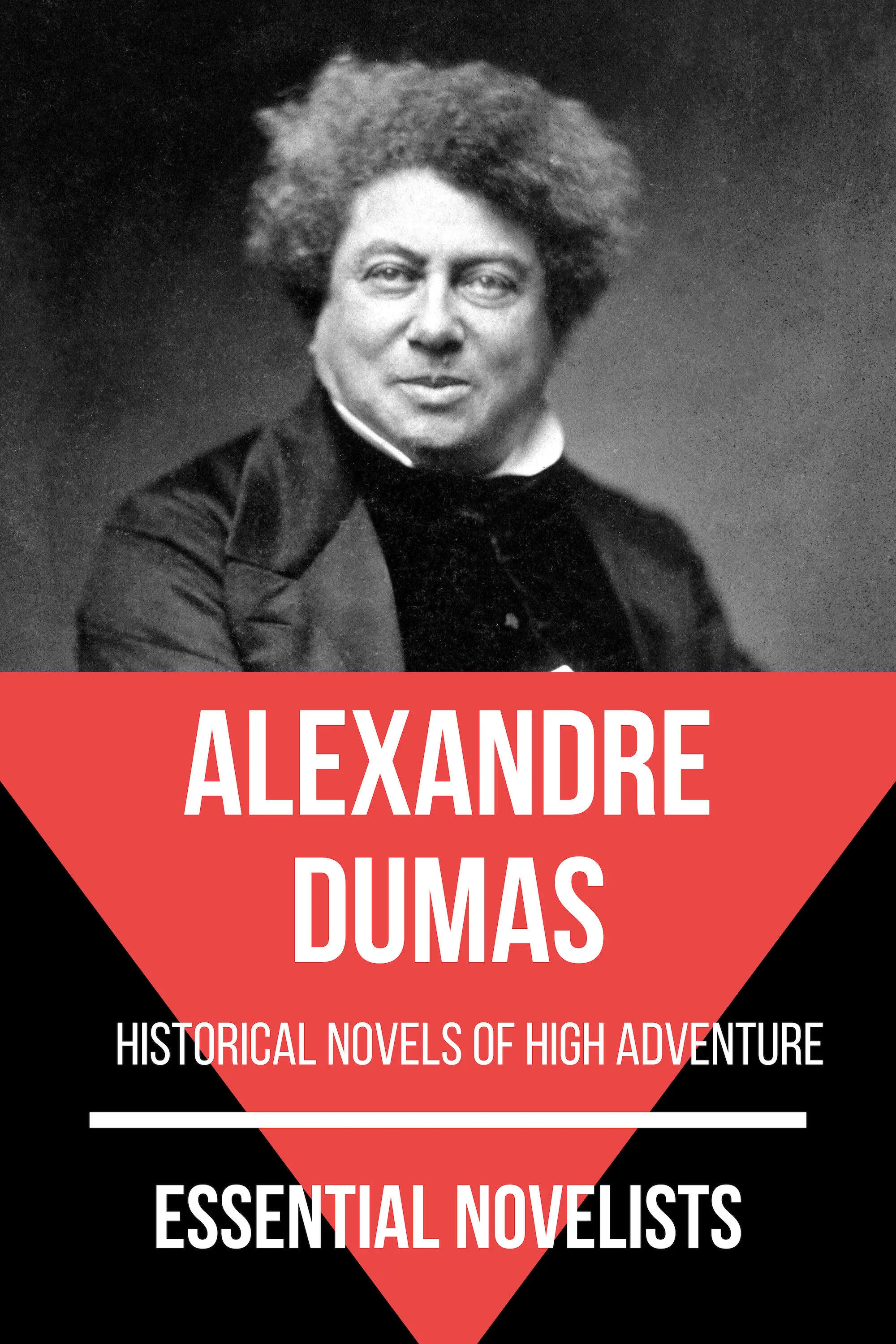
- Название:Essential Novelists - Alexandre Dumas
- Автор:
- Жанр:
- Год:неизвестен
- ISBN:нет данных
- Рейтинг книги:4 / 5. Голосов: 1
-
Избранное:Добавить в избранное
- Отзывы:
-
Ваша оценка:
Essential Novelists - Alexandre Dumas: краткое содержание, описание и аннотация
Предлагаем к чтению аннотацию, описание, краткое содержание или предисловие (зависит от того, что написал сам автор книги «Essential Novelists - Alexandre Dumas»). Если вы не нашли необходимую информацию о книге — напишите в комментариях, мы постараемся отыскать её.
For this book, the literary critic August Nemo has chosen the two most important and meaningful novels of Alexandre Dumas which are The Three Musketeersand The Count of Monte Cristo.
Alexandre Dumas is a celebrated French author best known for his historical adventure novels, including 'The Three Musketeers' and 'The Count of Monte Cristo.'
Novels selected for this book:
– The Three Musketeers
– The Count of Monte Cristo.
This is one of many books in the series Essential Novelists. If you liked this book, look for the other titles in the series, we are sure you will like some of the authors.
Essential Novelists - Alexandre Dumas — читать онлайн ознакомительный отрывок
Ниже представлен текст книги, разбитый по страницам. Система сохранения места последней прочитанной страницы, позволяет с удобством читать онлайн бесплатно книгу «Essential Novelists - Alexandre Dumas», без необходимости каждый раз заново искать на чём Вы остановились. Поставьте закладку, и сможете в любой момент перейти на страницу, на которой закончили чтение.
Интервал:
Закладка:
“Be so kind as to reflect, sire,” said the cardinal. “If we release the prisoner thus, we shall never know the truth.”
“Athos may always be found,” replied Treville, “ready to answer, when it shall please the gownsmen to interrogate him. He will not desert, Monsieur the Cardinal, be assured of that; I will answer for him.”
“No, he will not desert,” said the king; “he can always be found, as Treville says. Besides,” added he, lowering his voice and looking with a suppliant air at the cardinal, “let us give them apparent security; that is policy.”
This policy of Louis XIII made Richelieu smile.
“Order it as you please, sire; you possess the right of pardon.”
“The right of pardoning only applies to the guilty,” said Treville, who was determined to have the last word, “and my Musketeer is innocent. It is not mercy, then, that you are about to accord, sire, it is justice.”
“And he is in the Fort l’Eveque?” said the king.
“Yes, sire, in solitary confinement, in a dungeon, like the lowest criminal.”
“The devil!” murmured the king; “what must be done?”
“Sign an order for his release, and all will be said,” replied the cardinal. “I believe with your Majesty that Monsieur de Treville’s guarantee is more than sufficient.”
Treville bowed very respectfully, with a joy that was not unmixed with fear; he would have preferred an obstinate resistance on the part of the cardinal to this sudden yielding.
The king signed the order for release, and Treville carried it away without delay. As he was about to leave the presence, the cardinal gave him a friendly smile, and said, “A perfect harmony reigns, sire, between the leaders and the soldiers of your Musketeers, which must be profitable for the service and honorable to all.”
“He will play me some dog’s trick or other, and that immediately,” said Treville. “One has never the last word with such a man. But let us be quick—the king may change his mind in an hour; and at all events it is more difficult to replace a man in the Fort l’Eveque or the Bastille who has got out, than to keep a prisoner there who is in.”
M de Treville made his entrance triumphantly into the Fort l’Eveque, whence he delivered the Musketeer, whose peaceful indifference had not for a moment abandoned him.
The first time he saw d’Artagnan, “You have come off well,” said he to him; “there is your Jussac thrust paid for. There still remains that of Bernajoux, but you must not be too confident.”
As to the rest, M. de Treville had good reason to mistrust the cardinal and to think that all was not over, for scarcely had the captain of the Musketeers closed the door after him, than his Eminence said to the king, “Now that we are at length by ourselves, we will, if your Majesty pleases, converse seriously. Sire, Buckingham has been in Paris five days, and only left this morning.”
16 IN WHICH M. SEGUIER, KEEPER OF THE SEALS, LOOKS MORE THAN ONCE FOR THE BELL
––––––––

IT IS IMPOSSIBLE TO form an idea of the impression these few words made upon Louis XIII. He grew pale and red alternately; and the cardinal saw at once that he had recovered by a single blow all the ground he had lost.
“Buckingham in Paris!” cried he, “and why does he come?”
“To conspire, no doubt, with your enemies, the Huguenots and the Spaniards.”
“No, PARDIEU, no! To conspire against my honor with Madame de Chevreuse, Madame de Longueville, and the Condes.”
“Oh, sire, what an idea! The queen is too virtuous; and besides, loves your Majesty too well.”
“Woman is weak, Monsieur Cardinal,” said the king; “and as to loving me much, I have my own opinion as to that love.”
“I not the less maintain,” said the cardinal, “that the Duke of Buckingham came to Paris for a project wholly political.”
“And I am sure that he came for quite another purpose, Monsieur Cardinal; but if the queen be guilty, let her tremble!”
“Indeed,” said the cardinal, “whatever repugnance I may have to directing my mind to such a treason, your Majesty compels me to think of it. Madame de Lannoy, whom, according to your Majesty’s command, I have frequently interrogated, told me this morning that the night before last her Majesty sat up very late, that this morning she wept much, and that she was writing all day.”
“That’s it!” cried the king; “to him, no doubt. Cardinal, I must have the queen’s papers.”
“But how to take them, sire? It seems to me that it is neither your Majesty nor myself who can charge himself with such a mission.”
“How did they act with regard to the Marechale d’Ancre?” cried the king, in the highest state of choler; “first her closets were thoroughly searched, and then she herself.”
“The Marechale d’Ancre was no more than the Marechale d’Ancre. A Florentine adventurer, sire, and that was all; while the august spouse of your Majesty is Anne of Austria, Queen of France—that is to say, one of the greatest princesses in the world.”
“She is not the less guilty, Monsieur Duke! The more she has forgotten the high position in which she was placed, the more degrading is her fall. Besides, I long ago determined to put an end to all these petty intrigues of policy and love. She has near her a certain Laporte.”
“Who, I believe, is the mainspring of all this, I confess,” said the cardinal.
“You think then, as I do, that she deceives me?” said the king.
“I believe, and I repeat it to your Majesty, that the queen conspires against the power of the king, but I have not said against his honor.”
“And I—I tell you against both. I tell you the queen does not love me; I tell you she loves another; I tell you she loves that infamous Buckingham! Why did you not have him arrested while in Paris?”
“Arrest the Duke! Arrest the prime minister of King Charles I! Think of it, sire! What a scandal! And if the suspicions of your Majesty, which I still continue to doubt, should prove to have any foundation, what a terrible disclosure, what a fearful scandal!”
“But as he exposed himself like a vagabond or a thief, he should have been—”
Louis XIII stopped, terrified at what he was about to say, while Richelieu, stretching out his neck, waited uselessly for the word which had died on the lips of the king.
“He should have been—?”
“Nothing,” said the king, “nothing. But all the time he was in Paris, you, of course, did not lose sight of him?”
“No, sire.”
“Where did he lodge?”
“Rue de la Harpe. No. 75.”
“Where is that?”
“By the side of the Luxembourg.”
“And you are certain that the queen and he did not see each other?”
“I believe the queen to have too high a sense of her duty, sire.”
“But they have corresponded; it is to him that the queen has been writing all the day. Monsieur Duke, I must have those letters!”
“Sire, notwithstanding—”
“Monsieur Duke, at whatever price it may be, I will have them.”
“I would, however, beg your Majesty to observe—”
“Do you, then, also join in betraying me, Monsieur Cardinal, by thus always opposing my will? Are you also in accord with Spain and England, with Madame de Chevreuse and the queen?”
“Sire,” replied the cardinal, sighing, “I believed myself secure from such a suspicion.”
“Monsieur Cardinal, you have heard me; I will have those letters.”
“There is but one way.”
“What is that?”
Читать дальшеИнтервал:
Закладка:
Похожие книги на «Essential Novelists - Alexandre Dumas»
Представляем Вашему вниманию похожие книги на «Essential Novelists - Alexandre Dumas» списком для выбора. Мы отобрали схожую по названию и смыслу литературу в надежде предоставить читателям больше вариантов отыскать новые, интересные, ещё непрочитанные произведения.








Обсуждение, отзывы о книге «Essential Novelists - Alexandre Dumas» и просто собственные мнения читателей. Оставьте ваши комментарии, напишите, что Вы думаете о произведении, его смысле или главных героях. Укажите что конкретно понравилось, а что нет, и почему Вы так считаете.