Museum Practice
Здесь есть возможность читать онлайн «Museum Practice» — ознакомительный отрывок электронной книги совершенно бесплатно, а после прочтения отрывка купить полную версию. В некоторых случаях можно слушать аудио, скачать через торрент в формате fb2 и присутствует краткое содержание. Жанр: unrecognised, на английском языке. Описание произведения, (предисловие) а так же отзывы посетителей доступны на портале библиотеки ЛибКат.
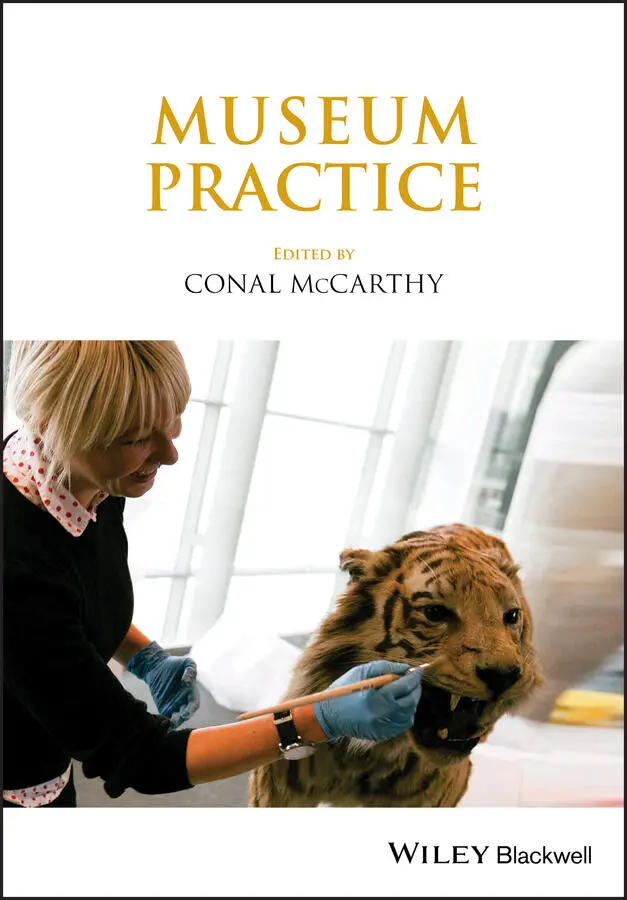
- Название:Museum Practice
- Автор:
- Жанр:
- Год:неизвестен
- ISBN:нет данных
- Рейтинг книги:5 / 5. Голосов: 1
-
Избранное:Добавить в избранное
- Отзывы:
-
Ваша оценка:
Museum Practice: краткое содержание, описание и аннотация
Предлагаем к чтению аннотацию, описание, краткое содержание или предисловие (зависит от того, что написал сам автор книги «Museum Practice»). Если вы не нашли необходимую информацию о книге — напишите в комментариях, мы постараемся отыскать её.
Museum Practice — читать онлайн ознакомительный отрывок
Ниже представлен текст книги, разбитый по страницам. Система сохранения места последней прочитанной страницы, позволяет с удобством читать онлайн бесплатно книгу «Museum Practice», без необходимости каждый раз заново искать на чём Вы остановились. Поставьте закладку, и сможете в любой момент перейти на страницу, на которой закончили чтение.
Интервал:
Закладка:
4
RECONCEPTUALIZING MUSEUM ETHICS FOR THE TWENTY-FIRST CENTURY
A View from the Field 1
Janet Marstine, Jocelyn Dodd, and Ceri Jones
In our rapidly changing world museums face increasing demands to engage with complex ethics issues, and to behave ethically. However, the predominant late twentieth-century approach to ethics as professional practice, which relies on ethics codes revised perhaps once a decade and authored by like-minded individuals to produce and implement these codes, has proven to be a constraining factor, rather than an enabling process. In order for museums effectively to negotiate difficult issues as well as ethical opportunities that arise, novel approaches to ethics are required in which the museum sector actively pursues a dynamic ethics-based museum practice. Over the past five years a new model of museum ethics has emerged; it reconceptualizes ethics as a discourse contingent upon transformations in the social, political, technological, and economic domains. Where these transformations interact with museum practice, a new sphere for ethics debate results. Through discussions among diverse stakeholders with divergent viewpoints, ethical issues are identified, considered, and acted upon. Conceptualizing museum ethics as a discourse acknowledges both the intellectual inquiry and social practice that are integral to communications. In addition, our focus on discourse aims to refute the fragmentation of ethics into distinct and overly reductive protocols for professional practice.
The new museum ethics has been shaped by scholarship in several key areas, most notably: the postmodern critical theories of post-colonialism, feminism, and neo-Marxism; new thinking in applied ethics across disciplines; and current research on new museum theory and practice. Encouraging museums to look outward and engage with the wider world through the lens of ethics, it maintains that transparency and self-reflexivity toward the processes and authority that museums hold, helps them to build trust with communities. The new museum ethics advocates placing social responsibility at the heart of museums so as to reinvigorate their mission and values toward contributing to the wellbeing of society (Marstine 2011a).
In order to map the twenty-first-century ethical terrain that museums must negotiate, and to explore how the new museum ethics can be translated effectively into practice, the Research Centre for Museums and Galleries (RCMG), based in the School of Museum Studies at the University of Leicester, embarked in 2011 on a research project with partners the Museums Association (MA) and the Inter- Disciplinary Ethics Applied Centre for Excellence in Teaching and Learning (IDEA CETL) at the University of Leeds. The unique cross-disciplinary nature of the collaboration created a rich environment for new thinking: RCMG researches the social role of museums and engages in knowledge exchange with the museum sector; IDEA CETL helps professionals across disciplines identify, analyze, and respond effectively to ethical issues they encounter in their careers; and the MA is a membership organization for UK museum, gallery, and heritage professionals and sets ethical standards for the sector.
Funded by the UK’s Arts and Humanities Research Council (AHRC) under the “Care for the Future” initiative, the project took the form of a research network which brought together some 26 museum leaders, including museum directors, policymakers, senior practitioners, and academics (RCMG 2013), to identify and analyze key ethics issues with which museums are grappling and to test the potential value of the new museum ethics to address these issues. The primary aim of the project was to build a network of expertise in the new museum ethics. While the parameters of the grant dictated that the scale of the network remain modest, with most participants based in the UK, British contributors were joined by a number from Europe, the United States, Australia, and New Zealand. Together, they represented a cross-section of museum practitioners and researchers active in social and ethical initiatives; group members expressed a range of political perspectives, but shared a set of values rooted in the belief that museums have the potential to play an important social role in addressing inequalities. Many of the conversations could be characterized as encompassing an Anglo-American perspective, but nonetheless raise important questions about ethics in other contexts. Two members of the network are representatives of the MA’s ethics committee, including Nick Merriman, the ethics committee convener. Other network members did not necessarily think of themselves as ethicists, but recognized that they were working to model ethical leadership in their practice.
Led by Janet Marstine and Jocelyn Dodd from RCMG, the research network met during five day-long workshops over 18 months (late 2011 to early 2013). Each workshop was devoted to a specific theme chosen by RCMG in consultation with partner organizations. These themes were: social engagement; transparency; shared guardianship of collections; moving beyond canonicity; and sustainability. Approximately half of the participants were core group members who attended all five workshops, creating a sustained conversation. The other half consisted of guest speakers who attended a single workshop as provocateurs.
This chapter discusses the findings from the research network and presents preliminary ideas about how the new museum ethics might be shared and implemented within the wider museum sector. Support for the model of new museum ethics was unanimous among participants; all agreed that the model represents a powerful and productive framework through which to re-envision museums in the twenty-first century. While many questions persist about the practical implications of the new museum ethics that will require further research, responses from participants affirm the significance of the five ethics themes on which the network focused. Responses from contributors also emphasize the value for museums in forging new relationships with communities, built upon participation, mutual understanding, and joint decision-making. Through incorporating unpublished group discussions, the chapter captures the distinct voices of network participants as they collaborate, speaking freely and experimenting with new ideas. In this way, we hope to model one strand of how new museum ethics discourse might develop to chart a course for change in the museum. Comments made by contributors to the five workshops are quoted throughout the text; the Appendix provides a full list of contributors for each workshop. Where appropriate, references have been made to publications that further extend or elucidate the themes discussed.
The new museum ethics: why is change needed, and why now?
As Marstine has described, museums are facing some of the most serious challenges in their history but the sector is unable to adapt or respond effectively to these challenges (Marstine 2011b, xxiii). New opportunities to become socially responsible are going unrecognized and unmet. Many museums are currently under-resourced and, as a result, innovative agendas to promote social engagement are often abandoned in favor of conventional approaches to practice. Financial pressures are forcing museum leaders to make choices in the short term that may compromise the work of institutions in the longer term.
Of great concern is the sector’s inadequate engagement with the shifting ethics landscape. Museum professional bodies and the museums they represent have long relied on ethics codes to define their policy and practice. Introduced by the American Association of Museums in 1925, the Museums Association in the 1970s, and the International Council of Museums in 1986 (Besterman 2006, 433–435), such codes remain the touchstone of museum ethics today. This dependence, in turn, reflects the prioritization of skill development and standard setting that characterized the museum and museum studies sectors for much of the last century. The focus on professional ethics has played a significant role in distinguishing public service from personal gain and political interests. Ironically, it has also insulated museums from social concerns in the world around them. Gary Edson’s seminal volume Museum Ethics advanced this notion of ethics as an inward looking process of professionalization; “Museum ethics is not about the imposition of external values on museums, but about an understanding of the foundations of museum practices” (Edson 1997, xxi). By contrast, the shifting terrain around museums drives a critique of common practice: change is needed to address the current and future needs of society.
Читать дальшеИнтервал:
Закладка:
Похожие книги на «Museum Practice»
Представляем Вашему вниманию похожие книги на «Museum Practice» списком для выбора. Мы отобрали схожую по названию и смыслу литературу в надежде предоставить читателям больше вариантов отыскать новые, интересные, ещё непрочитанные произведения.


Обсуждение, отзывы о книге «Museum Practice» и просто собственные мнения читателей. Оставьте ваши комментарии, напишите, что Вы думаете о произведении, его смысле или главных героях. Укажите что конкретно понравилось, а что нет, и почему Вы так считаете.