Museum Practice
Здесь есть возможность читать онлайн «Museum Practice» — ознакомительный отрывок электронной книги совершенно бесплатно, а после прочтения отрывка купить полную версию. В некоторых случаях можно слушать аудио, скачать через торрент в формате fb2 и присутствует краткое содержание. Жанр: unrecognised, на английском языке. Описание произведения, (предисловие) а так же отзывы посетителей доступны на портале библиотеки ЛибКат.
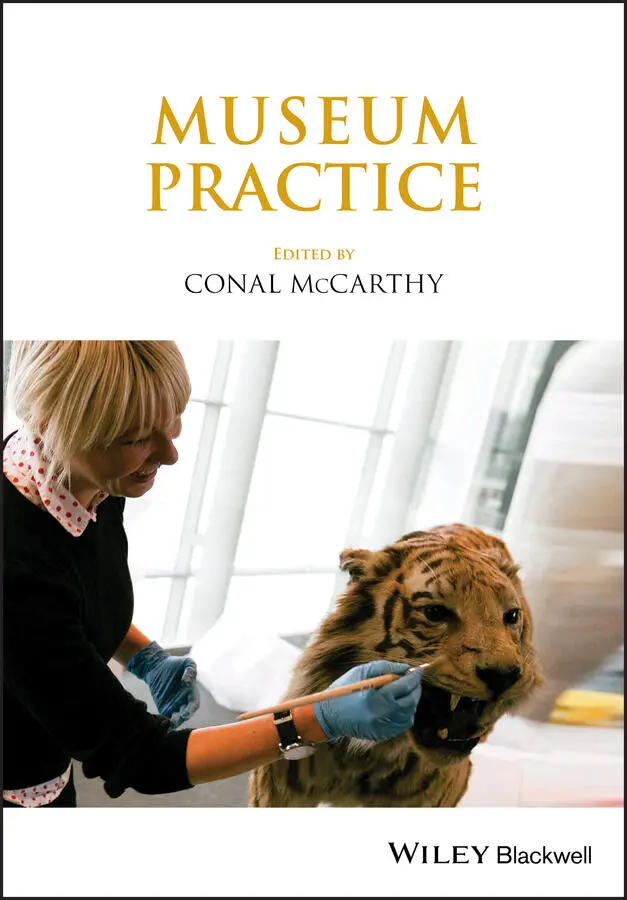
- Название:Museum Practice
- Автор:
- Жанр:
- Год:неизвестен
- ISBN:нет данных
- Рейтинг книги:5 / 5. Голосов: 1
-
Избранное:Добавить в избранное
- Отзывы:
-
Ваша оценка:
Museum Practice: краткое содержание, описание и аннотация
Предлагаем к чтению аннотацию, описание, краткое содержание или предисловие (зависит от того, что написал сам автор книги «Museum Practice»). Если вы не нашли необходимую информацию о книге — напишите в комментариях, мы постараемся отыскать её.
Museum Practice — читать онлайн ознакомительный отрывок
Ниже представлен текст книги, разбитый по страницам. Система сохранения места последней прочитанной страницы, позволяет с удобством читать онлайн бесплатно книгу «Museum Practice», без необходимости каждый раз заново искать на чём Вы остановились. Поставьте закладку, и сможете в любой момент перейти на страницу, на которой закончили чтение.
Интервал:
Закладка:
And how important was New Labour policy to museums, museum professionals, and museum practice? The short answer is that it was of considerable importance if it brought paychecks with it. So for the 60 or so National or Hub museums that received direct funding from DCMS or via MLA, understanding and keeping abreast of policy was essential. But many hundreds of museums were also indirectly touched by government policy. The resources put into Museum Development Officers and Subject Specialist Networks, for example, reached deep into the sector. It also influenced the Heritage Lottery Fund and therefore all those who applied for a grant.
Policy certainly endorsed the actions of those museums – or more specifically, those museum leaders – who sought a wider role in society, through social inclusion and purposefully working with the disadvantaged. But policy-engaged people are not that common in the museums sector. At best even the more able museum managers are primarily and selfishly partisan for their own institutions and see any benefits of government policy as somehow being “accidental windfalls.” Government initiatives encouraging museums to do different things and do things differently are usually regarded as being just another set of criteria to which lip service must be paid if you want the financial benefits. Policy rarely stimulates serious discussion within the sector. But then neither does the DCMS energetically promote such discussions.
This chapter reveals something of the vacillations of government policy, and the unpredictable durability of particular initiatives. Certain preoccupations remained consistent: museums registration (subsequently, Accreditation Scheme); funding and governance; relationships within the UK and internationally; use of new technologies – although these may not have progressed according to plan. Other concerns proved less predictable. Museum admission charges, for example, are often regarded as the battleground between Conservative versus Labour ideologies (Wilkinson 2003). While different Conservative administrations introduced charges, their reasons for doing so were different. Thatcher’s predecessor, Edward Heath, refused to accept the principle that museum access should be free, whereas Thatcher was concerned to make the public sector less dependent on state support. A more meaningful indicator of the consistent evolution of conditions affecting British museums’ operations might therefore be the degree to which the sector delivers, or is expected to deliver, on government objectives.
Other museum-related enterprises can be seen to have manifestly fallen by the wayside. These include the watchdog, QUEST, which may have part of a ruse by DCMS’s first Secretary of State to increase funding to the sector from the Treasury (Smith 2003). It was abolished by New Labour’s second Secretary of State on taking up office. Other matters were clouded by political argument. After the think-tank, Demos, first raised the specter of cultural value as a reprieve from instrumentalist value in 2003, DCMS responded by describing culture as synonymous with “transformative power,” a greater sense of well-being, connectedness, confidence, and aspiration, and giving a greater sense of personal meaning. But it still associated culture with the development of more aspirant individuals and better communities, in short, the production of a more thriving economy. The debate has now become the subject of academic research partnerships (O’Brien 2010), as interrogation of subjective well-being has taken over from economic and social impact, represented for example, in MLA’s attempt to promote SORI (Social Return on Investment), following the Cabinet Office’s lead.
Elsewhere the persistence, if not the transience, of policy reflected broader trends within government. Evidence on the development of evidence-based policy is slight. The vast amount of evidence collected on museums either proved insufficient for the generation of evidence-based policy, or it may have simply proved surplus to the requirements of policy-making (as with free admission). But DCMS’s declining emphasis on targets reflects a withdrawal from a target-driven culture across government more generally. However, when it came to it DCMS exerted no scrutiny over MLA, which never produced annual reports or accounts – not even on Renaissance, its most substantial museums program for over 150 years.
This sort of laxity should be unacceptable to museum professionals and should provoke outrage. But to earn the respect of government and be treated more seriously, they must engage more critically with government policy. There is often a resignation about museums – worldwide, not just in the UK – and their relationship with almost everything that ought to matter to them. It is David and Goliath, but worse odds. Museums have a support base in society. They need to work harder to have a place in policy-making so that they have just a little more say in what happens to them rather than rolling over and becoming hapless victims.
Notes
1 1Those that are recognized as working to nationally agreed standards for museums. See the accreditation section originally set up by the Museums Libraries and Archives Council and now administered by Arts Council England; see also ACE 2014a. The relationship between DCMS, its UK and English remits is complex, and beyond the scope of this chapter. National museums in Scotland, Wales, and Northern Ireland are funded by those countries’ devolved governments.
2 2One study concluded that whereas national museums had a uniform 15 percent cut, other museums were affected to varying degrees, with 20 percent of respondents reporting cuts of more than 25 percent (Newman and Tourle 2011, 3).
3 3Their job is to “drive development and deliver sustainability resilience and innovation in England’s regional museums” (ACE 2014b).
4 4At the same time, the Welsh Assembly Government issued policy directions related to money distributed in Wales; these complement the UK-wide directions.
5 5See Sir H. A. Miers. 1928. A Report on the Public Museums of the British Isles (other than the National Museums). Edinburgh; S. F. Markham. 1938. The Museums and Art Galleries of the British Isles. Edinburgh; Standing Commission on Museums and Galleries. 1963. Survey of Provincial Museums and Galleries. London (the Rosse Report); Standing Commission on Museums and Galleries. 1979. Framework for a System of Museums. London (the Drew Report).
6 6This refers to a demographic classification system derived from the British National Readership Survey (NRS), used in market research, in which C2 are skilled manual workers; D are semi-skilled and unskilled manual workers, and E are state pensioners, casual or lowest grade workers, unemployed with state benefits only (Ipsos Media CT 2009).
References
ACE (Arts Council England). 2011a. “Culture, Knowledge and Understanding: Great Museums and Libraries for Everyone.” Accessed September 15, 2014. http://www.artscouncil.org.uk/media/uploads/pdf/culture_knowledge_and_understanding.pdf.
ACE (Arts Council England). 2011b. “A Review of Research and Literature on Museums and Libraries.” Accessed September 15, 2014. http://www.artscouncil.org.uk/publication_archive/museums-and-libraries-research-review.
ACE (Arts Council England). 2014a. “Accreditation Scheme.” Accessed September 15, 2014. http://www.artscouncil.org.uk/what-we-do/supporting-museums/accreditation-scheme.
ACE (Arts Council England). 2014b. “Arts Council England Announces Successful Recipients of the Renaissance Strategic Support and Designation Development Funds.” Accessed September 20, 2014. http://press.artscouncil.org.uk/Press-Releases/Arts-Council-England-announces-successful-recipients-of-the-Renaissance-Strategic-support-and-Design-846.aspx.
Читать дальшеИнтервал:
Закладка:
Похожие книги на «Museum Practice»
Представляем Вашему вниманию похожие книги на «Museum Practice» списком для выбора. Мы отобрали схожую по названию и смыслу литературу в надежде предоставить читателям больше вариантов отыскать новые, интересные, ещё непрочитанные произведения.










Обсуждение, отзывы о книге «Museum Practice» и просто собственные мнения читателей. Оставьте ваши комментарии, напишите, что Вы думаете о произведении, его смысле или главных героях. Укажите что конкретно понравилось, а что нет, и почему Вы так считаете.