Museum Practice
Здесь есть возможность читать онлайн «Museum Practice» — ознакомительный отрывок электронной книги совершенно бесплатно, а после прочтения отрывка купить полную версию. В некоторых случаях можно слушать аудио, скачать через торрент в формате fb2 и присутствует краткое содержание. Жанр: unrecognised, на английском языке. Описание произведения, (предисловие) а так же отзывы посетителей доступны на портале библиотеки ЛибКат.
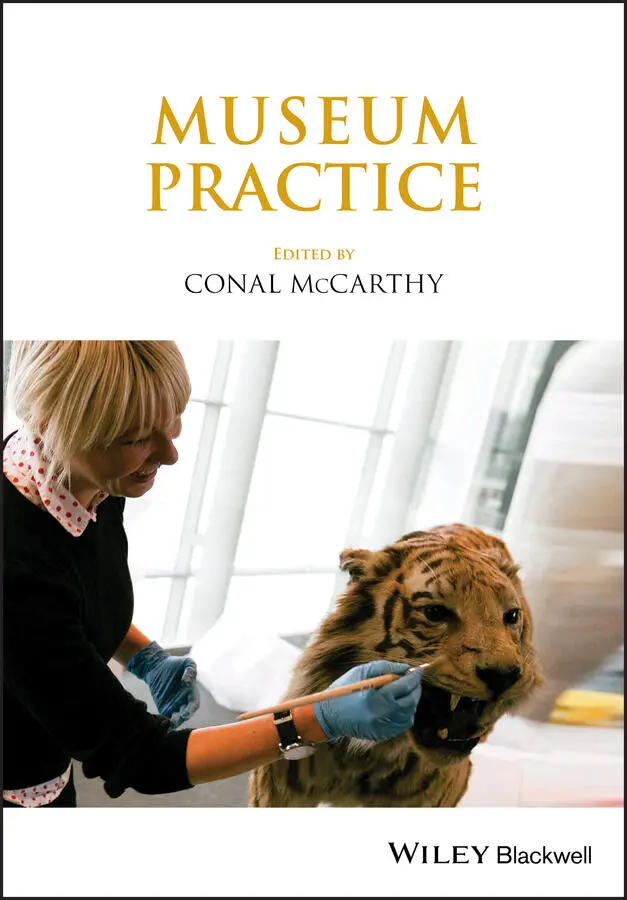
- Название:Museum Practice
- Автор:
- Жанр:
- Год:неизвестен
- ISBN:нет данных
- Рейтинг книги:5 / 5. Голосов: 1
-
Избранное:Добавить в избранное
- Отзывы:
-
Ваша оценка:
Museum Practice: краткое содержание, описание и аннотация
Предлагаем к чтению аннотацию, описание, краткое содержание или предисловие (зависит от того, что написал сам автор книги «Museum Practice»). Если вы не нашли необходимую информацию о книге — напишите в комментариях, мы постараемся отыскать её.
Museum Practice — читать онлайн ознакомительный отрывок
Ниже представлен текст книги, разбитый по страницам. Система сохранения места последней прочитанной страницы, позволяет с удобством читать онлайн бесплатно книгу «Museum Practice», без необходимости каждый раз заново искать на чём Вы остановились. Поставьте закладку, и сможете в любой момент перейти на страницу, на которой закончили чтение.
Интервал:
Закладка:
Restrictions in public expenditure across the board meant that the whole emphasis of the government’s cultural policy was on plural funding, via sponsorship, marketing, charges, and trading. Thatcher’s introduction of entrepreneurialism to the public sector prompted major reform. Through the Financial Management Initiative, launched in 1982, her government called for greater accountability efficiency, effectiveness, and “value for money” at central and local government levels. It brought about change in the culture of the civil service and government- funded agencies, with budget-holding and -planning regularly impinging on the lives of those who had never previously been required to consider issues of costs and benefits. The implementation of the Financial Management Initiative was largely scrutinized through the Audit Commission and the National Audit Office, both of which were set up in 1983. The former had responsibility for examining the management of local authority auditing in England and Wales and the latter, for reporting on public spending programs in England, Scotland, and Wales. While neither body was, or is, specifically responsible for cultural services, yet museums, galleries, and the arts nonetheless fall within their remits and have been subject to the philosophy that they represent.
These changes impacted on national museums as well as local authority museums in England. They were hit by a series of initiatives designed to introduce a basic understanding of the principles of business managerialism as far down their structures as possible. The introduction of competitive tendering in the early 1980s brought indirect pressure to bear as costs were everywhere scrutinized and tested. The Audit Commission’s report, The Road to Wigan Pier (1991) reminded local authorities “first to be clear about why they are supporting museums, to set objectives for them and then to devise a business or development plan for the service,” and that that their “[s]ervices should be targeted at chosen customers” (Audit Commission 1991, 3). Other indirect reforms included the Citizens’ Charter. This initiative, launched by Thatcher’s successor John Major in 1991, promised better-quality public service provision through the publication of service standards, the right of redress, performance monitoring, penalties, tighter regulation of privatized utilities, and the increased pressures resulting from competition and privatization. “Charter marks” were awarded to the most successful service providers, including several museums.
Following Major’s 1992 election victory, and in response to what he perceived as having been a fragmentary approach to support for culture, he replaced the OAL with the Department for National Heritage (DNH). Unlike its predecessor departments, the DNH was headed by a Secretary of State with Cabinet status, which brought a greater political influence to bear on its sectors. The new department’s agenda was visibly shaped by the interests of government. In 1996, DNH published Treasures in Trust (DNH 1996a), described as the first major statement of government policy toward museums since the 1930s. It was intended to provide a new framework for museums, which increased emphasis on collection care, public participation, and quality of service. It proposed to help to raise standards in museums and galleries, using the existing Museum Registration Scheme as a basis; underline the importance of museum education, especially as part of lifelong learning; address the opportunities provided by new technologies, especially to make collections more widely accessible; and give museums and galleries access to funding from the National Lottery for a wide range of projects. It also commissioned David Anderson’s report A Common Wealth (1997) which made the case for museums offering much better services to learners of all kinds (and was subsequently republished by Labour).
In the longer term, the most important innovation under Major was undoubtedly the creation of the National Lottery through the National Lottery Act 1993 . Heritage was one of the five good causes identified to receive lottery income and museums have benefited enormously over the years since (see case studies below). By 1997, DNH was increasingly guiding its sectors’ strategic direction, which it articulated as being to encourage high quality and diversity; safeguard existing creative achievements and promote understanding of the past; extend opportunities to enjoy and appreciate rewarding leisure opportunities; promote the contribution all our sectors make to the national prosperity and prestige; and carry out these activities with proper stewardship of the resources available (DNH 1996b, 3). It had seemingly embraced the importance of access (Bottomley in DNH 1996b, 8) and had possibly learned from what Labour local authorities had achieved during the years of opposition. The way was perhaps smoothed for the arrival of New Labour and an unprecedented proactive approach to cultural policy.
New Labour, 1997–2010
New Labour won three successive elections: 1997, 2001, and 2005. Over the period within which it was in power, its policies were broadly consistent. Before winning the 1997 election, Labour described the cultural sector as of fundamental importance to its operation as the incoming government, with the capacity “to promote our sense of community and common purpose” and as being “central to the task of re-establishing a sense of community, of identity and of civic pride, the undermining of which has so damaged our society” (Labour Party 1997, 9). New Labour’s establishment of DCMS, and the publication of A New Cultural Framework (DCMS 1998), the most detailed statement of any government’s plans to reform the sector, made explicit the extent to which culture was envisaged as being an instrument of government.
DCMS was committed to “reducing bureaucracy; making sure that money is spent on direct services, and putting a new emphasis on the public rather than the producer.” The reward would be substantial increases in funding. DCMS was also committed to “joined-up government.” It worked, for example, with the Social Exclusion Unit, Home Office, Department of Education, and Department of the Environment, to explore the connections between crime, schooling, poor housing, and culture, an area where museums felt that they had something positive to offer.
DCMS’s policy preoccupations, as reported in its Annual Reports from 1998– 2009, remained largely consistent, even if their emphases shifted and the ways in which they were articulated changed. Little distinguishes its original desire to promote “access for the many not just the few” (a standard Labour mantra of the time); pursue “excellence and innovation”; nurture “educational opportunity”; and foster the creative industries (DCMS 1998) from its final objectives – to encourage more widespread enjoyment of culture, media, and sport; support talent and excellence in culture, media, and sport, and realize the economic benefits of the department’s sectors.
DCMS’s actions were based on New Labour’s belief in the increased effectiveness of greater public expenditure attached to its modernization agenda (Chief Secretary to the Treasury 1998). Having initially adhered to the Conservative’s spending plans, Labour’s expenditure grew at an average of 4.4 percent per annum in real terms, which was significantly more than the Conservatives’ 0.7 percent per annum average between 1979 and 1997. While this largely reflected increases in spending on the National Health Service, education, and transport, increases in culture were far from insignificant. Between 1998 and 2010, support to the cultural sector rose by about 98 percent, and for museums by around 95 percent. That is quite apart from the billions of pounds that came from the National Lottery. Such investments reflected a period of steady public growth in the economy from 37 percent in 1999–2000 to 42 percent by 2007–2008.
Читать дальшеИнтервал:
Закладка:
Похожие книги на «Museum Practice»
Представляем Вашему вниманию похожие книги на «Museum Practice» списком для выбора. Мы отобрали схожую по названию и смыслу литературу в надежде предоставить читателям больше вариантов отыскать новые, интересные, ещё непрочитанные произведения.









Обсуждение, отзывы о книге «Museum Practice» и просто собственные мнения читателей. Оставьте ваши комментарии, напишите, что Вы думаете о произведении, его смысле или главных героях. Укажите что конкретно понравилось, а что нет, и почему Вы так считаете.