Museum Practice
Здесь есть возможность читать онлайн «Museum Practice» — ознакомительный отрывок электронной книги совершенно бесплатно, а после прочтения отрывка купить полную версию. В некоторых случаях можно слушать аудио, скачать через торрент в формате fb2 и присутствует краткое содержание. Жанр: unrecognised, на английском языке. Описание произведения, (предисловие) а так же отзывы посетителей доступны на портале библиотеки ЛибКат.
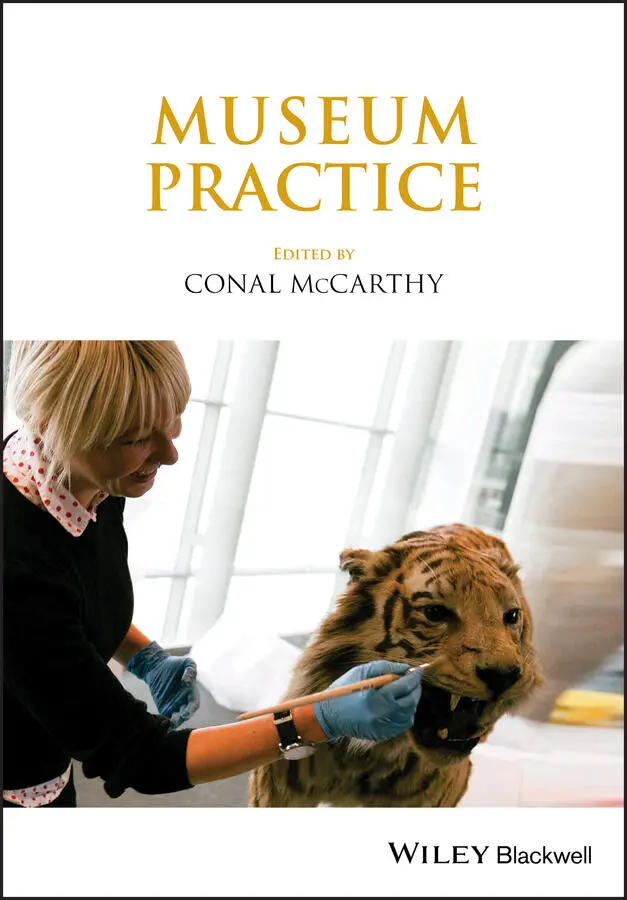
- Название:Museum Practice
- Автор:
- Жанр:
- Год:неизвестен
- ISBN:нет данных
- Рейтинг книги:5 / 5. Голосов: 1
-
Избранное:Добавить в избранное
- Отзывы:
-
Ваша оценка:
Museum Practice: краткое содержание, описание и аннотация
Предлагаем к чтению аннотацию, описание, краткое содержание или предисловие (зависит от того, что написал сам автор книги «Museum Practice»). Если вы не нашли необходимую информацию о книге — напишите в комментариях, мы постараемся отыскать её.
Museum Practice — читать онлайн ознакомительный отрывок
Ниже представлен текст книги, разбитый по страницам. Система сохранения места последней прочитанной страницы, позволяет с удобством читать онлайн бесплатно книгу «Museum Practice», без необходимости каждый раз заново искать на чём Вы остановились. Поставьте закладку, и сможете в любой момент перейти на страницу, на которой закончили чтение.
Интервал:
Закладка:
The greater vitality of independent not-for-profit associations has prompted moves to introduce them in jurisdictions where museums have traditionally been governed as line departments. The transition is often difficult. In Hong Kong, for instance, the West Kowloon Cultural District Authority has had the disconcerting experience of seeing its first two directors (one local, the other imported) resign, allegedly for “personal” or “health” reasons, within a few days of their appointments. Such contretemps occur as boards accustomed to obedient civil servants within government line departments encounter directors who must be given freedom to operate an independent association. Considering all these issues, it is not surprising that incoming trustees are usually presented with a Board Manual, and may be expected to undergo an orientation program. When museum board meetings make bad news, it is usually due to an ill-prepared or only partially understood relationship between the director and some or all of the board members.
New directions in the governance of civil society institutions
Any discussion of museum governance today must be conducted in the context established by the late Stephen Weil (1928–2005), the renowned American museologist who introduced the term “civil society institutions” in much of his writing and speaking toward the end of his life (Weil 2004). By this phrase he was referring to the emergence of museums that are far more involved in their communities – culturally, economically, and socially – so that their governance calls out for the active participation of public and private sectors, individuals and organizations with a sense of responsibility to and for the maintenance of a healthy, creative, innovative society. This movement can be clearly seen in science centers that get involved in public/private partnerships to encourage innovation, in art museums aiming to stimulate creativity in the public school system, or in natural or cultural history museums that are courageous enough to present exhibitions on controversial topics.
Ironically, this trend has been intensified by government financial cutbacks, as even line department museums have reached out to become more involved in the economic realities of their communities. The increasingly important role of museums in the vital cultural tourism industry has also supported this direction. Museums’ contributions to social cohesion in an age of rapid social change, their often decisive role in urban regeneration, and their ability to contribute to the “brand” of their cities are all further factors encouraging this direction. Perhaps most important has been the growth in importance of what economist Richard Florida has called “the creative class,” in other words people working in or around the “knowledge economy”; as scientific, cultural, and heritage institutions, museums are integral to the knowledge economy, and their governance must be adapted to reflect this position (Florida 2003).
Not surprisingly, the resultant tendency among line department museums has been to move to arm’s-length status, while among those museums already at “arm’s length” there has been pressure for greater autonomy. Among independent not-for-profit associations greater civil society engagement points to the need for boards that are more representative of the diverse populations the museums are serving, with concomitant attention to increasing access for all sectors of society.
Consider the following statement of a museum board’s responsibilities that we recently wrote in the executive summary of a Board Development Strategy for a museum of contemporary art:
It is recommended that the board’s roles and responsibilities be two-fold: the board will be responsible both to the museum and the public. The board will work to ensure institutional sustainability, continuity and evolution. It will also represent the ethnic and social diversity of the community that it represents.
Exactly how museum governance of civil society institutions will evolve will form the narrative of the coming decades. Nina Simon may have pointed the way in her recent book, The Participatory Museum (2010). Governing boards will need to find ways to encourage greater public participation without weakening museum professionalism. Hopefully this greater engagement with the museum’s community may result in a civil society institution that is not dependent on any one source of funding but reflective of the broad public support its professionals will work hard to deserve. All of us may then directly and consciously hold our heritage in trust.
The following case study, drawn from our firm’s work with the governing board of the Museum of Contemporary Canadian Art (MOCCA) in Toronto, illustrates the development of a civil society institution. Interestingly, it traces an evolution that has included aspects of all three types of governance discussed here. Currently, as an arm’s-length institution, MOCCA continues to evolve as a civil society institution. Its aspirations may serve as a signal example of how museums in the present century will be entering more and more into every aspect of the economic and social as well as cultural life of their communities. The future of museum governance may be uncertain, but it can certainly be bright, and challenging, if our institutions collectively have the courage to genuinely serve the societies they live in.
Case study: Becoming a civil society museum – the Museum of Contemporary Canadian Art (Toronto, Canada)
Rina Gerson
The Museum of Contemporary Canadian Art and its governance structure is an exemplary model of an institution making the transition into a “civil society museum.” Today it is a thriving anchor for the contemporary art community in Toronto’s Arts + Design District. However, the museum was born of a complex relationship between a corporation and a municipality, neither of which now exist, and has fought for survival under changing governance and leadership. Over its two-decade history, the museum has continuously adapted to meet the needs of its constituency, fulfilling its mandate to further the careers of living Canadian artists. The museum has undergone tremendous transformation and continues to grow. Its survival is a testament to exceptional civic, political, and institutional leadership, as well as a responsive and evolving approach to governance.
Background
MOCCA was constituted in 1999 from the former Art Gallery of North York, which was founded five years earlier. In its original incarnation, the Art Gallery of North York was a 5000 sq. foot (465 m 2) gallery in the back of the North York Performing Arts Centre (NYPAC), a state-of-the-art theater complex built in 1993 by what was then called the City of North York, which is now a suburb of Toronto.
The driving principle behind the Centre was that it would be an incubator for the arts without requiring additional tax dollars. This was accomplished through a 10-year deal between the City of North York and Live Entertainment Corp. (Livent), according to which Livent paid the City an annual fee from the profits it made by operating NYPAC as a commercial venture. Through this deal, Livent paid the staff salaries and other operating costs at the Centre. It also allocated a portion of the surcharge on ticket sales toward building a contemporary Canadian art collection for the City of North York. While Livent operated the Centre, NYPAC was nevertheless governed by the North York Performing Arts Centre Corporation, a city-appointed body responsible for running the Centre. The Gallery and its advisors reported directly to this NYPAC Corporation board.
The Art Gallery of North York was an exciting, novel, and important venue for living Canadian artists. When it opened on June 21, 1994 with an ambitious exhibition entitled Future Traditions in Canadian Art: Seven Artists Selected by Seven Curators , it became the only institution in Toronto dedicated exclusively to showcasing the work of living Canadian artists. For the next four years the Gallery built its collection, which in 1999 was reported to be worth CDN$3 million and welcomed 70,000 visitors at its peak – many of whom were also theater patrons at Livent productions.
Читать дальшеИнтервал:
Закладка:
Похожие книги на «Museum Practice»
Представляем Вашему вниманию похожие книги на «Museum Practice» списком для выбора. Мы отобрали схожую по названию и смыслу литературу в надежде предоставить читателям больше вариантов отыскать новые, интересные, ещё непрочитанные произведения.









Обсуждение, отзывы о книге «Museum Practice» и просто собственные мнения читателей. Оставьте ваши комментарии, напишите, что Вы думаете о произведении, его смысле или главных героях. Укажите что конкретно понравилось, а что нет, и почему Вы так считаете.