Museum Practice
Здесь есть возможность читать онлайн «Museum Practice» — ознакомительный отрывок электронной книги совершенно бесплатно, а после прочтения отрывка купить полную версию. В некоторых случаях можно слушать аудио, скачать через торрент в формате fb2 и присутствует краткое содержание. Жанр: unrecognised, на английском языке. Описание произведения, (предисловие) а так же отзывы посетителей доступны на портале библиотеки ЛибКат.
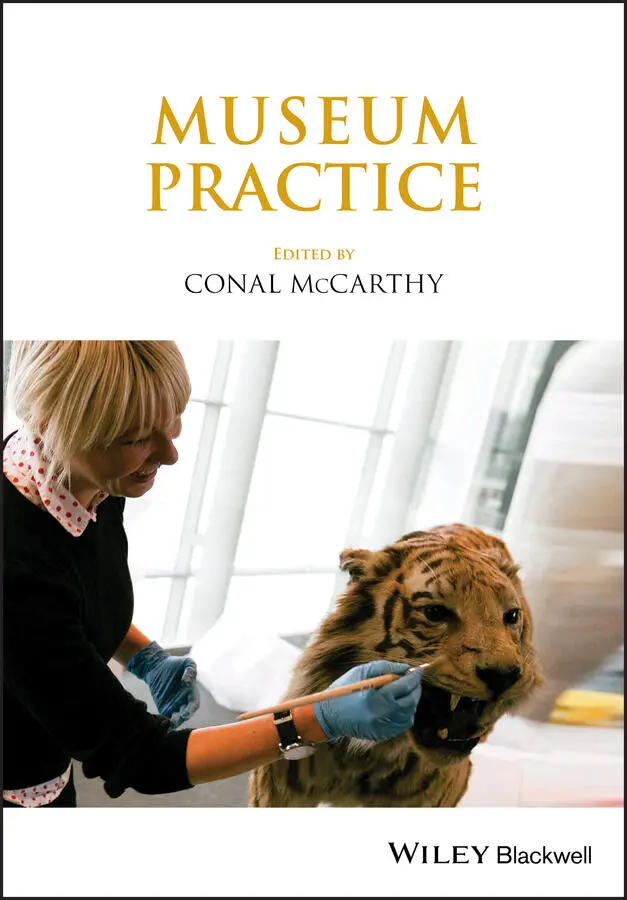
- Название:Museum Practice
- Автор:
- Жанр:
- Год:неизвестен
- ISBN:нет данных
- Рейтинг книги:5 / 5. Голосов: 1
-
Избранное:Добавить в избранное
- Отзывы:
-
Ваша оценка:
Museum Practice: краткое содержание, описание и аннотация
Предлагаем к чтению аннотацию, описание, краткое содержание или предисловие (зависит от того, что написал сам автор книги «Museum Practice»). Если вы не нашли необходимую информацию о книге — напишите в комментариях, мы постараемся отыскать её.
Museum Practice — читать онлайн ознакомительный отрывок
Ниже представлен текст книги, разбитый по страницам. Система сохранения места последней прочитанной страницы, позволяет с удобством читать онлайн бесплатно книгу «Museum Practice», без необходимости каждый раз заново искать на чём Вы остановились. Поставьте закладку, и сможете в любой момент перейти на страницу, на которой закончили чтение.
Интервал:
Закладка:
Over and above all this, and causing many of these problems, is the issue of NMGM CULTURE, or corporate personality, which in turn is the result of a lack of a shared and articulated VISION. We have, to a degree, failed to be clear about why we exist, what we are here for, and what we want to be.
Furthermore, I argued that NMGM needed a vision “of a learning organisation which is ambitious, generous, exciting and successful; which is founded on a bedrock of scholarship and excellence; wherein different talents are valued and respected; which is geared up for operating in a rapidly-changing world.” It was at this address that I first set a target for NMGM to attract 2 million visitors a year by 2010. The number visiting in 2001 was around 700,000 a year (Brown 2006). It was also in this speech that I explained my belief that museums are, first and foremost, educational organizations, and that NMGM must strive to attract the broadest audiences.
Much discussion and debate followed, involving staff and trustees, and out of these discussions arose an early symbolic change of name from National Museums and Galleries on Merseyside, which the service had been called since 1986, to National Museums Liverpool. This may not seem such a big deal, but it was a conscious decision to shorten our name and acronym, and drop the rather indeterminate “Merseyside” in favor of the much stronger, if somewhat controversial, city brand “Liverpool.” 11 Names can be important signifiers of intent, style, and value, which is why many organizations spend so much on branding (see Chong, this volume).
Meanwhile, we restructured NML in order to improve strategic focus, try to kill off a rampant departmentalism, enable us to bring in some new talent, and promote existing talent. We continued a process of “visioning,” which included an illuminating discussion in February 2003 at a workshop for 30 managers. We were seeking “a shared sense of purpose,” and specifically we wanted to develop a new mission, values, and vision. During the course of this workshop, members of staff were asked to imagine NML as a person, as a car, as a dog, and to suggest whom or what we would rather be. The responses were rather alarming: they saw NML as nonagenarian romantic novelist Barbara Cartland (“seen better days”), Tory Prime Minister John Major (“safe, old fashioned”), and Coronation Street’s Ken Barlow (“stuffy, staid, a bit embittered”). Similarly, as a car we would be a safe family car like a Volvo or a Rover (“old and reliable, past its time”), and as a dog we would be an old English sheepdog (“big, cuddly, lumbering, wants to be loved”) or a cross-breed (“so in-bred, not sure what it is”). In aspiration terms staff wanted NML to be like Halle Berry (“stylish, elegant, sexy, racy”), a Mini Cooper (“nippy, sporty, cool”), and a young Border collie (“boundless energy, enthusiastic, fun, friendly, hard working”).
The comment about being “a bit embittered” struck a real chord. What was obvious was the degree of frustration among the managers at NML’s stately pace and demeanor, lack of excitement, and the distance between where we were and where the managers wanted us to be. As a newcomer at both TWM and NML, I discovered that many staff understood that something was wrong with the museum service, and they were often clear about what it was. They were frustrated that those with the power to change things for the better seemed unable to do so. As the new director, I saw it as my job to erase this frustration.
However, there was a problem in addressing the issues revealed in this workshop; namely that the staff did not always feel that our ambitions for modernizing NML were matched by the ambitions of our trustees. Staff felt that we were way ahead of trustees, who were regarded as staid, traditional in their thinking, risk-averse, and rather nervous, which is obviously problematic in the fast-changing twenty- first century.
At a joint session with staff to discuss possible name changes, one trustee forcibly expressed the opinion that museums weren’t about education at all. This was both irritating and ironic, in that the central role of education in museum work was precisely what staff were trying to implant in our corporate thinking. Trustees took an age to allow us to change NMGM’s name, and, for a number of years, they insisted on watering down the new mission statements that staff had drafted, so that they became less radical than we would have liked. We had to wait a while until the governance environment was more positive, enlightened, and enabling (on governance see Lord, Chapter 2in this volume).
This situation was compounded by a distinct sense among members of staff that some long-serving trustees actually resented the reforms and improvements to NMGM, in that they felt they were being implicitly criticized for faulty stewardship of the organization. Trying to effect radical change in an atmosphere of defensiveness and denial is not easy. At the beginning of 2004, I wrote a status report on NML entitled “Picking Up Speed” that expressed the belief that our new “Aims and Beliefs” fell somewhat short of what we wanted to say (see Appendix B below).
One of the hardest things to change in a complex organisation is its culture. What I found when I came to NML was a culture of rivalry and finger pointing, compliance and deference, with a bureaucratic overlay which made decision-making and prioritisation difficult. This is not a recipe for an organisation to be able to improve its performance in a fast-changing and demanding environment.
I do not pretend that all is yet well, though I do believe we are on the mend. I sense widespread support for our new Aims and Beliefs which, while imperfect, does a decent job of outlining what we need to do – and with what attitude – in order for us to move onward successfully, i.e. to be a people- and service-orientated organisation rather than an insular and procedurally-minded one.
We have gone some way towards freeing up the collective mindset of NML, causing us to be less risk averse and more creative, more confident in sharing information, more relaxed, easier to engage with. Of course, such a transformation is facilitated by obvious successes such as the steep rise in visitor numbers, in turn the result of changed ways of doing things.
Nonetheless, we were making progress. These are some of the changes we implemented during the five-year period from 2002 to 2006:
overhauled our financial structure and got a grip on our finances;
brought in some key new staff and made some judicious promotions to ensure a positive approach to a change agenda;
strengthened our Board of Trustees with some key appointments;
placed a new emphasis on education work;
placed a new emphasis on work with local communities;
increased our volunteer workforce;
implemented a number of capital projects that helped break down internal barriers and motivate staff;
introduced free admission to all venues, events, and activities;
introduced an improved exhibitions management regime;
greatly increased our media profile.
These changes enabled us to build audiences: the annual number of visitors rose to more than 2 million by 2007, three years ahead of the target I set (purely speculatively) in 2001, and almost three times as many as that year. By 2011, the annual visitor total was 3 million, up 330 percent, and by 2012 the NML had its most successful year ever with 3.3 million visitors, five times as many as a decade before (National Museums Liverpool 2013). These audiences were more diverse than before, and more diverse than most other national museums in the United Kingdom ( Changing Lives 2012, 21). Meanwhile new iterations of our Aims and Beliefs appeared annually over the years, arising out of regular discussions among staff and trustees, culminating eventually in the current version:
Читать дальшеИнтервал:
Закладка:
Похожие книги на «Museum Practice»
Представляем Вашему вниманию похожие книги на «Museum Practice» списком для выбора. Мы отобрали схожую по названию и смыслу литературу в надежде предоставить читателям больше вариантов отыскать новые, интересные, ещё непрочитанные произведения.




Обсуждение, отзывы о книге «Museum Practice» и просто собственные мнения читателей. Оставьте ваши комментарии, напишите, что Вы думаете о произведении, его смысле или главных героях. Укажите что конкретно понравилось, а что нет, и почему Вы так считаете.