Museum Practice
Здесь есть возможность читать онлайн «Museum Practice» — ознакомительный отрывок электронной книги совершенно бесплатно, а после прочтения отрывка купить полную версию. В некоторых случаях можно слушать аудио, скачать через торрент в формате fb2 и присутствует краткое содержание. Жанр: unrecognised, на английском языке. Описание произведения, (предисловие) а так же отзывы посетителей доступны на портале библиотеки ЛибКат.
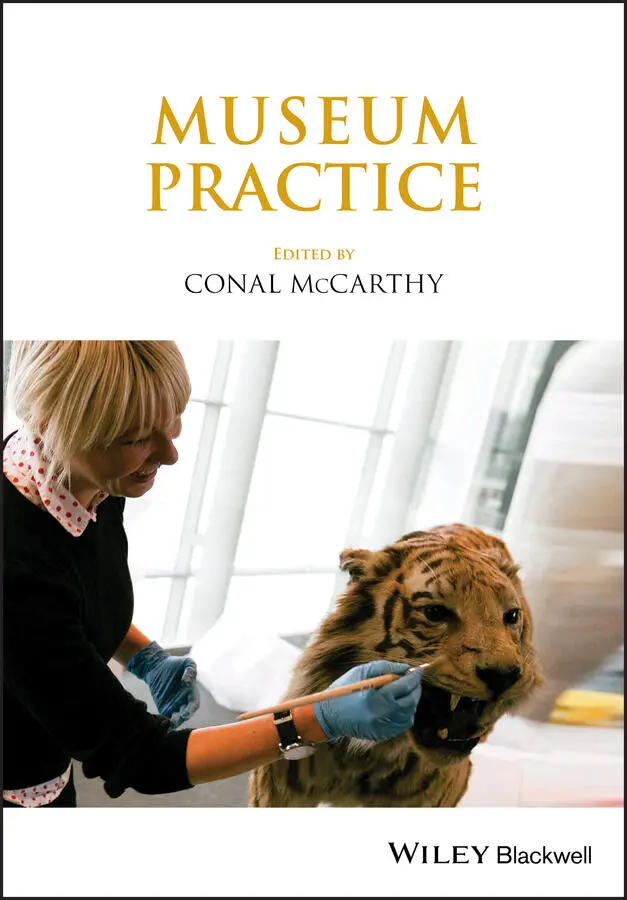
- Название:Museum Practice
- Автор:
- Жанр:
- Год:неизвестен
- ISBN:нет данных
- Рейтинг книги:5 / 5. Голосов: 1
-
Избранное:Добавить в избранное
- Отзывы:
-
Ваша оценка:
Museum Practice: краткое содержание, описание и аннотация
Предлагаем к чтению аннотацию, описание, краткое содержание или предисловие (зависит от того, что написал сам автор книги «Museum Practice»). Если вы не нашли необходимую информацию о книге — напишите в комментариях, мы постараемся отыскать её.
Museum Practice — читать онлайн ознакомительный отрывок
Ниже представлен текст книги, разбитый по страницам. Система сохранения места последней прочитанной страницы, позволяет с удобством читать онлайн бесплатно книгу «Museum Practice», без необходимости каждый раз заново искать на чём Вы остановились. Поставьте закладку, и сможете в любой момент перейти на страницу, на которой закончили чтение.
Интервал:
Закладка:
What was happening was that TWM was edging away from the traditional view of the role of museums as defined by, for example, the UK Museums Association and ICOM, toward a position where the right of the public to access and benefit from collections becomes the overriding mission. 9 This is a subtle but important distinction that reflects the need for museums to be acutely conscious of their socioeconomic environment, whatever their collections-based needs and priorities.
In May 1996 TWM’s senior managers held a “Strategy Day,” something we did on a frequent basis. We noted at that meeting that, in 1991, we had been suffering from political hostility, low staff morale, a low professional profile, declining funding, no strategy, and low visitor numbers. By 1996 we had become politically popular, staff morale was “quite good” (although members of staff were “tired”), our professional profile was strong, our fundraising was successful, we were now very strategic, and visitor numbers had more than doubled from 500,000 to 1.2 million since 1990 (Tyne and Wear Museum Annual Reports 1990–1998). We also noted that we had become far more cost-effective and ambitious, the funding from the National Lottery had changed our landscape dramatically, and that a possible Labour Government was on the political horizon.
High visitor numbers suggested that our focus on being relevant to local communities was working, but we could not rest on our laurels. In April 1998, I sent a note to TWM staff: “If ever we forget that our single most important performance indicator is the level of public support we enjoy (and earn) then our present Golden Age will be finished.” There was a growing acknowledgment within TWM that the primary purpose of museums is to provide a service to the whole of the public. This belief sat at the heart of TWM’s philosophy by the end of the 1990s, and was captured in our Statement of Purpose and Beliefs (mentioned above), a document worked on by scores of TWM managers and endorsed by the Department for Culture, Media and Sport in its Policy Guidance on social inclusion for museums, galleries, and archives in May 2000 (DCMS 2000, 29). This Purpose and Beliefs was clearer than had been our previous mission statements about TWM’s social role. Here is an extract:
Our Mission is:
To help people determine their place in the world and understand their identities,
so enhancing their self-respect and their respect for others.
We Believe that:
We act as an agent of social and economic regeneration.
We Pursue our Mission by:
Exposing our public to ideas, thus helping counter ignorance, discrimination and hostility.
Our Vision for the Future of TWM is for:
Total inclusion.
Thirteen years later, the current TWAM (now Tyne and Wear Archives and Museums) mission reads: “Our mission is to help people determine their place in the world and define their identities, so enhancing their self-respect and their respect for others” (Tyne and Wear Museums and Archives 2011).
It would be fair to note that the advent of the New Labour Government in 1997 had encouraged our explicit commitment to social inclusion at TWM, because social inclusion was a key government policy which shaped and was shaped by important research on social inequality (Fleming in Dodd and Sandell 2001). We felt able to be more expansive about our social aims, and when the Government decided to use the TWM Purpose and Beliefs in its policy guidance for all museums and archives, we felt vindicated in our approach. In letters written to me by the outgoing Government Ministers in 2001, both Secretary of State Chris Smith and Culture Minister Alan Howarth made reference to the example TWM had provided to the museum sector. Howarth wrote:
I have very much admired the way in which you have flown the flag not just for Tyne and Wear Museums, but for regional museums in general. You have demonstrated that first class practice is not confined to the national museums, and indeed you have blazed several of the trails that as Ministers we very much wanted the museums system to pursue. 10
Case study 2: National Museums Liverpool
My most recent experience of redefining a mission and organizational values has been at National Museums Liverpool (NML), where I became director in October 2001. NML has been a national museum service since 1986. It is a group of museums in Liverpool and Wirral that hold world-class collections across the range of museum disciplines (National Museums Liverpool 2013). It is a bigger service than TWM and, unlike TWM, there is no local authority control. Again my perspective on this case study is colored by my own involvement, but I believe the value of this autobiographical sketch is to provide a personal account of organizational change from the inside.
On becoming director of, as it was known at the time, National Museums and Galleries on Merseyside (NMGM), like all new directors I needed to get beneath the skin of the organization, and one of the ways of doing this was to find out what the NMGM managers thought of their service. A “Vision Away Day” in November 2001, entitled “Reinventing NMGM,” threw up a great many issues, as senior managers raised long-held frustrations.
Among the more serious concerns about NMGM that were expressed by the senior team were: the museum had no shared vision, it was fragmented, risk averse, not strategic, and, far from having a team culture, had a blame culture . Having worked at TWM, of course, none of this was altogether shocking. All museums need to refresh their thinking every now and again in order to prevent this kind of perceived staleness. NMGM’s Mission Statement read in 2001:
To use effectively the staff, buildings and resources of NMGM to promote the public enjoyment and understanding of art, history and science by:
adding to, caring for and preserving the collections
studying and researching the collections
exhibiting the collections
and by other appropriate means.
The mission was backed up not by a set of values or beliefs, but by a schedule of “services provided to the public” and a list of “national standards achieved or aspired to.” This was hardly a motivational mission. Dry, descriptive, and functional, it had been in use for a number of years, and spoke volumes about the need for a new approach at NMGM.
NMGM was certainly not in the parlous state that TWM had been in 1991, but it did need a renewed sense of purpose, wherein the service was able to identify what it was good at, but then go on to fulfill its potential in terms of audience- building and social impact; audiences were too low, invariably a sign that all is not well. When I worked at TWM, we used to compare our visitor numbers with those of NMGM, which had far bigger budgets but smaller audiences. I was determined to do something about this: at my job interview with the NMGM trustees, I had argued that NMGM needed a new primary aim, which was “to be a social, cultural and educational powerhouse, through audience development.” In a report for trustees in 2005, I wrote that in 2001:
Our culture was slow-moving and bureaucratic, and energies and boldness were suppressed by anxieties and fear of failure … NMGM was tribal, racked by departmental agendas, with loyalties to individual venues. Central services, such as marketing and finance, were held in low regard by venue managers, and therefore by their staff. Curators often saw themselves as superior beings rather than as part of a team. Others simply kept their heads down so as to avoid, as they perceived it, unnecessary bureaucracy and interference.
And so, together with senior staff, I set out together on a long journey to reinvent NMGM. In an early address to staff entitled “First Impressions” in December 2001, I set the scene: despite having talented and experienced staff, great collections and buildings, and other capabilities, we were poor at internal communications, at forward planning, at prioritization. I said that:
Читать дальшеИнтервал:
Закладка:
Похожие книги на «Museum Practice»
Представляем Вашему вниманию похожие книги на «Museum Practice» списком для выбора. Мы отобрали схожую по названию и смыслу литературу в надежде предоставить читателям больше вариантов отыскать новые, интересные, ещё непрочитанные произведения.




Обсуждение, отзывы о книге «Museum Practice» и просто собственные мнения читателей. Оставьте ваши комментарии, напишите, что Вы думаете о произведении, его смысле или главных героях. Укажите что конкретно понравилось, а что нет, и почему Вы так считаете.