Museum Practice
Здесь есть возможность читать онлайн «Museum Practice» — ознакомительный отрывок электронной книги совершенно бесплатно, а после прочтения отрывка купить полную версию. В некоторых случаях можно слушать аудио, скачать через торрент в формате fb2 и присутствует краткое содержание. Жанр: unrecognised, на английском языке. Описание произведения, (предисловие) а так же отзывы посетителей доступны на портале библиотеки ЛибКат.
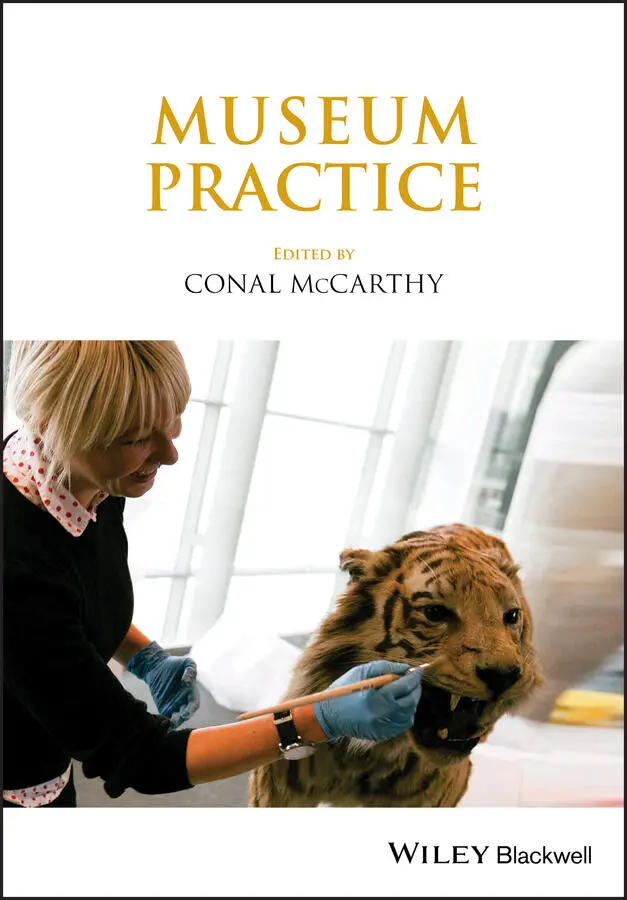
- Название:Museum Practice
- Автор:
- Жанр:
- Год:неизвестен
- ISBN:нет данных
- Рейтинг книги:5 / 5. Голосов: 1
-
Избранное:Добавить в избранное
- Отзывы:
-
Ваша оценка:
Museum Practice: краткое содержание, описание и аннотация
Предлагаем к чтению аннотацию, описание, краткое содержание или предисловие (зависит от того, что написал сам автор книги «Museum Practice»). Если вы не нашли необходимую информацию о книге — напишите в комментариях, мы постараемся отыскать её.
Museum Practice — читать онлайн ознакомительный отрывок
Ниже представлен текст книги, разбитый по страницам. Система сохранения места последней прочитанной страницы, позволяет с удобством читать онлайн бесплатно книгу «Museum Practice», без необходимости каждый раз заново искать на чём Вы остановились. Поставьте закладку, и сможете в любой момент перейти на страницу, на которой закончили чтение.
Интервал:
Закладка:
Of course, we must never underestimate the power of the non-profit mission to attract staff. Salaries in the non-profit sector are invariably lower than in the corporate sector, and in order to attract talented people away from the big money non-profits have to emphasize the social value they are capable of creating. Creating social value – doing a job that is socially worthwhile – motivates many people far more than accumulating money ever will.
V. Kasturi Rangan writes: “Most of the nonprofits operating today make program decisions based on a mission rather than on a strategy” (Rangan 2004, 1). It is worth exploring more carefully the distinction he is making. Rangan writes of the tendency for non-profits to become victims of “stick-and-stretch syndrome” (2004, 2). He describes how a non-profit may fail to respond to changing conditions, such as a changing market, and to fall behind the times, by sticking too rigidly to their original, motivational mission, dubbing this “mission stickiness” (Rangan 2004, 1).
On the other hand, non-profits are pulled by market forces, and, as Rangan puts it, “[t]he need to attract new donors often compels nonprofits to take on programs that don’t fit their existing capabilities and expertise well.” He calls this tendency “stretchiness to market demands” (Rangan 2004, 2). Combining “mission stickiness” with “stretchiness” can undermine a non-profit’s effectiveness, resulting in either a slow-moving bureaucracy that survives because of mission legitimacy rather than mission performance, or a busy organization that suffers from action paralysis because it never steps back to consider the full implications of its actions.
The problem, as Rangan points out, is that it is all very well having a mission, but you also need a strategy. As he puts it:
What most nonprofits consider strategy is really just intensive resource allocation and program management activity … Nonprofits don’t have the discipline of the bottom line and of performance-obsessed capital markets, so they can go for years without having to make strategic choices. Moreover, because neither the nonprofits nor their funding sources are especially skilled at measuring results, it’s easy for them to fall into a vicious cycle of ineffectiveness that can take years to become apparent. Only a grave crisis, a visionary leader, or an outsider (such as a board member) would be able to highlight the need for strategic deliberation and redirection. (Rangan 2004, 3)
This is a salutary warning. Being clear about the mission, values, and vision won’t amount to much unless an organization is capable of turning these notions into appropriate, and preferably measurable, activity that is responsive to changes in the environment in which the organization operates.
Museum missions
There is a literature on mission in the not-for-profit sector, and a few publications on museum missions (Drucker 1990; Scott, Jaffe, and Tobe 1993; Davies 1999; Lord and Lord 1999; Anderson 2000). In the museum world the importance of mission statements has long been known, though perhaps rather better in US museums than elsewhere. In the United States, the management of “nonprofit organizations” was recognized long ago as requiring specific approaches and skills that are different from those needed in business. “Non-profit institutions exist for the sake of their mission,” wrote Peter Drucker, “They exist to make a difference in society … They exist for the sake of their mission, and this must never be forgotten” (Drucker 1990, 45).
Gail Anderson stressed the point that museums operate in a fast-changing world, and that they must therefore be “agile” (Anderson 2000, v). I have come to realize that remaining agile, by watching social, economic, political, and technological trends very carefully, and molding museum activity to suit new circumstances (trying to anticipate change before it happens), has long been at the core of my own work. This contrasts with the traditional museum approach of keeping one’s head down until things have stabilized so that museums can go back to their “real” work of research, collecting, preservation, and so on. In my view, the constant re-examination needed for museums to remain viable leads inevitably to the requirement for their missions to underpin the change process. The mission statement has to be a lot more than a mere description of the functions performed by a museum, which, Anderson noted, had been common in the sector (2000, v).
Acknowledging that the mission is actually a central and inspirational part of modernizing a museum, and of ensuring it remains relevant, is a key to understanding how change can be brought about in the museum industry. Needless to say, the world outside the museum changes at a faster and faster rate, so the need for museum staff to understand these changes and to keep up with them becomes ever more pressing (Knell, MacLeod, and Watson 2007). Recognizing the need for constant change in museums, and implementing this change, is the most important role of the modern museum director, and a huge challenge for his or her leadership skills (Fleming 1999). Managing change lies at the heart of the contemporary museum.
In this chapter I present two case studies which demonstrate the process of bringing about change, and in which I have been involved over the past two decades. In each case I was the new director of a museum service which was in need of a major overhaul in order to realize its potential. Bringing about sustainable change within these two services was my primary leadership challenge. I felt that my staff and I had to reshape the services so that they had a healthy and productive future. So, I needed to ensure that we re-envisioned ourselves, based upon an agreed set of values, captured in a set of statements that made it absolutely clear within the museum service what we were about, and which also served to announce to the outside world how we saw ourselves.
Case study 1: Tyne and Wear Museums
My experience with missions, values, and vision began in earnest in the early 1990s, when I became Director of Tyne and Wear Museums (TWM) in the northeast of England. TWM was, and remains, essentially a major local authority museum service, which has responsibility for a group of museums that hold collections of regional, national, and international significance (Tyne and Wear Archives and Museums 2011). 1Its funding and governance arrangements are unusual, and the service currently is funded by the five Tyne and Wear local authorities (Gateshead, Newcastle upon Tyne, Sunderland, North Tyneside, and South Tyneside), by the University of Newcastle, and by the Department for Culture, Media and Sport, part of the UK Government. Balancing the interests of the various funding bodies has always been a challenge, and this necessarily underpinned the ways in which I approached the management of TWM.
I had been Assistant Director at TWM for just over a year when, in late 1991, I was appointed director. I was fully aware, therefore, that TWM was an organization that was failing to inspire the public, the politicians who provided the majority of the museum service’s funding, or its staff. It was made clear to me by the politicians who voted the funding for TWM that the service was being given its last chance to put its house in order, or dire consequences would follow – in effect, the probable collapse of the “joint service” arrangement entered into by the five Tyne and Wear local authorities.
The febrile atmosphere at the time was captured in a Museums Journal article entitled “Lifting the Fog on the Tyne” (Davies 1991). Having been created as a joint local authority service in 1986, TWM was unstable, and had already been condemned by the Museums and Galleries Commission in 1988 as “unworkable.” I recall one northeast museum director described TWM at the time as a “critically injured patient.” Nonetheless, a series of attempts had been made to stabilize the beleaguered museum service, which led to a new staff structure in 1990, though this had been done in such a way that a senior member of TWM staff commented that “someone had a vision of how it’s all supposed to work, but they didn’t tell me.”
Читать дальшеИнтервал:
Закладка:
Похожие книги на «Museum Practice»
Представляем Вашему вниманию похожие книги на «Museum Practice» списком для выбора. Мы отобрали схожую по названию и смыслу литературу в надежде предоставить читателям больше вариантов отыскать новые, интересные, ещё непрочитанные произведения.









Обсуждение, отзывы о книге «Museum Practice» и просто собственные мнения читателей. Оставьте ваши комментарии, напишите, что Вы думаете о произведении, его смысле или главных героях. Укажите что конкретно понравилось, а что нет, и почему Вы так считаете.