Charles G. Harper - The Old Inns of Old England
Здесь есть возможность читать онлайн «Charles G. Harper - The Old Inns of Old England» — ознакомительный отрывок электронной книги совершенно бесплатно, а после прочтения отрывка купить полную версию. В некоторых случаях можно слушать аудио, скачать через торрент в формате fb2 и присутствует краткое содержание. Жанр: unrecognised, на английском языке. Описание произведения, (предисловие) а так же отзывы посетителей доступны на портале библиотеки ЛибКат.
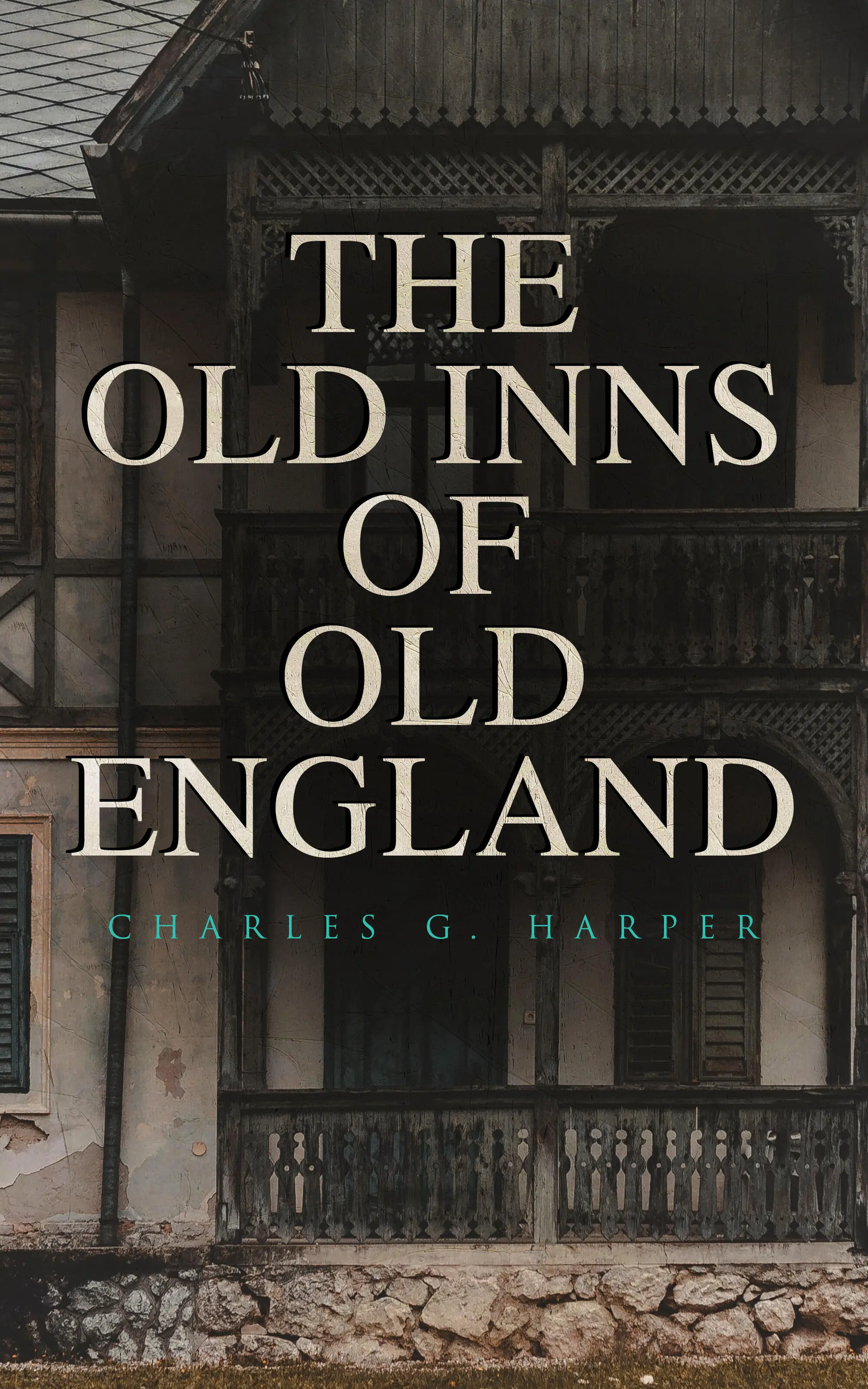
- Название:The Old Inns of Old England
- Автор:
- Жанр:
- Год:неизвестен
- ISBN:нет данных
- Рейтинг книги:3 / 5. Голосов: 1
-
Избранное:Добавить в избранное
- Отзывы:
-
Ваша оценка:
The Old Inns of Old England: краткое содержание, описание и аннотация
Предлагаем к чтению аннотацию, описание, краткое содержание или предисловие (зависит от того, что написал сам автор книги «The Old Inns of Old England»). Если вы не нашли необходимую информацию о книге — напишите в комментариях, мы постараемся отыскать её.
Volume 1:
Introductory
The Ancient History of Inns
General History of Inns
The Eighteenth Century
Latter Days
Pilgrims' Inns and Monastic Hostels
Historic Inns
Inns of Old Romance
Pickwickian Inns
Dickensian Inns
Highwaymen's Inns
Volume 2:
A Posy of Old Inns
The Old Inns of Cheshire
Inns Retired from Business
Inns with Relics and Curiosities
Tavern Rhymes and Inscriptions
The Highest Inns in England
Gallows Signs
Signs Painted by Artists
Queer Signs in Quaint Places
Rural Inns
The Evolution of a Country Inn
Ingle-nooks
Innkeepers' Epitaphs
Inns with Odd Privileges
Inns in Literature
Visitors' Books
The Old Inns of Old England — читать онлайн ознакомительный отрывок
Ниже представлен текст книги, разбитый по страницам. Система сохранения места последней прочитанной страницы, позволяет с удобством читать онлайн бесплатно книгу «The Old Inns of Old England», без необходимости каждый раз заново искать на чём Вы остановились. Поставьте закладку, и сможете в любой момент перейти на страницу, на которой закончили чтение.
Интервал:
Закладка:
“What cosy old parlours in those days,” he exclaims, “low-roofed, glowing with ample fires and fenced from the blasts of the doors by screens whose folding doors were, or seemed to be, infinite! What motherly landladies! won, how readily, to kindness the most lavish by the mere attractions of simplicity and youthful innocence, and finding so much interest in the bare circumstance of being a traveller at a childish age! Then what blooming young handmaidens; how different from the knowing and worldly demireps of modern high roads! And sometimes grey-headed, faithful waiters, how sincere and attentive by comparison with their flippant successors, the eternal ‘Coming, sir, coming,’ of our improved generation!”
They all tell the same tale; those whose privilege it was to witness the meeting of the old order and the new.
“It was interesting,” says Mr. Locker-Lampson, writing of old times, “as the post-chaise drew up at the door of the roomy and comfortable hostel where we were to dine or sleep, to see Boniface and his better half smilingly awaiting us—Us in particular!—waiter and chamber-lasses grouped behind them. The landlady advances to the carriage-window with a cordial, self-respecting, ‘Will you please to alight.’ I remember that the landlord, who announced dinner, sometimes entered with the first dish and placed it on the table, bowing as he retired. Why, it all seems as if it were but yesterday! Now it is gone for ever.”
Yes, irrevocably gone. Most of the old inns are gone too, and in their place, only too frequently, the traveller finds the modern, company-owned hotel, with a foreign manager who naturally takes no interest in the guests he, as a matter of fact, rarely sees, and with whom no guest could possibly foregather. In the modern barrack hotel the guest must necessarily be impersonal—one of a number going to swell the returns. No one quite willingly resigns himself to being a mere number; it is, indeed, one of the greatest of the convict’s trials that he has lost his name and become identified only by a letter and a row of figures. Just in the same way, when we stay at hotels our self-respect is revolted at being received and dismissed with equal indifference, and there are many who would gladly resign the innovations of electric light and hydraulic lifts for that “welcome at an inn” of which Shenstone speaks. The philosophy of these regrets must, in fact, be sought in that illuminating phrase, “ Us in particular .” We travellers are unwilling to be thought of merely as numbers identical with those of our bedrooms, and we like to believe, against our own better judgment, that the old-fashioned hosts and hostesses were pleased to see us ; which of course, in that special sense, was not the case. But a little make-believe sometimes goes a great way, and we need never, unless we have a mind to distress ourselves, seek the tongue of humbug in the cheek of courtesy.
The landlord of a good coaching house was a very important person indeed. Not seldom he was a large owner of horses and employer of labour; a man of some culture and of considerable wealth. He was not only a good judge of wine and horseflesh, but of men and matters, and not merely the servant, but the self-respecting and respected friend, of the gentry in his neighbourhood. He was generally in evidence at his house, and he or his wife would have scorned the idea of appointing a manager to do their work. In those days, and with such men along the road, it was an established rule of etiquette for the coming guest to invite his host to take a glass of wine with him and to exchange the news. But the type has become quite extinct, and even their old houses have been either demolished or else converted into private residences. Such hosts were Mr. and Mrs. Botham, of the “Windmill” at Salt Hill; or the long succession of notable landlords of the “Castle” at Marlborough, on the Bath Road; such were Clark, of the “Bell,” Barnby Moor, and Holt of the “Wheatsheaf,” Rushyford Bridge, on the Great North Road—to name but those.
They were men, too, of considerable influence, and, when equipped with determination, wielded a certain amount of power, and brought great changes to pass; as when Robert Lawrence, of the “Lion” at Shrewsbury, by dint of great personal exertions, brought the line of travel between London and Dublin through Shrewsbury and Holyhead, instead of, as formerly, through Chester. He died in 1806, and the curious may yet read on his mural monument in St. Julian’s Church how he was “many years proprietor of the ‘Raven’ and ‘Lion’ inns in this town,” and that it was to his “public spirit and unremitting exertions for upwards of thirty years, in opening the great road through Wales between the United kingdoms, as also for establishing the first mail-coach, that the public in general have been greatly indebted.”
Almost equally forceful were some of the old-time proprietors of the “George” at Walsall. In 1781 Mr. Thomas Fletcher, one of an old and highly respected family in that town, gave up the “Dragon” in High Street and built the great “George Hotel.” He even procured an Act of Parliament by which the present road from Walsall to Stafford was made, thereby bringing Walsall out of a by-road into the direct line of traffic. He also caused the Birmingham road to be straightened and widened, and gradually brought coaching and posting through the town. His successors, Fletcher and Sharratt, were equally energetic. In 1823 they remodelled the “George,” giving it the classic-columned front that confers a kind of third-cousin relationship to the British Museum, with unappetising and gruesome thoughts of dining on fried mummy and kippered parchments. The columns, which are still very solemnly there—or were, a year ago—came from the Marquis of Donegall’s neighbouring seat of Fisherwick Hall, demolished about that time, and the placing of them here was celebrated by an inaugural feast, “the colonnade dinner,” presided over by Lord Hatherton, a great patron of the house.
Those wonder-working innkeepers also, in 1831, promoted the Bill by which the present Birmingham road through Perry Bar was made, superseding the old route by Hamstead and Handsworth church.
Unfortunately, those fine old innkeepers, whatever else they were, were not usually cultivators of the art of literary expression, and did not write their memoirs and reminiscences. Yet they could, had they chosen, have told an interesting tale of men and matters. Consider! They were in the whirl of life, and often knew personages and affairs, not merely by report, but at first hand. What would not the historian of social England give for such reminiscences? They would open the door to much that is now sealed, and would clothe the dry bones of mere facts with romance.
One such innkeeper, Mr. J. Kearsley Fowler, who kept the “White Hart,” Aylesbury, in the last few years of its existence, has, however, left us something by which we may see, described at first-hand, the life and surroundings of a first-class old coaching and posting inn between 1812 and those middle years of the ’60’s, when a few branch-road coaches were yet left, and the Squire and Agriculture were still prosperous.
He tells us, of his own knowledge, that the innkeepers had by far the largest amount of capital invested in the country towns, where, as men generally of superior manners and education, from their constant association with the leading nobility, clergy, and magistracy, they took a prominent position, both socially and politically, the leading houses being the head quarters, respectively, of Whigs and Tories.
The “White Hart” at Aylesbury was generally believed to have dated back to the time of Richard the Second, and in the time of the Wars of the Roses to have been the rendezvous of the White Rose party, while the “Roebuck” was affected to the Red Rose.
Читать дальшеИнтервал:
Закладка:
Похожие книги на «The Old Inns of Old England»
Представляем Вашему вниманию похожие книги на «The Old Inns of Old England» списком для выбора. Мы отобрали схожую по названию и смыслу литературу в надежде предоставить читателям больше вариантов отыскать новые, интересные, ещё непрочитанные произведения.







Обсуждение, отзывы о книге «The Old Inns of Old England» и просто собственные мнения читателей. Оставьте ваши комментарии, напишите, что Вы думаете о произведении, его смысле или главных героях. Укажите что конкретно понравилось, а что нет, и почему Вы так считаете.