Gustave Flaubert - Gustave Flaubert - Madame Bovary, Salammbô & Sentimental Education (3 Books in One Edition)
Здесь есть возможность читать онлайн «Gustave Flaubert - Gustave Flaubert - Madame Bovary, Salammbô & Sentimental Education (3 Books in One Edition)» — ознакомительный отрывок электронной книги совершенно бесплатно, а после прочтения отрывка купить полную версию. В некоторых случаях можно слушать аудио, скачать через торрент в формате fb2 и присутствует краткое содержание. Жанр: unrecognised, на английском языке. Описание произведения, (предисловие) а так же отзывы посетителей доступны на портале библиотеки ЛибКат.
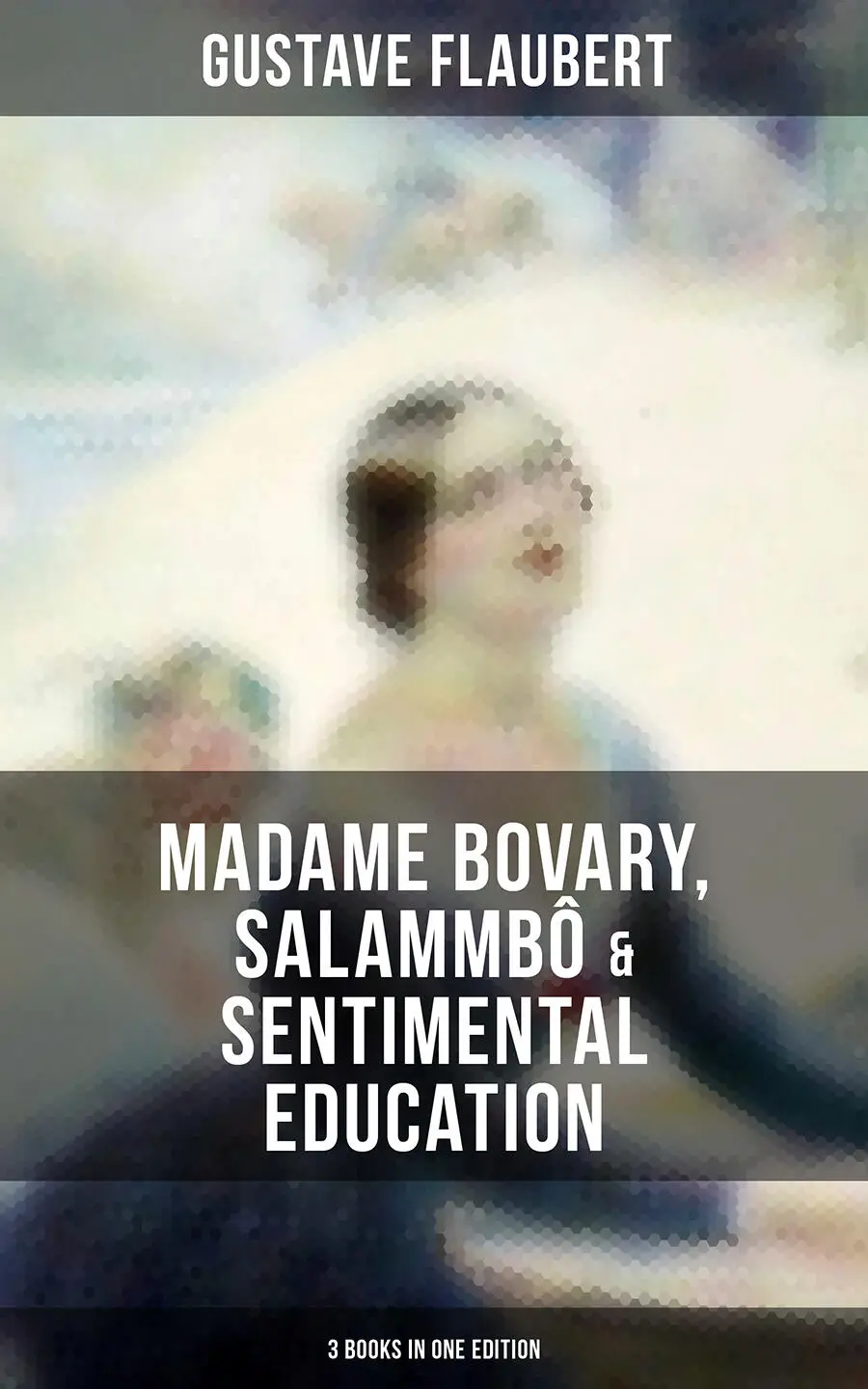
- Название:Gustave Flaubert: Madame Bovary, Salammbô & Sentimental Education (3 Books in One Edition)
- Автор:
- Жанр:
- Год:неизвестен
- ISBN:нет данных
- Рейтинг книги:4 / 5. Голосов: 1
-
Избранное:Добавить в избранное
- Отзывы:
-
Ваша оценка:
Gustave Flaubert: Madame Bovary, Salammbô & Sentimental Education (3 Books in One Edition): краткое содержание, описание и аннотация
Предлагаем к чтению аннотацию, описание, краткое содержание или предисловие (зависит от того, что написал сам автор книги «Gustave Flaubert: Madame Bovary, Salammbô & Sentimental Education (3 Books in One Edition)»). Если вы не нашли необходимую информацию о книге — напишите в комментариях, мы постараемся отыскать её.
Gustave Flaubert ( 1821 – 1880) was an influential French writer who is counted among the greatest novelists in Western literature. He is known especially for his first published novel, Madame Bovary (1857), for his Correspondence, and for his scrupulous devotion to his art and style.
Gustave Flaubert: Madame Bovary, Salammbô & Sentimental Education (3 Books in One Edition) — читать онлайн ознакомительный отрывок
Ниже представлен текст книги, разбитый по страницам. Система сохранения места последней прочитанной страницы, позволяет с удобством читать онлайн бесплатно книгу «Gustave Flaubert: Madame Bovary, Salammbô & Sentimental Education (3 Books in One Edition)», без необходимости каждый раз заново искать на чём Вы остановились. Поставьте закладку, и сможете в любой момент перейти на страницу, на которой закончили чтение.
Интервал:
Закладка:
Then she went up again, shut her door, put on coals, and fainting with the heat of the hearth, felt her boredom weigh more heavily than ever. She would have like to go down and talk to the servant, but a sense of shame restrained her.
Every day at the same time the schoolmaster in a black skullcap opened the shutters of his house, and the rural policeman, wearing his sabre over his blouse, passed by. Night and morning the post-horses, three by three, crossed the street to water at the pond. From time to time the bell of a public house door rang, and when it was windy one could hear the little brass basins that served as signs for the hairdresser’s shop creaking on their two rods. This shop had as decoration an old engraving of a fashion-plate stuck against a windowpane and the wax bust of a woman with yellow hair. He, too, the hairdresser, lamented his wasted calling, his hopeless future, and dreaming of some shop in a big town — at Rouen, for example, overlooking the harbour, near the theatre — he walked up and down all day from the mairie to the church, sombre and waiting for customers. When Madame Bovary looked up, she always saw him there, like a sentinel on duty, with his skullcap over his ears and his vest of lasting.
Sometimes in the afternoon outside the window of her room, the head of a man appeared, a swarthy head with black whiskers, smiling slowly, with a broad, gentle smile that showed his white teeth. A waltz immediately began and on the organ, in a little drawing room, dancers the size of a finger, women in pink turbans, Tyrolians in jackets, monkeys in frock coats, gentlemen in knee-breeches, turned and turned between the sofas, the consoles, multiplied in the bits of looking glass held together at their corners by a piece of gold paper. The man turned his handle, looking to the right and left, and up at the windows. Now and again, while he shot out a long squirt of brown saliva against the milestone, with his knee raised his instrument, whose hard straps tired his shoulder; and now, doleful and drawling, or gay and hurried, the music escaped from the box, droning through a curtain of pink taffeta under a brass claw in arabesque. They were airs played in other places at the theatres, sung in drawing rooms, danced to at night under lighted lustres, echoes of the world that reached even to Emma. Endless sarabands ran through her head, and, like an Indian dancing girl on the flowers of a carpet, her thoughts leapt with the notes, swung from dream to dream, from sadness to sadness. When the man had caught some coppers in his cap, he drew down an old cover of blue cloth, hitched his organ on to his back, and went off with a heavy tread. She watched him going.
But it was above all the meal-times that were unbearable to her, in this small room on the ground floor, with its smoking stove, its creaking door, the walls that sweated, the damp flags; all the bitterness in life seemed served up on her plate, and with smoke of the boiled beef there rose from her secret soul whiffs of sickliness. Charles was a slow eater; she played with a few nuts, or, leaning on her elbow, amused herself with drawing lines along the oilcloth table cover with the point of her knife.
She now let everything in her household take care of itself, and Madame Bovary senior, when she came to spend part of Lent at Tostes, was much surprised at the change. She who was formerly so careful, so dainty, now passed whole days without dressing, wore grey cotton stockings, and burnt tallow candles. She kept saying they must be economical since they were not rich, adding that she was very contented, very happy, that Tostes pleased her very much, with other speeches that closed the mouth of her mother-in-law. Besides, Emma no longer seemed inclined to follow her advice; once even, Madame Bovary having thought fit to maintain that mistresses ought to keep an eye on the religion of their servants, she had answered with so angry a look and so cold a smile that the good woman did not interfere again.
Emma was growing difficult, capricious. She ordered dishes for herself, then she did not touch them; one day drank only pure milk, the next cups of tea by the dozen. Often she persisted in not going out, then, stifling, threw open the windows and put on light dresses. After she had well scolded her servant she gave her presents or sent her out to see neighbours, just as she sometimes threw beggars all the silver in her purse, although she was by no means tender-hearted or easily accessible to the feelings of others, like most country-bred people, who always retain in their souls something of the horny hardness of the paternal hands.
Towards the end of February old Rouault, in memory of his cure, himself brought his son-in-law a superb turkey, and stayed three days at Tostes. Charles being with his patients, Emma kept him company. He smoked in the room, spat on the firedogs, talked farming, calves, cows, poultry, and municipal council, so that when he left she closed the door on him with a feeling of satisfaction that surprised even herself. Moreover she no longer concealed her contempt for anything or anybody, and at times she set herself to express singular opinions, finding fault with that which others approved, and approving things perverse and immoral, all of which made her husband open his eyes widely.
Would this misery last for ever? Would she never issue from it? Yet she was as good as all the women who were living happily. She had seen duchesses at Vaubyessard with clumsier waists and commoner ways, and she execrated the injustice of God. She leant her head against the walls to weep; she envied lives of stir; longed for masked balls, for violent pleasures, with all the wildness that she did not know, but that these must surely yield.
She grew pale and suffered from palpitations of the heart.
Charles prescribed valerian and camphor baths. Everything that was tried only seemed to irritate her the more.
On certain days she chatted with feverish rapidity, and this over-excitement was suddenly followed by a state of torpor, in which she remained without speaking, without moving. What then revived her was pouring a bottle of eau-de-cologne over her arms.
As she was constantly complaining about Tostes, Charles fancied that her illness was no doubt due to some local cause, and fixing on this idea, began to think seriously of setting up elsewhere.
From that moment she drank vinegar, contracted a sharp little cough, and completely lost her appetite.
It cost Charles much to give up Tostes after living there four years and “when he was beginning to get on there.” Yet if it must be! He took her to Rouen to see his old master. It was a nervous complaint: change of air was needed.
After looking about him on this side and on that, Charles learnt that in the Neufchatel arrondissement there was a considerable market town called Yonville-l’Abbaye, whose doctor, a Polish refugee, had decamped a week before. Then he wrote to the chemist of the place to ask the number of the population, the distance from the nearest doctor, what his predecessor had made a year, and so forth; and the answer being satisfactory, he made up his mind to move towards the spring, if Emma’s health did not improve.
One day when, in view of her departure, she was tidying a drawer, something pricked her finger. It was a wire of her wedding bouquet. The orange blossoms were yellow with dust and the silver bordered satin ribbons frayed at the edges. She threw it into the fire. It flared up more quickly than dry straw. Then it was, like a red bush in the cinders, slowly devoured. She watched it burn.
Читать дальшеИнтервал:
Закладка:
Похожие книги на «Gustave Flaubert: Madame Bovary, Salammbô & Sentimental Education (3 Books in One Edition)»
Представляем Вашему вниманию похожие книги на «Gustave Flaubert: Madame Bovary, Salammbô & Sentimental Education (3 Books in One Edition)» списком для выбора. Мы отобрали схожую по названию и смыслу литературу в надежде предоставить читателям больше вариантов отыскать новые, интересные, ещё непрочитанные произведения.










Обсуждение, отзывы о книге «Gustave Flaubert: Madame Bovary, Salammbô & Sentimental Education (3 Books in One Edition)» и просто собственные мнения читателей. Оставьте ваши комментарии, напишите, что Вы думаете о произведении, его смысле или главных героях. Укажите что конкретно понравилось, а что нет, и почему Вы так считаете.