John Buchan - The Collected Works of John Buchan (Illustrated)
Здесь есть возможность читать онлайн «John Buchan - The Collected Works of John Buchan (Illustrated)» — ознакомительный отрывок электронной книги совершенно бесплатно, а после прочтения отрывка купить полную версию. В некоторых случаях можно слушать аудио, скачать через торрент в формате fb2 и присутствует краткое содержание. Жанр: unrecognised, на английском языке. Описание произведения, (предисловие) а так же отзывы посетителей доступны на портале библиотеки ЛибКат.
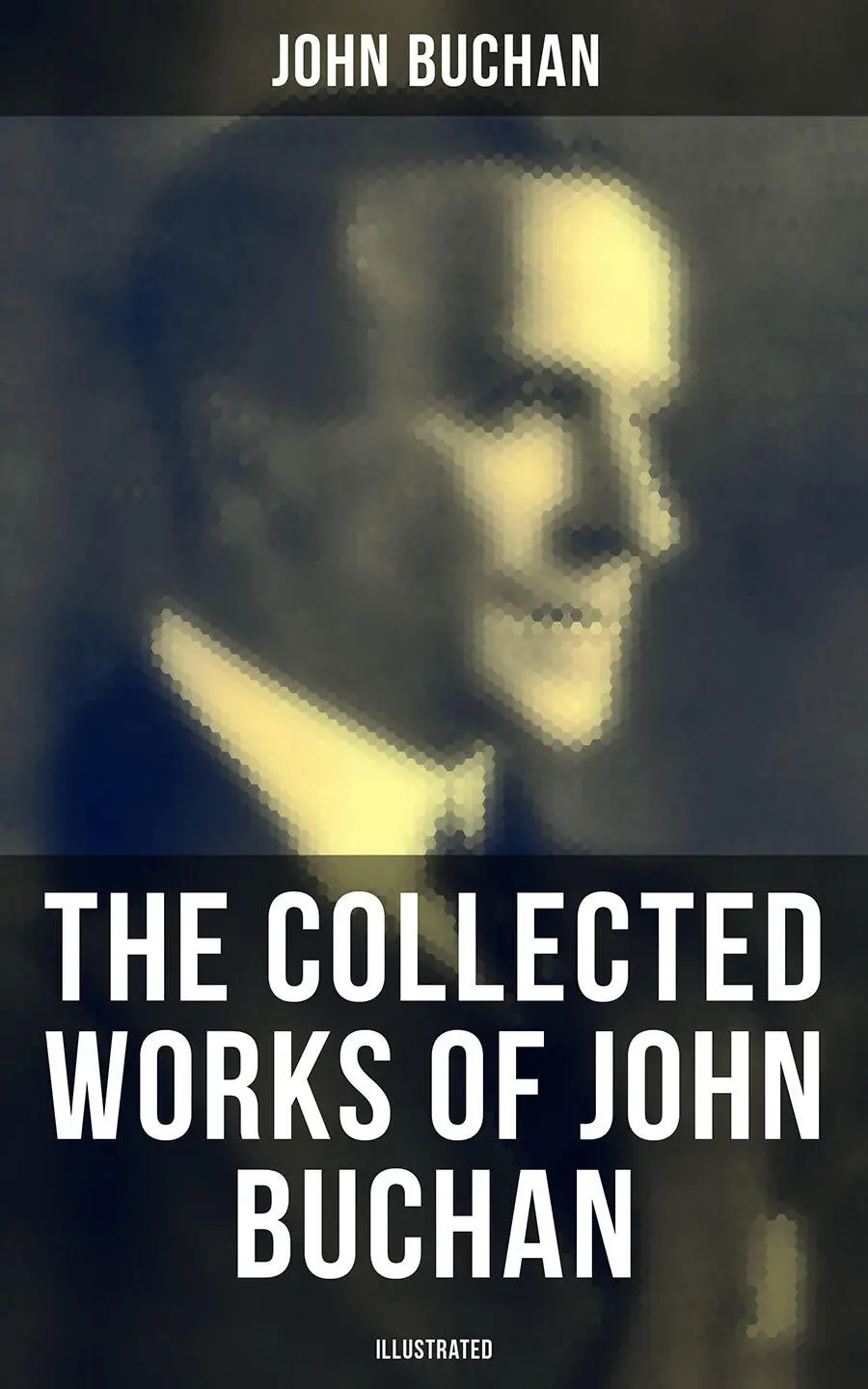
- Название:The Collected Works of John Buchan (Illustrated)
- Автор:
- Жанр:
- Год:неизвестен
- ISBN:нет данных
- Рейтинг книги:5 / 5. Голосов: 1
-
Избранное:Добавить в избранное
- Отзывы:
-
Ваша оценка:
The Collected Works of John Buchan (Illustrated): краткое содержание, описание и аннотация
Предлагаем к чтению аннотацию, описание, краткое содержание или предисловие (зависит от того, что написал сам автор книги «The Collected Works of John Buchan (Illustrated)»). Если вы не нашли необходимую информацию о книге — напишите в комментариях, мы постараемся отыскать её.
The Collected Works of John Buchan (Illustrated) — читать онлайн ознакомительный отрывок
Ниже представлен текст книги, разбитый по страницам. Система сохранения места последней прочитанной страницы, позволяет с удобством читать онлайн бесплатно книгу «The Collected Works of John Buchan (Illustrated)», без необходимости каждый раз заново искать на чём Вы остановились. Поставьте закладку, и сможете в любой момент перейти на страницу, на которой закончили чтение.
Интервал:
Закладка:
We dropped anchor off the quays of Lisbon on a shiny blue morning, pretty near warm enough to wear flannels. I had now got to be very wary. I did not leave the ship with the shore-going boat, but made a leisurely breakfast. Then I strolled on deck, and there, just casting anchor in the middle of the stream, was another ship with a blue and white funnel I knew so well. I calculated that a month before she had been smelling the mangrove swamps of Angola. Nothing could better answer my purpose. I proposed to board her, pretending I was looking for a friend, and come on shore from her, so that anyone in Lisbon who chose to be curious would think I had landed straight from Portuguese Africa.
I hailed one of the adjacent ruffians, and got into his rowboat, with my kit. We reached the vessel—they called her the Henry the Navigator —just as the first shore-boat was leaving. The crowd in it were all Portuguese, which suited my book.
But when I went up the ladder the first man I met was old Peter Pienaar.
Here was a piece of sheer monumental luck. Peter had opened his eyes and his mouth, and had got as far as ‘ Allemachtig’ , when I shut him up.
‘Brandt,’ I said, ‘Cornelis Brandt. That’s my name now, and don’t you forget it. Who is the captain here? Is it still old Sloggett?’
‘ Ja ,’ said Peter, pulling himself together. ‘He was speaking about you yesterday.’
This was better and better. I sent Peter below to get hold of Sloggett, and presently I had a few words with that gentleman in his cabin with the door shut.
‘You’ve got to enter my name in the ship’s books. I came aboard at Mossamedes. And my name’s Cornelis Brandt.’
At first Sloggett was for objecting. He said it was a felony. I told him that I dared say it was, but he had got to do it, for reasons which I couldn’t give, but which were highly creditable to all parties. In the end he agreed, and I saw it done. I had a pull on old Sloggett, for I had known him ever since he owned a dissolute tug-boat at Delagoa Bay.
Then Peter and I went ashore and swaggered into Lisbon as if we owned De Beers. We put up at the big hotel opposite the railway station, and looked and behaved like a pair of lowbred South Africans home for a spree. It was a fine bright day, so I hired a motor-car and said I would drive it myself. We asked the name of some beauty-spot to visit, and were told Cintra and shown the road to it. I wanted a quiet place to talk, for I had a good deal to say to Peter Pienaar.
I christened that car the Lusitanian Terror, and it was a marvel that we did not smash ourselves up. There was something immortally wrong with its steering gear. Half a dozen times we slewed across the road, inviting destruction. But we got there in the end, and had luncheon in an hotel opposite the Moorish palace. There we left the car and wandered up the slopes of a hill, where, sitting among scrub very like the veld, I told Peter the situation of affairs.
But first a word must be said about Peter. He was the man that taught me all I ever knew of veld-craft, and a good deal about human nature besides. He was out of the Old Colony—Burgersdorp, I think—but he had come to the Transvaal when the Lydenburg goldfields started. He was prospector, transport-rider, and hunter in turns, but principally hunter. In those early days he was none too good a citizen. He was in Swaziland with Bob Macnab, and you know what that means. Then he took to working off bogus gold propositions on Kimberley and Johannesburg magnates, and what he didn’t know about salting a mine wasn’t knowledge. After that he was in the Kalahari, where he and Scotty Smith were familiar names. An era of comparative respectability dawned for him with the Matabele War, when he did uncommon good scouting and transport work. Cecil Rhodes wanted to establish him on a stock farm down Salisbury way, but Peter was an independent devil and would call no man master. He took to big-game hunting, which was what God intended him for, for he could track a tsessebe in thick bush, and was far the finest shot I have seen in my life. He took parties to the Pungwe flats, and Barotseland, and up to Tanganyika. Then he made a speciality of the Ngami region, where I once hunted with him, and he was with me when I went prospecting in Damaraland.
When the Boer War started, Peter, like many of the very great hunters, took the British side and did most of our intelligence work in the North Transvaal. Beyers would have hanged him if he could have caught him, and there was no love lost between Peter and his own people for many a day. When it was all over and things had calmed down a bit, he settled in Bulawayo and used to go with me when I went on trek. At the time when I left Africa two years before, I had lost sight of him for months, and heard that he was somewhere on the Congo poaching elephants. He had always a great idea of making things hum so loud in Angola that the Union Government would have to step in and annex it. After Rhodes Peter had the biggest notions south of the Line.
He was a man of about five foot ten, very thin and active, and as strong as a buffalo. He had pale blue eyes, a face as gentle as a girl’s, and a soft sleepy voice. From his present appearance it looked as if he had been living hard lately. His clothes were of the cut you might expect to get at Lobito Bay, he was as lean as a rake, deeply browned with the sun, and there was a lot of grey in his beard. He was fifty-six years old, and used to be taken for forty. Now he looked about his age. I first asked him what he had been up to since the war began. He spat, in the Kaffir way he had, and said he had been having hell’s time.
‘I got hung up on the Kafue,’ he said. ‘When I heard from old Letsitela that the white men were fighting I had a bright idea that I might get into German South West from the north. You see I knew that Botha couldn’t long keep out of the war. Well, I got into German territory all right, and then a skellum of an officer came along, and commandeered all my mules, and wanted to commandeer me with them for his fool army. He was a very ugly man with a yellow face.’ Peter filled a deep pipe from a kudu-skin pouch.
‘Were you commandeered?’ I asked.
‘No. I shot him—not so as to kill, but to wound badly. It was all right, for he fired first on me. Got me too in the left shoulder. But that was the beginning of bad trouble. I trekked east pretty fast, and got over the border among the Ovamba. I have made many journeys, but that was the worst. Four days I went without water, and six without food. Then by bad luck I fell in with ‘Nkitla—you remember, the half-caste chief. He said I owed him money for cattle which I bought when I came there with Carowab. It was a lie, but he held to it, and would give me no transport. So I crossed the Kalahari on my feet. Ugh, it was as slow as a vrouw coming from nachtmaal . It took weeks and weeks, and when I came to Lechwe’s kraal, I heard that the fighting was over and that Botha had conquered the Germans. That, too, was a lie, but it deceived me, and I went north into Rhodesia, where I learned the truth. But by then I judged the war had gone too far for me to make any profit out of it, so I went into Angola to look for German refugees. By that time I was hating Germans worse than hell.’
‘But what did you propose to do with them?’ I asked.
‘I had a notion they would make trouble with the Government in those parts. I don’t specially love the Portugoose, but I’m for him against the Germans every day. Well, there was trouble, and I had a merry time for a month or two. But by and by it petered out, and I thought I had better clear for Europe, for South Africa was settling down just as the big show was getting really interesting. So here I am, Cornelis, my old friend. If I shave my beard will they let me join the Flying Corps?’
Читать дальшеИнтервал:
Закладка:
Похожие книги на «The Collected Works of John Buchan (Illustrated)»
Представляем Вашему вниманию похожие книги на «The Collected Works of John Buchan (Illustrated)» списком для выбора. Мы отобрали схожую по названию и смыслу литературу в надежде предоставить читателям больше вариантов отыскать новые, интересные, ещё непрочитанные произведения.


Обсуждение, отзывы о книге «The Collected Works of John Buchan (Illustrated)» и просто собственные мнения читателей. Оставьте ваши комментарии, напишите, что Вы думаете о произведении, его смысле или главных героях. Укажите что конкретно понравилось, а что нет, и почему Вы так считаете.