Simon Dixon - Catherine the Great
Здесь есть возможность читать онлайн «Simon Dixon - Catherine the Great» весь текст электронной книги совершенно бесплатно (целиком полную версию без сокращений). В некоторых случаях можно слушать аудио, скачать через торрент в формате fb2 и присутствует краткое содержание. Город: New York, Год выпуска: 2009, ISBN: 2009, Издательство: HarperCollins, Жанр: История, на английском языке. Описание произведения, (предисловие) а так же отзывы посетителей доступны на портале библиотеки ЛибКат.
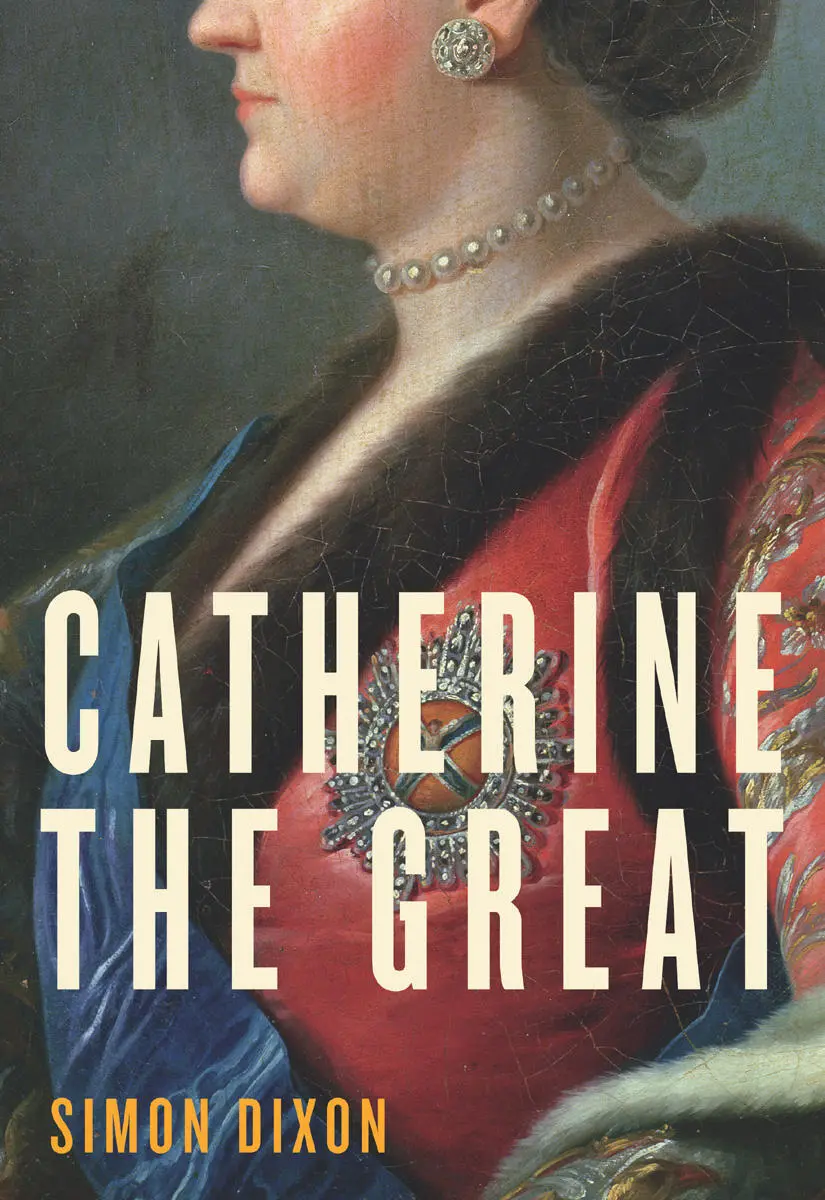
- Название:Catherine the Great
- Автор:
- Издательство:HarperCollins
- Жанр:
- Год:2009
- Город:New York
- ISBN:978-0-06-187179-5
- Рейтинг книги:3 / 5. Голосов: 1
-
Избранное:Добавить в избранное
- Отзывы:
-
Ваша оценка:
Catherine the Great: краткое содержание, описание и аннотация
Предлагаем к чтению аннотацию, описание, краткое содержание или предисловие (зависит от того, что написал сам автор книги «Catherine the Great»). Если вы не нашли необходимую информацию о книге — напишите в комментариях, мы постараемся отыскать её.
Admired for her achievements and satirized for her personal life, she wrote the most revealing memoirs by any European ruler. She promoted radical political ideas and emphasized moderation in government. Ruthless when necessary, she charmed everyone she met, joking at private dinner parties in the Hermitage, which she had built for her own use. Determined to endear herself to the Russians, she made religious devotions in which she never believed.
Intimate and revealing, Simon Dixon’s new biography examines the lifelong friendships that sustained the empress throughout her personal life, and places her within the context of the royal court: its politics, its flourishing literature, and the very culture that became central to her exercise of absolute power.
Catherine the Great — читать онлайн бесплатно полную книгу (весь текст) целиком
Ниже представлен текст книги, разбитый по страницам. Система сохранения места последней прочитанной страницы, позволяет с удобством читать онлайн бесплатно книгу «Catherine the Great», без необходимости каждый раз заново искать на чём Вы остановились. Поставьте закладку, и сможете в любой момент перейти на страницу, на которой закончили чтение.
Интервал:
Закладка:
The coffin, placed on a sort of chariot, drawn by eight horses and adorned with black velvet festoons, was covered with a black cloth pall richly trimmed with Spanish silver-point lace. A canopy made from the same materials was carried by Generals and Senators, accompanied by several officers of the guards. The Emperor followed immediately behind the coffin, wearing a large black cloak carried by twelve chamberlains, each holding a wax taper in his hand. Prince Georg of Holstein followed the Emperor as his nearest relation; then came the Prince of Holstein-Beck. The Empress followed also on foot, holding a burning taper and clad in a robe carried by all her maids of honour. Three hundred grenadiers brought up the rear of the procession. 45
Nothing could sound more solemn. Yet, according to Catherine, the tsar behaved in typically unseemly fashion. Irrepressibly cheerful throughout, he indulged in childish games, first lagging behind the hearse and then charging across the ice to catch it up, much to the embarrassment of the courtiers deputed to carry his train. When Count Sheremetev could no longer keep hold of it, it blew about in the wind to Peter’s intense amusement. 46
‘Everyone dined privately that day,’ Hård recalled, ‘and spent the evening in privacy, as if their grief and affliction had been real. But from the following day, no more was said or thought of Elizabeth, than if she had never existed. Such is ever the fate of things in this world: every thing passes; everything is forgotten.’ 47As if to prove his point, the Court travelled to Tsarskoye Selo a mere three days after the funeral to celebrate the tsar’s thirty-fourth birthday in style. Before the first dinner in the Picture Gallery, he invested Anna Vorontsova with the Order of St Catherine and announced that Yelena Naryshkina was to take her place as senior lady-in-waiting. In the ensuing banquets, he sat next to Princess Golitsyna and Countess Bruce. Catherine, having travelled separately from St Petersburg, remained in her apartments throughout the weekend, apparently oblivious as the first fireworks to be set off since Elizabeth’s death exploded all around her. 48
Conscious that the new empress had been isolated from the beginning of Peter’s reign, diplomats soon realised that she was entirely without influence. The disappointed Austrian ambassador, who had hoped to use her to undermine the tsar’s admiration for all things Prussian, assumed that her ‘calm exterior’ must conceal ‘some sort of secret undertakings’. But he had little hope of a plot maturing because, despite her obvious intelligence, Catherine seemed too impetuous to lead a successful conspiracy: ‘she lacks caution and fundamental sense, and her somewhat arrogant and lively nature will prevent her from following a premeditated plan’. 49She, not surprisingly, remembered things differently, telling Poniatowski soon after her accession that the coup had been ‘planned for the last six months’. Yet even if it was true that ‘propositions’ had been made to Catherine from the time of Elizabeth’s death, there was little that she could have done to challenge her husband before Easter. 50For one thing, she was pregnant. For another, the new tsar initially seemed to promise greater things than his detractors had anticipated.
For all his boorishness, Peter was the first adult male to ascend the Russian throne for more than a century. That in itself was cause for widespread jubilation. Further good news followed in February, when he issued an edict emancipating the nobility from the compulsory state service enforced by Peter the Great. Though this was one of the most significant pieces of legislation in eighteenth-century Russia, it is surprisingly difficult to be sure of its origins. Prince Shcherbatov famously claimed that the tsar had locked Dimitry Volkov, one of Elizabeth’s leading officials, into a palace stateroom with a great dane and told him to come up with something important overnight while he went off to carouse with Princess Kurakina:
Not knowing the reason for this or what the monarch had in mind, Volkov did not know what to begin writing. But write he must. Being an enterprising man, he remembered the frequent exhortations made by Count Roman Larionovich Vorontsov to the monarch, concerning the freedom of the nobility. Sitting down, he wrote out the manifesto concerning this. In the morning he was released from confinement, and the manifesto was approved by the monarch and promulgated. 51
Though we cannot be sure precisely how the final compromise was negotiated, or how difficult it was to reach it, the manifesto seems actually to have emerged from a spectrum of interests in Peter’s new government, all of which had deeper roots in Elizabeth’s reign. Roman Vorontsov was indeed anxious to secure noble property interests in an expanding land market, but his interests had to be balanced against those of the Shuvalovs, who took a more favourable view of the merchants. In the event, the nobles were denied a monopoly of serf ownership and immunity from corporal punishment (privileges that were ultimately confirmed by Catherine’s own Charter to the Nobility in 1785), but granted the option of serving voluntarily—no great sacrifice for a government which could already rely on a flourishing central bureaucracy and now wanted nobles to return to their provincial estates. 52Whatever the precise balance of forces, the decree seemed to presage a more considered approach to government than the tsar’s earlier behaviour had led people to expect. As Catherine’s first English biographer put it: ‘The grand duke had been inconsistent, impetuous and wild: Peter III now shewed himself equitable, patient, and enlightened.’ 53
Easter, however, marked a turning point in the fortunes of both the tsar and his consort. One of Peter’s first acts on his accession had been to inspect Rastrelli’s stone Winter Palace, whose construction had been delayed by the Seven Years’ War. As he and Catherine made another visit on 19 February, workmen laboured day and night to allow them to move in at the end of Lent. With the snow swirling all around, the tsar made a final inspection on Tuesday 2 April, decreeing that everything be made ready for the following Saturday. 54It was a tall order. A vast swathe of land, stretching south towards the Moika and west beyond the Admiralty, was still a building site, home to a small army of craftsmen housed in primitive wooden shacks, and festooned with the debris of an eight-year construction project. The authorities solved their problem in characteristically imaginative fashion by allowing the populace to take whatever they liked: thousands of scavengers swarmed towards the palace, denuding the surrounding area of timber, stones, bricks, tar and all manner of valuable building materials. The site having been miraculously cleared, Peter duly took possession of his new residence on 6 April. 55
No ceremony was shown: the tsar entered the palace incognito and only the firing of the guns announced that he had done so. But it was a different story in the week that followed, as celebration followed celebration. There could hardly have been better cover for the final stages of Catherine’s pregnancy. On Thursday of Easter week she gave birth to a boy—named Aleksey Grigoryevich in acknowledgement of the paternity of Grigory Orlov—who was promptly spirited away. Peter, who may never have known of his wife’s pregnancy (conveniently concealed by the mourning dress she wore throughout his reign), was irritated to discover that she was too ill to attend the banquet in honour of the peace with Prussia held on 29 April, less than three weeks after the birth. While that celebration had to be turned into a men-only affair, the tsar determined to hold another as soon as the ratification papers had been exchanged. 56
Читать дальшеИнтервал:
Закладка:
Похожие книги на «Catherine the Great»
Представляем Вашему вниманию похожие книги на «Catherine the Great» списком для выбора. Мы отобрали схожую по названию и смыслу литературу в надежде предоставить читателям больше вариантов отыскать новые, интересные, ещё непрочитанные произведения.










Обсуждение, отзывы о книге «Catherine the Great» и просто собственные мнения читателей. Оставьте ваши комментарии, напишите, что Вы думаете о произведении, его смысле или главных героях. Укажите что конкретно понравилось, а что нет, и почему Вы так считаете.