Richard Rashke - Useful Enemies
Здесь есть возможность читать онлайн «Richard Rashke - Useful Enemies» весь текст электронной книги совершенно бесплатно (целиком полную версию без сокращений). В некоторых случаях можно слушать аудио, скачать через торрент в формате fb2 и присутствует краткое содержание. Город: New York, Год выпуска: 2013, ISBN: 2013, Издательство: Delphinium, Жанр: История, на английском языке. Описание произведения, (предисловие) а так же отзывы посетителей доступны на портале библиотеки ЛибКат.
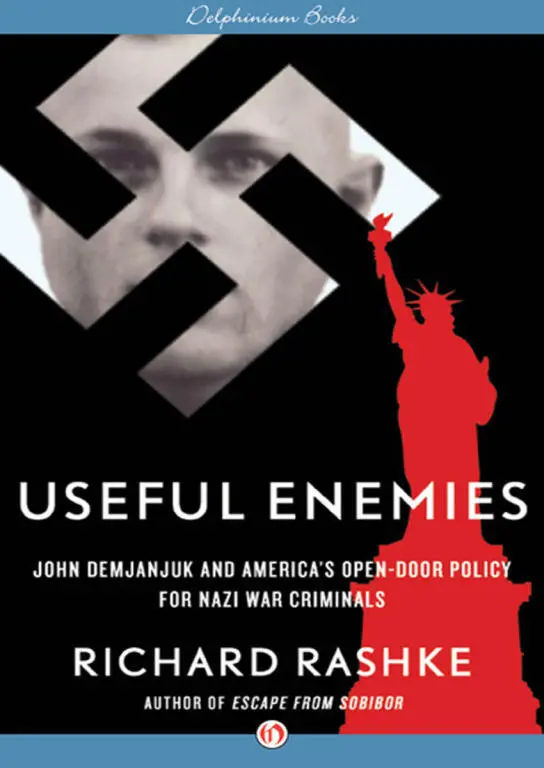
- Название:Useful Enemies
- Автор:
- Издательство:Delphinium
- Жанр:
- Год:2013
- Город:New York
- ISBN:9781883285517
- Рейтинг книги:3 / 5. Голосов: 1
-
Избранное:Добавить в избранное
- Отзывы:
-
Ваша оценка:
Useful Enemies: краткое содержание, описание и аннотация
Предлагаем к чтению аннотацию, описание, краткое содержание или предисловие (зависит от того, что написал сам автор книги «Useful Enemies»). Если вы не нашли необходимую информацию о книге — напишите в комментариях, мы постараемся отыскать её.
The answer lies in the annals of the Cold War, when fear and paranoia drove American politicians and the U.S. military to recruit “useful” Nazi war criminals to work for the United States in Europe as spies and saboteurs, and to slip them into America through loopholes in U.S. immigration policy. During and after the war, that same immigration policy was used to prevent thousands of Jewish refugees from reaching the shores of America. The long and twisted saga of John Demjanjuk, a postwar immigrant and auto mechanic living a quiet life in Cleveland until 1977, is the final piece in the puzzle of American government deceit. The White House, the Departments of War and State, the FBI, and the CIA supported policies that harbored Nazi war criminals and actively worked to hide and shelter them from those who dared to investigate and deport them. The heroes in this story are men and women such as Congresswoman Elizabeth Holtzman and Justice Department prosecutor Eli Rosenbaum, who worked for decades to hold hearings, find and investigate alleged Nazi war criminals, and successfully prosecute them for visa fraud. But it was not until the conviction of John Demjanjuk in Munich in 2011 as an SS camp guard serving at the Sobibor death camp that this story of deceit can be told for what it is: a shameful chapter in American history.
Riveting and deeply researched,
is the account of one man’s criminal past and its devastating consequences, and the story of how America sacrificed its moral authority in the wake of history’s darkest moment.
Useful Enemies — читать онлайн бесплатно полную книгу (весь текст) целиком
Ниже представлен текст книги, разбитый по страницам. Система сохранения места последней прочитанной страницы, позволяет с удобством читать онлайн бесплатно книгу «Useful Enemies», без необходимости каждый раз заново искать на чём Вы остановились. Поставьте закладку, и сможете в любой момент перейти на страницу, на которой закончили чтение.
Интервал:
Закладка:
In sum, all Blatt could testify to was that there were SS guards at Sobibor and they were essential to the killing process.
The important role of all SS guards in the Sobibor killing process was not lost on the court. But what weight should it give that participation? During the sixteen months of killing at the camp, approximately 250,000 Jews were gassed. As an alleged SS guard at the death camp, John Demjanjuk assisted the SS in murdering them. But how many deaths was he co-responsible for?
Early in the trial, presiding judge Alt took out his calculator and tallied up from transportation records how many Jews arrived at Sobibor between March 1943 and September 1943, when John Demjanjuk allegedly served there. Alt came up with 29,900. Ninety-nine percent of them were Dutch.
Defense attorney Busch objected. The court was assuming, he argued, that Demjanjuk—if he had ever been at Sobibor—was working at the camp seven days a week. Guards had days off and leave time, Busch reminded the court. Shouldn’t days away from the camp be factored into the court’s murder formula?
Judge Alt agreed and recalculated. He came up with 29,060. Busch accepted the number and the court began the tedious task of reading into the record individual transport numbers and names, if known. Readers spoke rapidly in hushed, flat, monotonous tones:
“From Amsterdam on June 21, 1943, six hundred… from Westerbork…”
To the spectators in the gallery, it sounded as if the court was reading names and numbers from the Munich white pages. But to the living who lost loved ones at Sobibor, it was an emotional moment. When they heard Alt say the name of their mother or brother, father or sister, they burst into tears.
When Alt finished the reading of names, the testimony of relatives who had lost family at Sobibor began. Under German law, these prosecution witnesses could be co-plaintiffs in the trial and they could be represented by their own attorneys. They testified through their tears and rage about how they suffered because they lost a mother or father, brother or sister at Sobibor. With hands shaking, they read from the last letter they had received from a loved one, or held up a faded picture for the judges to see. Few wanted revenge. All wanted to keep Sobibor alive in the collective memory of the world as a tribute to those who died there. A spiritual gravestone.
Somewhere along the way—with all the killing process calculations—the court seemed to have lost sight of why John Demjanjuk was on trial. The proceedings were about the men, women, and children murdered at Sobibor, not about statistics. Philip Bialowitz, the second survivor witness to testify, played an important role in reminding the court of this fact.
Like the Treblinka survivors at the Israeli trial, Bialowitz brought reality into the courtroom. He directed the court’s attention away from numbers and relatives and onto the victims themselves. In so doing, he made Sobibor come painfully alive for the seven judges and the packed gallery. Bialowitz’s two sisters and a niece were murdered at Sobibor on the day they all arrived. He survived by conning the SS into believing that he had been a pharmacist’s assistant before he was captured. That he could be useful at Sobibor if spared.
Bialowitz’s first job was cutting the hair of women and girls who had been told that Sobibor was a transit camp. After a delousing, a silver-tongued SS officer announced over a loudspeaker, they would be sent to a work camp along with the rest of their families.
“Many of these women came from Holland and they appeared to believe that this was a resettlement camp,” Bialowitz testified. “Before I cut their hair, some of these Dutch women politely asked me not to cut [it] too short. They showed no signs of knowing that they were about to be murdered. Hundreds of women at a time passed through the hair-cutting shed in this manner. Within minutes of cutting their hair, we heard the roar of a motor, mixed with a horrible mass scream, at first loud and strong, then gradually subsiding into silence.”
The SS also ordered Bialowitz to help unload passengers and luggage from the boxcars. The Dutch, who had no idea where they were or what would happen to them, would offer him a tip for helping them with their bags. “My heart was bleeding,” Bialowitz testified, “because I knew that in less than an hour they would perish.”
One experience at the unloading platform gave him a lifetime of nightmares. When he slid open a boxcar door, an overpowering smell of decomposing bodies assaulted him. Half the people crammed inside were dead. The rest were demented and barely alive.
“We began helping the few survivors down from the train,” he testified. “Despite being in such pitiful and helpless condition, they were brutally beaten and shot by several German officers and Ukrainian guards.
“Next, we removed the corpses. I tried to pull a dead woman off the train, but her skin came away in my hands. I saw another woman with a baby on top of her. Both were dead and swollen. They were still embracing each other.”
When attorney Ulrich Busch finally began his opening statement for the defense, he raised two critical questions that went to the very heart of the Munich trial. “How can you say that those who gave the orders were innocent,” Busch argued, “and the one who received the order is guilty. There is a moral and legal double standard being applied today.”
Busch had a valid point. Germany had tried eleven Sobibor SS officers in Hagen in 1965–66. One committed suicide. One was sentenced to life in prison. Five got three to eight years. Four SS officers were acquitted because no one could testify that they had seen them commit a specific murder as required for conviction under the 1871 German penal code.
Busch’s second perceptive question drew a hiss from the mostly Jewish spectators in the gallery. How did a Ukrainian SS guard differ from a Jewish Kapo? To even ask the question was viewed by survivors and their families as an anti-Semitic insult. But the question begged for an answer.
Jewish Kapos were prisoners appointed by the Nazis to help manage and discipline their fellow Jews. They didn’t volunteer for the job, but many prisoners, if not most, would have done so if asked. The job came with privileges and power and, most important, it increased the chances of survival.
Kapos performed a number of tasks at Sobibor. They were in charge of roll calls and had to tell the SS officer in charge if anyone was missing, usually because of illness. The assignment was far from humanitarian. Sickness meant inability to work. Inability to work meant death. When someone did not show up for roll call, the Kapo had to order a team to go get the missing prisoner. An SS officer or an SS guard would then walk or drag the sick Jew to camp three to be shot.
Kapos served as barracks supervisors or warders. They were supposed to be the eyes and ears of the SS. If a Kapo failed to report a problem, such as talk of escape or eating stolen food, and the SS found out about it later, the Kapo would be punished with a whip or a gun.
Kapos with whips supervised work Kommandos. They accompanied SS men as they made their rounds of the workshops looking for shirkers or hoping to catch some Jew breaking a rule. If a worker was at fault, the Kapo would be ordered to give him or her twenty-five lashes.
Kapos also supervised their fellow Jews who were sorting the clothes and belongings of those who had just been gassed. He was required to report to his SS superior any acts of sabotage, such as cutting up good clothes to make them useless to the Reich, or the theft of tins of milk and sardines or gold coins and jewels. The money and stones could later be traded with the SS guards for food or sewn into prisoners’ clothes in case they ever escaped.
Читать дальшеИнтервал:
Закладка:
Похожие книги на «Useful Enemies»
Представляем Вашему вниманию похожие книги на «Useful Enemies» списком для выбора. Мы отобрали схожую по названию и смыслу литературу в надежде предоставить читателям больше вариантов отыскать новые, интересные, ещё непрочитанные произведения.









Обсуждение, отзывы о книге «Useful Enemies» и просто собственные мнения читателей. Оставьте ваши комментарии, напишите, что Вы думаете о произведении, его смысле или главных героях. Укажите что конкретно понравилось, а что нет, и почему Вы так считаете.