Kisari Mohan Ganguli - The Mahabharata of Krishna-Dwaipayana Vyasa
Здесь есть возможность читать онлайн «Kisari Mohan Ganguli - The Mahabharata of Krishna-Dwaipayana Vyasa» весь текст электронной книги совершенно бесплатно (целиком полную версию без сокращений). В некоторых случаях можно слушать аудио, скачать через торрент в формате fb2 и присутствует краткое содержание. Издательство: ManyBooks.net, Жанр: на английском языке. Описание произведения, (предисловие) а так же отзывы посетителей доступны на портале библиотеки ЛибКат.
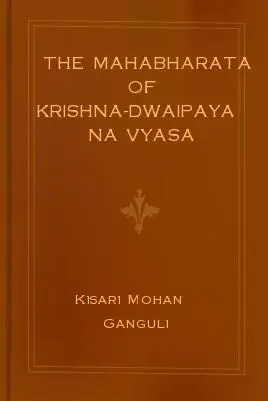
- Название:The Mahabharata of Krishna-Dwaipayana Vyasa
- Автор:
- Издательство:ManyBooks.net
- Жанр:
- Год:неизвестен
- ISBN:нет данных
- Рейтинг книги:3 / 5. Голосов: 1
-
Избранное:Добавить в избранное
- Отзывы:
-
Ваша оценка:
The Mahabharata of Krishna-Dwaipayana Vyasa: краткое содержание, описание и аннотация
Предлагаем к чтению аннотацию, описание, краткое содержание или предисловие (зависит от того, что написал сам автор книги «The Mahabharata of Krishna-Dwaipayana Vyasa»). Если вы не нашли необходимую информацию о книге — напишите в комментариях, мы постараемся отыскать её.
The Mahabharata of Krishna-Dwaipayana Vyasa — читать онлайн бесплатно полную книгу (весь текст) целиком
Ниже представлен текст книги, разбитый по страницам. Система сохранения места последней прочитанной страницы, позволяет с удобством читать онлайн бесплатно книгу «The Mahabharata of Krishna-Dwaipayana Vyasa», без необходимости каждый раз заново искать на чём Вы остановились. Поставьте закладку, и сможете в любой момент перейти на страницу, на которой закончили чтение.
Интервал:
Закладка:
"Maheswara said, 'O goddess without any fault, in consequence of thy having covered my eyes through an act of indiscretion the universe became in a moment devoid of light. When the universe became sunless and, therefore, all became dark, O daughter of the prince of mountains, I created the third eye desirous of protecting all creatures. The high energy of that eye crushed and consumed this 'mountain. For pleasing thee, however, O goddess, I once more made Himavat what he was by repairing the injury.'
"Uma said, 'O holy one, why are those faces of thine which are on the east, the north, and the west, so handsome and so agreeable to look at like the very moon? And why is that face of thine which is on the south so terrible? Why are thy matted locks tawny in hue and so erect? Why is thy throat blue after the manner of the peacock's plumes? Why, O illustrious deity, is the Pinaka always in thy hand? Why art thou always a Brahmacharin with matted locks? O lord, it behoves thee to explain all these to me. I am thy spouse who seeks to follow the same duties with thee. Further, I am thy devoted worshipper, O deity, having the bull for thy mark!'
"Narada continued, 'Thus addressed by the daughter of the prince of mountains, the illustrious wielder of Pinaka, the puissant Mahadeva, became highly gratified with her. The great god then addressed her saying, 'O blessed lady, listen to me as I explain, with the reasons thereof, why my forms are so.'"
SECTION CXLI
"The blessed and holy one said, 'In days of yore, a blessed woman was created by Brahman, called Tilottama, by culling grains of beauty from every beautiful object in the universe. One day, that lady of beautiful face, unrivalled in the universe for beauty of form, came to me, O goddess, for circumambulating me but really impelled by the desire of tempting me. In whatever direction that lady of beautiful teeth turned, a new face of mine instantly appeared (so eager did I become to see her). All those faces of mine became agreeable to look at. Thus, in consequence of the desire of beholding her, I became four-faced, through Yoga-puissance, Thus, I showed my high Yoga-power in becoming four-faced. With that face of mine which is turned towards the east, I exercise the sovereignty of the universe, With that face of mine which is turned towards the north, I sport with thee, O thou of faultless features! That face of mine which is turned towards the west is agreeable and auspicious. With it I ordain the happiness of all creatures. That face of mine which is turned towards the south is terrible. With it I destroy all creatures. I live as a Brahmacharin with matted locks on my head, impelled by the desire of doing good to all creatures. The bow Pinaka is always in my hand for accomplishing the purposes of the deities. In days of yore, Indra, desirous of acquiring my prosperity, had hurled his thunderbolt at me. With that weapon my throat was scorched. For this reason I have become blue-throated.'
"Uma said, 'When, O foremost of all creatures, there are so many excellent vehicles endued with great beauty, why is it that thou hast selected a bovine bull for thy vehicle?'
"Maheswara said, 'In the days of yore, the Grandsire Brahma created the celestial cow Surabhi yielding abundant milk. After her creation there sprang from her a large number of kine all of which yielded copious quantities of milk sweet as nectar. Once on a time a quantity of froth fell from the mouth of one of her calves on my body. I was enraged at this and my wrath scorched all the kine which thereupon became diversified in hue. I was then pacified by the Master of all the worlds, viz., Brahma, conversant with all topics. It was he who gave me this bull both as a vehicle for bearing me and as a device on my banner.'
"Uma said, 'Thou hast many abodes in heaven, of diverse forms and possessed of every comfort and luxury. Why, O holy one, dost thou reside in the crematorium, abandoning all those delightful mansions? The crematorium is full of the hair and bones (of the dead), abounds with vulture and jackals, and is strewn with hundreds of funeral pyres. Full of carrion and muddy with fat and blood, with entrails and bones strewn all over it, and always echoing with the howls of jackals, it is certainly an unclean place.'
"Maheswara said, 'I always wander over the whole earth in search of a sacred spot. I do not, however, see any spot that is more sacred than the crematorium. Hence, of all abodes, the crematorium pleases my heart most, shaded that it generally is by branches of the banian and adorned with torn garlands of flowers. O thou of sweet smiles, the multitudes of ghostly beings that are my companions love to reside in such spots. I do not like, O goddess, to reside anywhere without those ghostly creatures being by my side. Hence, the crematorium is a sacred abode to me. Indeed, O auspicious lady, it seems to me to be the very heaven. Highly sacred and possessed of great merit, the crematorium is much applauded by persons desirous of having holy abodes.'
"Uma said, 'O holy one, O lord of all creatures, O foremost of all observers of duties and religious rites, I have a great doubt, O wielder of Pinaka, O giver of boons. These ascetics, O puissant lord, have undergone diverse kinds of austerities. In the world are seen ascetics wandering everywhere under diverse forms and clad in diverse kinds of attire. For benefiting this large assemblage of Rishis, as also myself, do thou kindly resolve, O chastiser of all foes, this doubt of mine. What indications has Religion or Duty been said to possess? How, indeed, do men become unacquainted with the details of Religion or Duty to succeed in observing them? O puissant lord, O thou that art conversant with Religion, do thou tell me this.'
"Narada continued, 'When the daughter of Himavat put this question, conclave of Rishis there present worshipped the goddess and adored her with words adorned with Riks and with hymns fraught with deep import.'
"Maheswara said, 'Abstention from injury, truthfulness of speech, compassion towards all beings, tranquillity of soul, and the making of gifts to the best of one's power, are the foremost duties of the householder. Abstention from sexual congress with the spouses of other men, protection of the wealth and the woman committed to one's charge, unwillingness to appropriate what is not given to one, and avoidance of honey and meat,--these are the five chief duties. Indeed, Religion or Duty has many branches all of which are fraught with happiness. Even these are the duties which these embodied creatures who regard duty as superior should observe and practise. Even these are the sources of merit.'
"Uma said, O holy one, I wish to ask thee another question about which I have great doubts. It behoveth thee to answer it and dispel my doubts. What are the meritorious duties of the four several orders? What duties appertain to the Brahmana? What to the Kshatriya? What are the indications of those duties that appertain to the Vaisya? And what kind of duties appertain to the Sudra?'
"The holy one said, 'O highly blessed lady, the question thou hast asked is a very proper one. Those persons that belong to the regenerate order are regarded as highly blessed, and are, indeed, gods on earth. Without doubt, the observance of fasts (i.e., subjugation of the senses) is always the duty of the Brahmana. When the Brahmana succeeds in properly observing all his duties, he attains to identity with Brahma.[560] The proper observance of the duties of Brahmacharya, O goddess, are his ritual. The observance of vows and the investiture with the sacred thread are his other duties. It is by these that he becomes truly regenerate. He becomes a Brahmana for worshipping his preceptors and other seniors as also the deities. Verily, that religion which has for its soul the study of the Vedas is the source of all piety. Even that is the religion which those embodied creatures who are devoted to piety and duty should observe and practise.'
Читать дальшеИнтервал:
Закладка:
Похожие книги на «The Mahabharata of Krishna-Dwaipayana Vyasa»
Представляем Вашему вниманию похожие книги на «The Mahabharata of Krishna-Dwaipayana Vyasa» списком для выбора. Мы отобрали схожую по названию и смыслу литературу в надежде предоставить читателям больше вариантов отыскать новые, интересные, ещё непрочитанные произведения.










Обсуждение, отзывы о книге «The Mahabharata of Krishna-Dwaipayana Vyasa» и просто собственные мнения читателей. Оставьте ваши комментарии, напишите, что Вы думаете о произведении, его смысле или главных героях. Укажите что конкретно понравилось, а что нет, и почему Вы так считаете.