Chris Pourteau - Tails of the Apocalypse
Здесь есть возможность читать онлайн «Chris Pourteau - Tails of the Apocalypse» весь текст электронной книги совершенно бесплатно (целиком полную версию без сокращений). В некоторых случаях можно слушать аудио, скачать через торрент в формате fb2 и присутствует краткое содержание. Год выпуска: 2015, ISBN: 2015, Издательство: Hip Phoenix Publishing, Жанр: sf_postapocalyptic, Природа и животные, на английском языке. Описание произведения, (предисловие) а так же отзывы посетителей доступны на портале библиотеки ЛибКат.
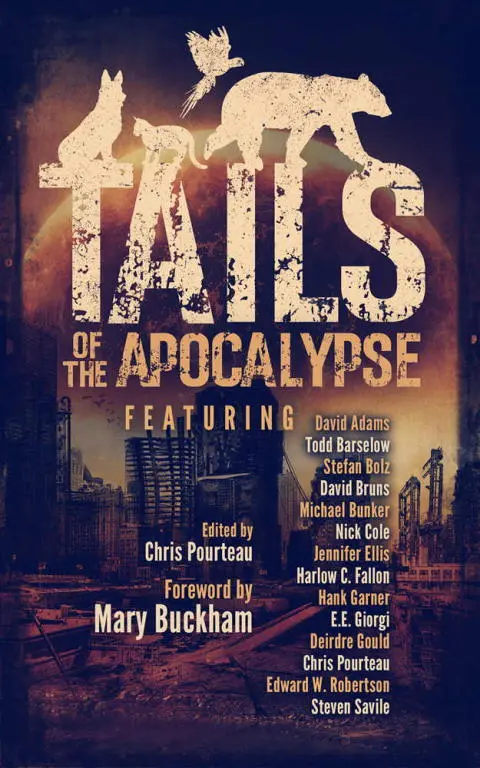
- Название:Tails of the Apocalypse
- Автор:
- Издательство:Hip Phoenix Publishing
- Жанр:
- Год:2015
- ISBN:978-0-989-98137-8
- Рейтинг книги:3 / 5. Голосов: 1
-
Избранное:Добавить в избранное
- Отзывы:
-
Ваша оценка:
Tails of the Apocalypse: краткое содержание, описание и аннотация
Предлагаем к чтению аннотацию, описание, краткое содержание или предисловие (зависит от того, что написал сам автор книги «Tails of the Apocalypse»). Если вы не нашли необходимую информацию о книге — напишите в комментариях, мы постараемся отыскать её.
) Nobility. Self-Sacrifice. Unconditional Love. These are the qualities of the heroic animals in this collection.
The Walking Dead
The Incredible Journey
Symphony of War
Pennsylvania
Wasteland Saga
Weston Files
Mayake Chronicles
After the Cure
Breakers
When the world ends, the humans who survive will learn an old lesson anew—that friendship with animals can make the difference between a lonely death among the debris and a life well lived, with hope for the future.
Tails of the Apocalypse — читать онлайн бесплатно полную книгу (весь текст) целиком
Ниже представлен текст книги, разбитый по страницам. Система сохранения места последней прочитанной страницы, позволяет с удобством читать онлайн бесплатно книгу «Tails of the Apocalypse», без необходимости каждый раз заново искать на чём Вы остановились. Поставьте закладку, и сможете в любой момент перейти на страницу, на которой закончили чтение.
Интервал:
Закладка:
In the morning, in the cold, orange light of the epic dust storm’s passing, in the silence that followed such, he spoke.
“I’ll call you Dog,” he barely croaked.
The puppy scratched at a flea behind his flappy ear.
“I’ll call you Dog.” Pause. He swallowed hard. “You can help me find the past now.”
The puppy tried to howl, surprised itself, and then looked around.
That morning they walked away from the town, away from the gorge, away from the fall, and continued on, in search of the past once more.
The dog grew and followed the man. Followed him into all the old ruins as they made their way west toward the setting sun each evening.
The dog who had once been a puppy wove in and out of the collapsed buildings and across the rubble as the man searched for the building he knew to look for, mumbling, “I am still faithful. I will never give up. I was… thank you for my helper. Thank you for my friend. I was just… too long by myself.”
When they, the buildings, weren’t found, and even when they were and they were empty save for the ash in the makeshift fire pits and the few bones they always found in such places, the man mumbled the words again, “Thank you, Lord, for giving me a helper to help me. Thank you for my friend.”
They shared the food they took from the land and the man would talk and throw sticks as they crossed the long stretches of a burning summer and a bone-deep winter until finally they came to the top of the mountain and saw the western ocean glittering far below.
When the man produced a small device, its clickety-clack noise-making made even the dog nervous.
“San Diego is like they always said it was. Annihilated because of the fleets and marines that were there,” mumbled the man. That spring they worked their way along the tops of lonely ridges, heading north along what was once called California on all the maps that had been burned for fuel and heating in the long winter that followed the end of the world.
“It seems like we’re going home, Dog. Giving up. But, there’s one last place to check and then….” He sighed as the wind beat at his clothes, making them flap and crack. “Then I don’t know where else to look.”
Dog thumped his tail against the chalk trail that barely existed anymore. Down below, along the coast well north of San Diego, spread the ruin of a massive urban sprawl that seemed ghostly and abandoned even from this high point.
“How can we have a future if we can give ’em no past,” muttered the man as he set to making their last camp in the coastal mountains.
All that spring and well through summer, they searched the ruin.
They found rusting cars.
Empty houses falling over on themselves.
Raven-haunted buildings.
Bones.
And the occasional salvager who shared a fire and told the man and dog that they were getting awfully close, dangerously close, too close to the El Lay and Mad King Arturo and the Dogeaters he made ally with.
Too close.
Too dangerously close.
On the wide stretch of cracked and broken highway, winding through the ruin of a sea of almost identical houses overgrown with weed and sage and vine, they came to the first totem of the Dogeaters.
Planted in the median, seven lanes of fading gray superhighway on each side. Clusters of housing collapsing along the hillsides above.
“Well…” whispered the man as Dog crept forward and barked at it.
Wide-jawed dog skulls, three of them, silently barked from the top of the rebar pole totem. Fresh guts and old skins dangled away from the sign’s crooked arms.
The man had known the new tribes of yesterday’s survivors to have done such things. To mark out their land with warnings like this. To keep others away. To keep what was within for themselves alone.
It was, in these hard times, the way things were.
But there was something about the dog skulls that was more. Something that said much more about the people who’d put them there.
“Best go wide here,” said the man above Dog’s growl. They moved off the freeway and down along some train tracks, working their way through the dried remains of a small swamp that had once gathered in the bottoms. Among the calcified mud and frozen rubbish of the past, they found another totem. And another further on. In time they were climbing up through dense eucalyptus groves that erupted up from the broken remains of ancient tract homes like the legs of giants, finding another nightmare dog-skull marker within sight of the last.
In the mosquito-buzzing heat within the shade of a massive, fallen eucalyptus giant that’d crushed three one-story houses all at once and long ago, the man dropped his pack and shed his patchwork armor for the day.
They were high up on a hill looking down into a bowl of residential ruin almost forty years gone. A planned community that had never planned for the end of the world.
“This was the last place, Dog,” he almost seemed to cry. “Further up the road and we get to El Lay, and everyone knows to stay clear of the madness that comes from there. Direct hit. Everyone knows that.”
Dog lay down next to him.
The man rubbed the velvet fuzz of the chocolate-brown sides of Dog.
“They find us in there and it won’t be good.” But what he really meant is that it wouldn’t be good for his friend.
“We’ll go back out into the desert, to the east, and skirt wide. After that, I don’t know where to look anymore. Maybe it’s all gone,” he said, staring out into the ruin and wondering about all those people that had lived there. What had they been like? Had they survived? Were they these Dogeaters?
He saw it.
Saw the type of building he was told to look for. Saw it far down there along the dim remains of an old road that wound along a hill above the dead swamp. Well within the borders of the Dogeaters.
All the years he’d been searching, he raged at himself that night, how many times had he found the exact same type of building. Just like he’d been taught to. And how many times had it been empty? Just fire pits and bones. Not a scrap of the past left in them.
“Every time,” he muttered within the vine-overgrown remains of an ancient family room that was scoured and brittle. An old, blackened family portrait still hung askew on one of the two walls that remained.
Every time.
They watched the fireplace and the fire within. In the night, an old owl hooted from the rafter of some nearby tract home, barely upright after forty years of hard sun and bitter winter.
He did not sleep that night. Late, when the moon was fat and low in the sky, he awoke and stood looking down into the valley once more.
Could he return and tell them he’d done his best? Searched everywhere to find the past? Could he?
He remembered her, Maggie. They’d called her Saint Maggie. But he had known her as just Maggie. He remembered the heavy smell of too-sweet flowers on her when she’d first scooped him up as the Doomsday horn rang out over the city and everyone fled. As fighter jets streaked across the sky and cars smashed into one another.
He remembered her running and saying, “I’m doing my best.”
Like it was a chant.
Like it was an explanation.
Like it was a prayer.
In the morning the man donned his armor and checked the last three shells. He loaded two and kept one in his jacket pocket.
“I gotta,” he told Dog. “I gotta do my best. I gotta go down there… and see.”
Dog had just returned from chasing something in the groves of the sweet-smelling giants that had collapsed across the old places.
“If we don’t find the past then they, back home, they ain’t got no future, buddy.” He hoisted his old ruck on his back once more. The old ruck that contained the transmitter he could use if ever he found the past. The times he’d shouldered its burden were uncountable. How many more times would he do it again?
Читать дальшеИнтервал:
Закладка:
Похожие книги на «Tails of the Apocalypse»
Представляем Вашему вниманию похожие книги на «Tails of the Apocalypse» списком для выбора. Мы отобрали схожую по названию и смыслу литературу в надежде предоставить читателям больше вариантов отыскать новые, интересные, ещё непрочитанные произведения.




Обсуждение, отзывы о книге «Tails of the Apocalypse» и просто собственные мнения читателей. Оставьте ваши комментарии, напишите, что Вы думаете о произведении, его смысле или главных героях. Укажите что конкретно понравилось, а что нет, и почему Вы так считаете.