Brian Aldiss - Helliconia Winter
Здесь есть возможность читать онлайн «Brian Aldiss - Helliconia Winter» весь текст электронной книги совершенно бесплатно (целиком полную версию без сокращений). В некоторых случаях можно слушать аудио, скачать через торрент в формате fb2 и присутствует краткое содержание. Год выпуска: 1985, ISBN: 1985, Издательство: Jonathan Cape, Жанр: Фантастика и фэнтези, на английском языке. Описание произведения, (предисловие) а так же отзывы посетителей доступны на портале библиотеки ЛибКат.
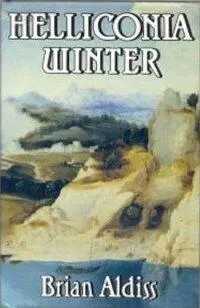
- Название:Helliconia Winter
- Автор:
- Издательство:Jonathan Cape
- Жанр:
- Год:1985
- ISBN:0-224-01847-7
- Рейтинг книги:5 / 5. Голосов: 1
-
Избранное:Добавить в избранное
- Отзывы:
-
Ваша оценка:
Helliconia Winter: краткое содержание, описание и аннотация
Предлагаем к чтению аннотацию, описание, краткое содержание или предисловие (зависит от того, что написал сам автор книги «Helliconia Winter»). Если вы не нашли необходимую информацию о книге — напишите в комментариях, мы постараемся отыскать её.
Helliconia Winter — читать онлайн бесплатно полную книгу (весь текст) целиком
Ниже представлен текст книги, разбитый по страницам. Система сохранения места последней прочитанной страницы, позволяет с удобством читать онлайн бесплатно книгу «Helliconia Winter», без необходимости каждый раз заново искать на чём Вы остановились. Поставьте закладку, и сможете в любой момент перейти на страницу, на которой закончили чтение.
Интервал:
Закладка:
The living of Earth, in other words, should beam empathy like a signal to Helliconia. Not to the living of Helliconia. The living, estranged from their Original Beholder, busy with their affairs, their lusts and hatreds, could not be expected to receive such a signal. But the gossies—for ever hungry for contact — might respond! The gossies in their event-free existence, suspended in obsidian as they sank towards the Original Beholder, the gossies might be capable of receiving a beam of empathy.
A whole generation discussed the daringly visionary proposal.
Was the attempt worth making? went the question.
It would be a great unifying experience even if it failed, came the answer.
Could we possibly hope to affect alien beings—the very dead—so far away?
Through us, Caia could address the Original Beholder. They are kin, not alien. Perhaps this amazing idea is not ours but hers. We must try.
But when we are so far distant in space and time… ?
Empathy is a matter of intensity. It defies space and time. Do we not still feel for the exile of Iphigenia in that ancient story? Let’s try.
Shall we?
On all counts, it is worth it. The spirit of Caia commands.
And so they tried.
The attempt was long-sustained. Wherever they sat and watched, wherever they came or went in their rough sandals, the living generations put away worldly things and radiated empathy towards the dead of Helliconia. And even when they could not resist including the living, such as Shay Tal or Laintal Ay, or whomever they might personally favour, they were still empathising with those long dead.
And over the years the warmth of their empathy took effect. The fessups ceased to grieve, the gossies ceased to chide. Those of the living who communed through pauk were not reproved but comforted. An unpossessive love had triumphed.
IX
A QUIET DAY ASHORE
Aiogas fire burned in the grate. Before it sat two brothers talking. Every now and again, the thin brother would reach out to pat the sturdy one, as the latter told his tale. Odirin Nan Odim, referred to by all his kin as Odo, was a year and six tenners older than Eedap Mun Odim. He much resembled his brother, except in the crucial matter of girth, for the Fat Death had yet to make its dread appearance in Rivenjk.
The two brothers had much to tell each other, and much planning to do. A ship bearing the Oligarch’s soldiery had recently arrived in the port, and the set of regulations against which Odim had fought was beginning to trouble Odo too. However, the Shiveninki were less ready than the Uskuti to take orders. Rivenjk was still a comfortable place in which to live.
The remaining precious porcelain which Odim had brought to his elder brother had been well received.
“Soon such porcelain will become even more precious,” said Odo. “Such fine quality may never be achieved again.”
“Because the weather deteriorates towards winter.”
“What follows from that, brother, is that fuel for firing the kilns will become short, and so increase in price. Also, as people’s lives grow harsher, they will be content with tin plates.”
“What do you plan to do then, brother?” asked Odim.
“My trade links with Bribahr, the neighbouring country, are excellent. I even despatch my goods to Kharnabhar, far north of here. Porcelain and china are not the only goods that need to travel such routes. We must adapt, deal in other goods. I have ideas for—”
But Odirin Nan Odim was never allowed peace for long. He, like his brother, housed a number of relations. Some of them, voluble and voluminous, rushed to the fireside now, heads full of a quarrel that only Odo could settle. Some of Redap Mun’s relations, surviving plague and voyage, had been billeted with their Rivenjk relations, and the old question had arisen of floor space being encroached upon.
“Perhaps you would not mind coming with me to see what is happening,” said Odo.
“I would be pleased. From now on, I shall be your shadow, brother.”
Homesteads in Rivenjk were arranged round a courtyard and protected from the elements by a high wall. The more prosperous the family, the higher the wall. Round this courtyard lived the various branches of the Odim family—very little more enterprising here than the relatives in Koriantura had been.
With the families lived their domestic animals, housed in stalls adjoining the human habitations. Some of the animals had been crowded together to permit the newly arrived relatives shelter. This arrangement was the cause of the present quarrel: the resident relations prized their animals above the newly arrived relations—and with some justice.
The sanitary arrangements of most Shiveninki courtyard homesteads depended on a commensalism between animals and humans. All excretions from both house and stall were washed down into a bottle- shaped pit carved in the rock under the courtyard. The pit could be maintained from an inspection flap in the courtyard, through which all vegetable refuse was also thrown. As the refuse rotted underground, it gave off biogas, chiefly methane.
The biogas rising from the pit was trapped and piped into the houses, to be used for cooking and lighting.
This civilised system had been developed throughout Shivenink to cope with the extremes of the Weyr- Winter.
As the Odim brothers inspected the complaints of their relatives, they discovered that two cousins had been housed in a stall where there was a small gas leak. The smell offended the cousins, who had insisted on bundling into the adjoining house, which was already packed with people.
The gas leak was plugged. The cousins, protesting for form’s sake, went back to their appointed stall. Slaves were despatched to see that the biogas tank was not malfunctioning.
Odo took his brother’s arm. “The church is nearby, as you will observe when we take you on a tour of the city. I have arranged this evening for a small service of thanksgiving to be held there. Praise will be offered to God the Azoiaxic for your preservation.”
“You are most kind. But I warn you, brother, I am free of religious belief.”
“This little service is necessary,” said Odo, raising a dismissive finger. “There you will be able to meet all our relatives formally. There is something downcast in your spirit, brother, owing to your multiple bereavements. You must take a good woman, or at least a slave, to make
O you happy. What is the status of that foreign woman in your party, Toress La’hl?”
“She’s a slave, belonging to Luterin Shokerandit. A doctor, very spirited. He is a fine young man, and from Kharnabhar. About Captain Fashnalgid, I am less certain. He’s a deserter, not that I blame him for that. I started out the voyage, before the Fat Death overcame us, with a woman who meant much to my comfort. Alas, she died in the epidemic.”
“Was she from Kuj-Juvec, brother?”
“No, but she became like a dove to the tree of my self. She was faithful and good. Her name, for I must speak it, was Besi Besamitikahl. She was more to me even than my—”
Odim broke off sharply, for up ran Kenigg, with a newfound friend. As Odim smiled and took his son’s hand, his brother said, “Let me help you find another dove for that good tree of your self. You have only one brother, but the air is full of doves waiting for a suitable branch on which to alight.”
Luterin Shokerandit and Harbin Fashnalgid had been given a small room under the roof, thanks to Odo’s generosity. It was lit by one little garret window overlooking the courtyard, from which they could watch the comings and goings of the family and their slaves. In an alcove stood a stove on which their slave could cook their meals.
Читать дальшеИнтервал:
Закладка:
Похожие книги на «Helliconia Winter»
Представляем Вашему вниманию похожие книги на «Helliconia Winter» списком для выбора. Мы отобрали схожую по названию и смыслу литературу в надежде предоставить читателям больше вариантов отыскать новые, интересные, ещё непрочитанные произведения.






Обсуждение, отзывы о книге «Helliconia Winter» и просто собственные мнения читателей. Оставьте ваши комментарии, напишите, что Вы думаете о произведении, его смысле или главных героях. Укажите что конкретно понравилось, а что нет, и почему Вы так считаете.