Brian Aldiss - Helliconia Winter
Здесь есть возможность читать онлайн «Brian Aldiss - Helliconia Winter» весь текст электронной книги совершенно бесплатно (целиком полную версию без сокращений). В некоторых случаях можно слушать аудио, скачать через торрент в формате fb2 и присутствует краткое содержание. Год выпуска: 1985, ISBN: 1985, Издательство: Jonathan Cape, Жанр: Фантастика и фэнтези, на английском языке. Описание произведения, (предисловие) а так же отзывы посетителей доступны на портале библиотеки ЛибКат.
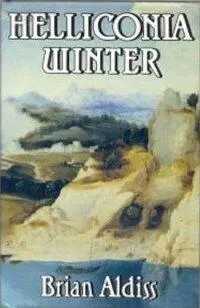
- Название:Helliconia Winter
- Автор:
- Издательство:Jonathan Cape
- Жанр:
- Год:1985
- ISBN:0-224-01847-7
- Рейтинг книги:5 / 5. Голосов: 1
-
Избранное:Добавить в избранное
- Отзывы:
-
Ваша оценка:
Helliconia Winter: краткое содержание, описание и аннотация
Предлагаем к чтению аннотацию, описание, краткое содержание или предисловие (зависит от того, что написал сам автор книги «Helliconia Winter»). Если вы не нашли необходимую информацию о книге — напишите в комментариях, мы постараемся отыскать её.
Helliconia Winter — читать онлайн бесплатно полную книгу (весь текст) целиком
Ниже представлен текст книги, разбитый по страницам. Система сохранения места последней прочитанной страницы, позволяет с удобством читать онлайн бесплатно книгу «Helliconia Winter», без необходимости каждый раз заново искать на чём Вы остановились. Поставьте закладку, и сможете в любой момент перейти на страницу, на которой закончили чтение.
Интервал:
Закладка:
At night, those humbled revenants huddled together for comfort and gazed upwards at the stars. The stars had scarcely changed since the time of paleolithic man. It was the human race which had changed.
Whole nations had gone forever. Those enterprising people who had developed mighty technologies and had struck out first for the planets and then for the stars, who had forged clever weapons and legends — those peoples had wiped themselves out. Their sole heirs were the sterile androids working on the outer planets.
Races came forth who, under an earlier dispensation, could be regarded as losers. They lived on islands or in wildernesses, at the tops of mountains or on untamed rivers, in jungles and swamps. They had once been the poor. Now they came forth to inherit the Earth.
They were peoples who took delight in life. In those first generations, a s the ice retreated, they had no need to quarrel. The world awoke again. Gaia forgave them. They rediscovered ways of living with the natural world of which they were a part. And they rediscovered Helliconia.
From 6000 and for the next six centuries, Gaia could be said to convalesce. The tall glaciers were withdrawing fast to their polar fortresses.
Some of the old ways of life had survived. As the land returned, old bastions of the technophile culture were uncovered—generally hidden underground in elaborate military complexes. In the deepest bastions, there were descendants still living whose ancestors had been part of the ruling elite of the technophile culture; they had ensured their own survival while those who had been subject to them had perished. But these living fossils, on reaching the sunshine, died within a few hours — like fish brought up from the enormous pressures of the ocean deeps.
In their foul warrens, a hope was found—the link with another living planet. Summonses were sent through space to Charon, and a company of androids fetched back to Earth. These androids, with untiring skill, set about building auditoria in which the new population could observe all that happened on the far- distant planet.
The mentalities of the new populations were shaped to a large extent by the unfolding story they saw. Survivors on the other planets, cut off from Earth, also had their links with Helliconia.
In fresh green lands, auditoria stood like conch shells upended in sand. Each auditorium was capable of housing ten thousand people. In their sandalled feet, roughly clothed in skin, and later cloth, they came to look on with wonder. What they saw was a planet not greatly different from their own, emerging slowly from the grip of a long winter. It was their story.
Sometimes an auditorium might remain deserted for years. The new p opulations also had their crises, and the natural catastrophes which attended Caia’s recovery. They had inherited not only the Earth but its uncertainties.
When they could, the new generations returned to watch the story of lives running parallel to their own. They were generations without terrestrial gods; but the figures on the giant screens appeared like gods. Those gods endured mysterious dramas of possession and religion which gripped yet puzzled their terrestrial audiences.
By the year 6344, living forms were again in moderate abundance. The human population took a solemn vow that they would hold all possessions in common, declaring that not only life but its freedom was sacred. They were much influenced by the deeds of a Helliconian living in an obscure hamlet in the central continent, a leader called Aoz Roon. They saw how a good man was ruined by a determination to get his own way. To the new generations, there was no “own way”; there was only a common way, the journey of life, the uct of the communal spirit.
As they viewed the immense figure of Aoz Roon, saw water blow from his lips and beard as he drank from his hands, they watched drops which had fallen a thousand years earlier. The human understanding of past generations had made past and present merge. For many years, the picture of Aoz Roon drinking from his hands became a popular ikon.
To the new generations, with their empathic feel for all life, it was natural to wonder whether they could assist Aoz Roon and those who lived with him. They had no idea of setting out in starships, as preglacial peoples might have done. Instead, they decided to focus their empathic sense and broadcast it outwards through conch shells.
So it was that signals went from Earth to Helliconia, responding for the first time to the signals which had long flowed in the opposite direction.
The characteristics of the human race were now drawn from a slightly different genetic pool than formerly. Those who had inherited the Earth were strong on empathy. Empathy had not been dominant in the preglacial world. That gift of entering into the personality of another, of experiencing sympathetically his or her state of mind, had never been rare. But the elite had despised it —or exploited it. Empathy ran against their interest as exploiters. Power and empathy were not happy teammates.
Now empathy was widely dispersed among the race. It became a dominant feature, with survival characteristics. There was nothing inhuman about it.
There was an inhuman aspect to the Helliconians. The terrestrials puzzled greatly about it. The Helliconians knew the spirits of their dead and communed regularly with them.
The new race on Earth took no particular account of death. They understood that when they died they were taken back and absorbed into the great Earth mother, their elementary particles to be re-formed into future living things. They were buried shallowly with flowers in their mouths, symbolising the force that would spring up from their decay. But it was different on Helliconia. They were fascinated by the Helli- conians’ descent into pauk to commune with their gossies, those sparks of vital energy.
And it was observed that the ancipital race had a similar relationship with its dead. Dead phagors sank into a “tether” state and appeared to linger, dwindling, for several generations. The phagors had no burial customs.
These macabre extensions to existence were regarded on Earth as a compensation for the extremities of climate which living things endured in the course of a Helliconian Great Year. There was, though, a marked difference between the defunct of the ancipital kind and the defunct of the human kind.
Phagors in tether supported their living descendants, formed a reservoir of wisdom and encouragement, comforted them in adversity. The spirits of humans visited in pauk, on the other hand, were unmitigatedly spiteful. No gossie ever spoke except to utter reproaches and to complain about a spoilt life.
Why this difference? asked the new intellects.
They answered from their own experience. They said: Dreadful though the phagors are, they are not estranged from the Original Beholder, the Helliconian Gaia figure. So they are not tormented by the spirits about them. The humans are estranged; they worship many useless gods who make them ill. So their spirits can never be at peace.
How happy for the Helliconian peoples—said the empathic ones among themselves—if they could have comfort from their gossies in the midst of all their other troubles.
So a determination developed. Those fortunate enough to experience life, to rise up from the molecular and surface into the great light of consciousness, like a salmon leaping from a stream to take a winged life, should radiate their happiness towards Helliconia.
Читать дальшеИнтервал:
Закладка:
Похожие книги на «Helliconia Winter»
Представляем Вашему вниманию похожие книги на «Helliconia Winter» списком для выбора. Мы отобрали схожую по названию и смыслу литературу в надежде предоставить читателям больше вариантов отыскать новые, интересные, ещё непрочитанные произведения.

Обсуждение, отзывы о книге «Helliconia Winter» и просто собственные мнения читателей. Оставьте ваши комментарии, напишите, что Вы думаете о произведении, его смысле или главных героях. Укажите что конкретно понравилось, а что нет, и почему Вы так считаете.