Brian Aldiss - Helliconia Winter
Здесь есть возможность читать онлайн «Brian Aldiss - Helliconia Winter» весь текст электронной книги совершенно бесплатно (целиком полную версию без сокращений). В некоторых случаях можно слушать аудио, скачать через торрент в формате fb2 и присутствует краткое содержание. Год выпуска: 1985, ISBN: 1985, Издательство: Jonathan Cape, Жанр: Фантастика и фэнтези, на английском языке. Описание произведения, (предисловие) а так же отзывы посетителей доступны на портале библиотеки ЛибКат.
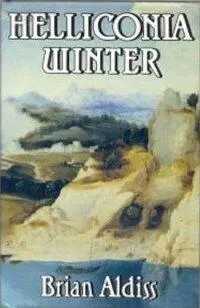
- Название:Helliconia Winter
- Автор:
- Издательство:Jonathan Cape
- Жанр:
- Год:1985
- ISBN:0-224-01847-7
- Рейтинг книги:5 / 5. Голосов: 1
-
Избранное:Добавить в избранное
- Отзывы:
-
Ваша оценка:
Helliconia Winter: краткое содержание, описание и аннотация
Предлагаем к чтению аннотацию, описание, краткое содержание или предисловие (зависит от того, что написал сам автор книги «Helliconia Winter»). Если вы не нашли необходимую информацию о книге — напишите в комментариях, мы постараемся отыскать её.
Helliconia Winter — читать онлайн бесплатно полную книгу (весь текст) целиком
Ниже представлен текст книги, разбитый по страницам. Система сохранения места последней прочитанной страницы, позволяет с удобством читать онлайн бесплатно книгу «Helliconia Winter», без необходимости каждый раз заново искать на чём Вы остановились. Поставьте закладку, и сможете в любой момент перейти на страницу, на которой закончили чтение.
Интервал:
Закладка:
Once a landslide started. A part of the cliff fell away. It dropped and dropped, carrying away more rock with it. Where it struck the sea, a great wave was raised. A wedge of ice fell, disappeared under the surface, bobbed up again. Larger wedges tumbled after it—having fallen from the edge of some glacier invisibly housed in the clouds. The falls caused terrifying reverberations of sound.
A colony of brown birds sped out from shore in their thousands, whistling their fright. So great was their wingspan that, when they passed over the ship, the noise of their movements was like low thunder. The colony took half an hour to pass overhead, and the captain shot several for the pot.
When at last the brig rounded the peninsula and began to sail north, within two days of Rivenjk, another storm struck. It was less severe than the previous one. They were whirled up in fog and snow, which arrived in great flurries. For a whole day the light of the suns glittered through thick mists and hail, the hailstones being as large as a man’s fist.
As the storm abated and the men at the pumps were able to stagger away and sleep, the coastline slowly revealed itself again.
Here the cliffs were less vertical, though as awesome as ever, husbanding their own clouds and rainstorms. From out of one obscuring storm emerged the gigantic figure of a man, swathed in mist.
The man appeared to be intending to spring from the shore and land on the deck of the New Season. Toress Lahl cried in alarm.
“That’s the Hero, ma’am,” said the second mate reassuringly. “He’s a sign we’re nearly at journey’s end—and a good thing too.”
Once the scale of the coast was grasped, it was plain that the statue was gigantic. The captain demonstrated with his sextant that it stood over a thousand metres high.
The Hero’s arms were upraised and carried slightly forward over the head. The knees were slightly bent. The man’s stance suggested that he was either about to jump into the ocean or take flight. The latter alternative was suggested by what might have been a pair of wings, or else a cloak, flowing back from the broad shoulders. For stability, the figure’s lower legs had not been separated from the rock face from which it was sculpted.
The statue was stylised, cut with curious whorls as if to confer an aerodynamic shape. The face was sharp and eaglelike, yet not entirely inhuman.
Increasing the solemnity of the sight, a distant bell tolled. Its brazen voice rolled across the grey waters to the brig.
“He’s a splendid figure, isn’t he?” Luterin Shokerandit said with pride. The passengers in their metamorphosed state all gathered at the rail to stare uneasily across at the gigantic statue.
“What does he represent?” Fashnalgid asked, plunging his hands into his coat pockets.
“He represents nothing. He is himself. He’s the Hero.”
“He must represent something.”
Annoyed, Shokerandit said, “He stands there, that’s all. A man. To be seen and admired.”
They fell uneasily silent, listening to the melancholy note of the bell.
“Shivenink is a land of bells,” Shokerandit said.
“Has the Hero got a bell in his belly?” young Kenigg asked.
“Who would build such a thing in such a place?” Odim enquired, to cover his son’s impertinent question.
“Let me tell you, my friends, that this mighty figure was created ages ago—some say many Great Years past,” Shokerandit said. “It was built, legend has it, by a superior race of men, whom we call the Architects of Kharnabhar. The Architects constructed the Great Wheel. They are the finest builders the world has ever known. When they finished their labours on the Wheel, they sculpted this giant figure of the Hero. And the Hero has guarded Rivenjk and the way to Kharnabhar ever since.”
“Beholder, what are we coming to?” Fashnalgid asked himself aloud. He went below to smoke a veronikane and read a book.
When the desolation of a post-apocalyptic Earth yielded to the ice age, signals had been received from Helliconia for the past three centuries. As the glaciers moved south, there were few who possessed the ability to watch that newly discovered planet’s history, apart from the androids on Charon.
At least this could be said for the ice age. It wiped the Earth clear of the festering shells of defunct cities. It obliterated the cemeteries which all previous habitation had become. Voles, rats, wolves, ran where highways had once been. In the southern hemisphere, too, the ice was on the move. Solitary condors patrolled the empty Andes. Penguins moved, generation by generation, towards the desired ice shelves of Copacabana.
A drop of only a few degrees had been enough to throw the intricate mechanisms of climatic control out of gear. The nuclear blast had induced in the living biosphere — in Gaia, the Earth mother — a state of shock. For the first time in epochs, Gaia met a brute force she could not accommodate. She had been raped and all but murdered by her sons.
For hundreds of millions of years, Earth’s surface had been steadily maintained within the narrow extremes of temperature most congenial to life — maintained by an unwitting conspiracy between all living things in conjunction with their parent world. This despite increases in the sun’s energy, causing dramatic changes in the constitution of the atmosphere. The regulation of the amount of salt in the sea had been maintained at a constant percentage of 3.4. If that had ever risen to a mere 6 percent, all marine life would have ceased. At that percentage of salinity, cell walls disintegrate.
The amount of oxygen in the atmosphere had similarly been maintained at a steady 21 percent. The percentage of ammonia in the atmosphere had also been maintained. The ozone layer in the atmosphere had been maintained.
All these homeostatic equilibria had been maintained by Gaia, the Earth mother in whom all living things, from sequoias to algae, whales to viruses, had their being. Only mankind had grown up and forgotten Gaia. Mankind had invented its own gods, had possessed those gods, had been possessed by them, had used them as weapons against enemies, and against their own inner selves. Mankind had enslaved itself, in hate as much as love. In that madness of isolation, mankind invented formidable weapons of destruction. In committing genocide, it almost slew Gaia.
She was slow to recover. One striking symptom of her illness was the death of trees. Those abundant organisms, which had spread from the tropical rain forests to the northern tundras, were killed by the radioactivity and an inability to photosynthesise. With the disappearance of trees, a vital link in the homeostatic chain was broken; the homes they provided for a myriad of life forms were lost.
Conditions of cold prevailed for almost a thousand years. Earth lay in a chill catalepsy. But the seas lived.
The seas had absorbed much of the large clouds of carbon dioxide released by the nuclear holocaust. The carbon dioxide remained trapped in the water, retained in deep ocean circulation and not to be released for centuries. The ultimate release initiated a period of greenhouse warming.
As had happened before, life came forth from the seas. Many components of the biosphere—insects, microorganisms, plants, man himself — had survived, thanks to isolation, freak winds, or other providential conditions. They again became active, as white gave place to green. The ozone layer, shielding living cells from lethal ultraviolet, reestablished itself. Once more, as the firn melted, the pipe of separate instruments reached towards orchestral pitch.
By 5900, better conditions were evident. Antelope sprang among low thorn trees. Men and women muffled themselves in skins and trudged north after the glaciers.
Читать дальшеИнтервал:
Закладка:
Похожие книги на «Helliconia Winter»
Представляем Вашему вниманию похожие книги на «Helliconia Winter» списком для выбора. Мы отобрали схожую по названию и смыслу литературу в надежде предоставить читателям больше вариантов отыскать новые, интересные, ещё непрочитанные произведения.






Обсуждение, отзывы о книге «Helliconia Winter» и просто собственные мнения читателей. Оставьте ваши комментарии, напишите, что Вы думаете о произведении, его смысле или главных героях. Укажите что конкретно понравилось, а что нет, и почему Вы так считаете.