Brian Aldiss - Helliconia Winter
Здесь есть возможность читать онлайн «Brian Aldiss - Helliconia Winter» весь текст электронной книги совершенно бесплатно (целиком полную версию без сокращений). В некоторых случаях можно слушать аудио, скачать через торрент в формате fb2 и присутствует краткое содержание. Год выпуска: 1985, ISBN: 1985, Издательство: Jonathan Cape, Жанр: Фантастика и фэнтези, на английском языке. Описание произведения, (предисловие) а так же отзывы посетителей доступны на портале библиотеки ЛибКат.
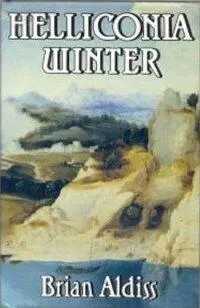
- Название:Helliconia Winter
- Автор:
- Издательство:Jonathan Cape
- Жанр:
- Год:1985
- ISBN:0-224-01847-7
- Рейтинг книги:5 / 5. Голосов: 1
-
Избранное:Добавить в избранное
- Отзывы:
-
Ваша оценка:
Helliconia Winter: краткое содержание, описание и аннотация
Предлагаем к чтению аннотацию, описание, краткое содержание или предисловие (зависит от того, что написал сам автор книги «Helliconia Winter»). Если вы не нашли необходимую информацию о книге — напишите в комментариях, мы постараемся отыскать её.
Helliconia Winter — читать онлайн бесплатно полную книгу (весь текст) целиком
Ниже представлен текст книги, разбитый по страницам. Система сохранения места последней прочитанной страницы, позволяет с удобством читать онлайн бесплатно книгу «Helliconia Winter», без необходимости каждый раз заново искать на чём Вы остановились. Поставьте закладку, и сможете в любой момент перейти на страницу, на которой закончили чтение.
Интервал:
Закладка:
“ ‘Plague’ is not the scientifically exact term. The plague and the Fat Death are different things, although we use the terms interchangeably. Obscene though the symptoms of the Fat Death are, the majority of young, healthy people who contract it recover.”
“It spreads like the plague, doesn’t it?”
Without turning her head to reply, Toress Lahl said, “I could not leave Shokerandit to die. I am a doctor.”
“If you’re a doctor, you should know the dangers involved.”
“I do, I do,” said Toress Lahl. Shaking her head, she rushed from them and hurried down the companionway below decks.
She paused outside the door of the closet in which she kept Shokerandit. As she rested her head on her arm, she was vouchsafed a glimpse of the turn her life had taken, the misery in which she now lived, and the uncertainty which surrounded all on the ship. What was the reason for this gift of consciousness, which even phagors did not have, this awareness that one was aware, when it was incapable of changing what one did?
She was nursing the man who had taken her husband’s lifeblood. And—oh, yes, she felt it—she was already infected with his disease. She knew it could easily leap to everyone else in the confines of this ship; the insanitary conditions on the New Season made it a haven for contagion. Why did life happen— and was it possible that, even now, some detached part of her was enjoying life?
She unlocked the door, set her shoulder against its resistance, and entered the closet. There she lived for the next two days, seeing no one, crawling only rarely onto the deck for fresh air.
Besi meanwhile had been given the task of supervising the many relations of Odim who had been stowed in the main hold. Her chief support came from the old grannie who made the delectable pastry savrilas. This aged woman still managed to cook on a small charcoal stove, filling the hold with benevolent aromas, while at the same time soothing the anxieties of the family.
The family lay about on boxes and ottomans and chests, indulging themselves in their customary way even while complaining about the rigours of life at sea. Theatrically, they declaimed to Besi and to anyone who would listen, and was not simultaneously declaiming, of the dangers of sea voyages. But Besi thought, And what of the dangers of plague! If it spreads to this hold, how many of you poor vulnerable bodies will survive? She determined to stay with them whatever happened, and secretly armed herself with a small dagger.
Toress Lahl remained isolated, speaking to no one, even when she crept up on deck.
On the third morning, she saw small icebergs dotting the water. On the third morning, with fever on her, she returned to her vigil as usual. The door was more reluctant than ever to budge.
Luterin Shokerandit was confined in a small irregular area in the bows of the New Season. A supporting pillar stood in the middle of the space, leaving enough room only for a bunk to one side of it and a bucket, a bale of hay, a stove, and four frightened fhlebihts, tethered beneath the small porthole. The porthole admitted light enough for Toress Lahl to see stains running across the floor and the gross figure tethered on the lower bunk. She locked the door behind her, rested against it, and then took a step closer to the prostrate figure.
“Luterin!”
He stirred. Under his left arm, which she had strapped by the wrist against the supports of the bunk, his head thrust a short way, tortoise-like, and one eye opened, to regard her through a spike of hair. His mouth opened, making a croaking noise.
She fetched a ladle of water from a casket standing behind the stove. He drank.
“More food,” he said.
She knew he would recover. These were the first words he had spoken since they had carried him to this place on the New Season. He was again capable of organized thought. Yet she dare not touch him, although his wrists and ankles were tied securely.
On the top of the stove lay the charred remains of the last fhlebiht she had killed. She had dismembered it into joints with a cleaver, cooking it as best she could over the charcoal. The corkscrew horns, the long white fleece of the animal, lay with other rubbish in the corner.
As she threw a joint over to him, Toress Lahl thought for the first time how good the grilled meat looked. Shokerandit wedged it under an elbow and commenced to gnaw at the meat. Ever and again he cast a glance up at her. There was no longer the anger of madness in his eye. The bulimia had passed.
The thought of his previous savage eating tormented her. She looked at his naked limbs, gleaming with the sweat of his earlier struggles, and imagined how it would be to sink her teeth into his flesh. She snatched the charred meat from the stove.
Chains and manacles lay ready. Toress Lahl fell to her knees and crawled to them, securing herself to the central post with them. She locked her wrists together and flung the key clumsily into one corner, out of reach. The halitus of the place came to her, the stench of the man’s body mingled with the smell of the confined animals and the odour of their droppings, all flavoured with the fumes from the charcoal. As she choked, a stiffness came on her. She began to stretch as far as the chains would allow, knees out before her in an ungainly position, head slowly rolling at the end of its neck. The animal carcass was cradled under one arm as if it were a child.
The man lay where he was, staring without movement. At last the woman’s name came to his lips and he called to her. Her gaze momentarily met his, but it was the stare of an idiot and her eyeballs continued to roll.
Jaw hanging open, Shokerandit wriggled to sit up. He was tightly bound to the bunk. The wildest struggles of his delirium, when the helico virus had raged in his hypothalamus, had not sufficed for him to break the leather thongs securing his wrists and ankles.
As he struggled, he found a pair of brass tongs with claws, such as were used for handling lumps of red-hot charcoal, against his side. The implement was useless for cutting his bonds. For a while he slept. Waking, he tried again to set himself free.
He called. Nobody would come. The fear of the Fat Death was too great. The woman lay almost immobile against her pillar. He could prod her with his foot. The animals bleated, turning restlessly on their straw. Their eyes glowed yellow in the half dark.
Shokerandit had been secured so that he lay face down. The stiffness was leaving his joints. He was able to twist his head and look about. He inspected the webbing of the bunk overhead. Halfway down the bed a wooden crossbar was inserted to strengthen the structure. Into the crossbar a long-bladed dagger had been driven.
Minutes passed as he gazed awkwardly up at the dagger. Its handle was not far above him, but he had no hope of grasping it, tied as he was. He was clear in his mind that Toress Lahl had set it there before she succumbed to the disease. But why?
He felt the brass tongs against his flesh. The connection came at once, and with it a revelation of her cleverness. Wriggling, he managed to work the tongs down the bunk until he could grasp them between his knees. Then came an agony of contortion as he rotated his clenched knees and brought them up under the dagger. He worked for an hour, two hours, sweating and groaning in his pain, until at last he had the handle of the dagger secure between the brass claws. Then it was only a matter of time until he worked the dagger free.
It fell against his thighs. Shokerandit rested until he had recovered strength enough to shuffle the blade up the bunk. At last he could take it in his teeth.
There was the painful labour of sawing through one of the leather thongs, but it was done eventually. Once he had one hand free, he was able to cut himself loose. He lay back, panting. At last he climbed from the foetid bunk.
Читать дальшеИнтервал:
Закладка:
Похожие книги на «Helliconia Winter»
Представляем Вашему вниманию похожие книги на «Helliconia Winter» списком для выбора. Мы отобрали схожую по названию и смыслу литературу в надежде предоставить читателям больше вариантов отыскать новые, интересные, ещё непрочитанные произведения.








Обсуждение, отзывы о книге «Helliconia Winter» и просто собственные мнения читателей. Оставьте ваши комментарии, напишите, что Вы думаете о произведении, его смысле или главных героях. Укажите что конкретно понравилось, а что нет, и почему Вы так считаете.