Brian Aldiss - Helliconia Winter
Здесь есть возможность читать онлайн «Brian Aldiss - Helliconia Winter» весь текст электронной книги совершенно бесплатно (целиком полную версию без сокращений). В некоторых случаях можно слушать аудио, скачать через торрент в формате fb2 и присутствует краткое содержание. Год выпуска: 1985, ISBN: 1985, Издательство: Jonathan Cape, Жанр: Фантастика и фэнтези, на английском языке. Описание произведения, (предисловие) а так же отзывы посетителей доступны на портале библиотеки ЛибКат.
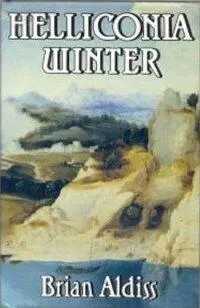
- Название:Helliconia Winter
- Автор:
- Издательство:Jonathan Cape
- Жанр:
- Год:1985
- ISBN:0-224-01847-7
- Рейтинг книги:5 / 5. Голосов: 1
-
Избранное:Добавить в избранное
- Отзывы:
-
Ваша оценка:
Helliconia Winter: краткое содержание, описание и аннотация
Предлагаем к чтению аннотацию, описание, краткое содержание или предисловие (зависит от того, что написал сам автор книги «Helliconia Winter»). Если вы не нашли необходимую информацию о книге — напишите в комментариях, мы постараемся отыскать её.
Helliconia Winter — читать онлайн бесплатно полную книгу (весь текст) целиком
Ниже представлен текст книги, разбитый по страницам. Система сохранения места последней прочитанной страницы, позволяет с удобством читать онлайн бесплатно книгу «Helliconia Winter», без необходимости каждый раз заново искать на чём Вы остановились. Поставьте закладку, и сможете в любой момент перейти на страницу, на которой закончили чтение.
Интервал:
Закладка:
On Mars, Venus, Mercury, and the moons of Jupiter, human beings were more free — free to found their own petty nations and ruin their own lives their own way. But they formed a sort of second-class citizenry of the solar system. Everything they acquired — and acquisition still played a major part in their lives—they paid for to COSA.
It was in 4901 that this burden became too great, and in 4901 that a statesman on Earth made the mistake of using the old derogatory term “immigrants” about the inhabitants of Mars. And so it was in 4901 that nuclear war broke out among the planets—the War over a Word, as it was called.
Although records of those pre-apocalypse times are scarce, we do know that populations then regarded themselves as too civilized to begin such a war. They had a dread that some lunatic might press a button. In fact the buttons were pressed by sane men, responding to a well-rehearsed chain of command. The fear of total destruction had always been there. Nuclear weapons, once invented, cannot be disinvented. And such are the laws of enantiodromia that the fear became the wish, and missiles sped to targets, and people burned like candles, and silos and cities erupted in an unexpungeable fire.
It was a war between the worlds, as had been predicted. Mars was silenced for ever. The other planets struck back with only a fraction of their total firepower (and so were destroyed). Earth was hit by no more than twelve io,ooo-megaton bombs. It was enough.
A great cloud rose above the capital of La Cosa. Dust which comprised fragments of soot, grains of buildings, flakes of bodies, vegetable and mineral, rose to the stratosphere. A hurricane of heat rolled across the continents. Forests, mountains, were consumed by its breath. When the initial fires died, when much of the radioactivity sank to the despoiled ground, the cloud remained.
The cloud was death. It covered all of the northern hemisphere. The sunlight was blotted from the ground. Photosynthesis, the basis of all life, could no longer take place. Everything froze. Plants died, trees died. Even the grass died. The survivors of the strike found themselves straggling through a landscape which came more and more to resemble Greenland. Land temperatures fell rapidly to minus thirty degrees. Nuclear winter had come.
The oceans did not freeze. But the cold, the dirt in the upper atmosphere, spread like discharge over a sheet, poisoning the southern hemisphere as well as the northern. Cold gripped even the favoured lands of the equator. Dark and chill reigned on Earth. It seemed that the cloud was to be mankind’s last creative act.
Helliconia was celebrated for its long winters. But those winters were of natural occurrence: not nature’s death, but its sleep, from which the planet would reliably arouse itself. The nuclear winter held no promise of spring.
The filthy aftermath of the war merged indistinguishably with another kind of winter. Snow fell on hills which the so-called summer did not disperse; next winter, more snow fell on what remained. The drifts deepened. They became permanent. One permanent bed linked with another. One frozen lake generated another. The ice reservoirs of the far north began to flow southward. The land took the colour of the sky. The Age of Ice returned.
Space travel was forgotten. For Earthmen, it had again become an adventure to travel a mile.
A spirit of adventure grew in the minds of those who sailed in the New Season. The brig left the harbour without incident, and soon was sailing westwards along the Sibornalese coast with a fresh northeasterly in her canvas. Captain Fashnalgid found that he was whistling a hornpipe.
Eedap Mun Odim coaxed his portly wife and three children on deck. They stood in a mute line, staring back at Koriantura. The weather had cleared. Freyr wreathed itself in fire low on the southern horizon, Batalix shone almost at zenith. The rigging made complex patterns of shadow on the deck and sails.
Odim excused himself politely, and went over to where Besi Besamit-ikahl stood alone in the stern. At first he thought she was seasick, until the movements of her head told him she was weeping. He put an arm around her.
“It hurts me to see my precious one waste her tears.”
She clung to him. “I feel so guilty, dear master. I brought this trouble on you… Never shall I forget the sight of that man… burning. … It was all my fault.”
He tried to calm her, but she burst out with her story. Now she put the blame on Harbin Fashnalgid. He had sent her out early in the day, when no ordinary people were about, to buy some books, and she had been seized in the street by Major Gardeterark.
“His biwacking books! And he said that that was the last of his money. Fancy wasting the last of your money on books!”
“And the major—what did he do?”
She wept again. “I told him nothing. But he recognised me as one of your possessions. He took me into a room where there were other soldiers. Officers. And he made me … made me dance for them. Then he dragged me round to our offices… It’s me that’s to blame. I should never have been fool enough to go out for those books…”
Odim wiped her eyes and made soothing noises. When Besi was calmer, he asked seriously, “Have you a real affection for this Captain Harbin?”
Again she clutched him. “Not any more.”
They stood in silence. Koriantura was sinking in the distance. The New Season was sailing past a cluster of broad-beamed herring-coaches. The herring-coaches had their curtain nets out, trawling for fish. Behind the fishermen were salters and coopers, who would gut and preserve the catch as soon as it was hauled aboard.
Amid sniffs, Besi said, “You’ll never forget what happened when you —when that man died on the kiln, will you, dear master?”
He stroked her hair. “Life in Koriantura is over. I have put everything that belonged to Koriantura behind me, and would advise you to do the same. Life will begin again when we reach my brother’s home in Shivenink.”
He kissed her and returned to his wife.
The next morning, Fashnalgid sought Odim out. His tall clumsy figure dominated Odim’s slender and tightly parcelled form.
“I’m grateful to you for your kindness in taking me aboard,” he said. “You’ll be paid in full when we get to Shivenink, I assure you.”
“Don’t worry,” Odim said, and said no more. He did not know how to deal with this officer, now a deserter, except by his usual method of dealing with people—through politeness. The ship was crowded with people who had begged to be allowed aboard to escape the oligarchic legislation; all had paid Odim. His cabin was stacked with treasures of one sort of another.
“I mean what I say—you will be paid in full,” Fashnalgid repeated, looking heavily down at Odim.
“Good, good, yes, thank you,” said Odim, and backed away. Out of the corner of his eye, he saw Toress Lahl coming on deck, and went over to her to escape from Fashnalgid’s attentions. Besi followed him. She had avoided Fashnalgid’s gaze.
“How is your patient?” Odim asked the Borldoranian woman. Toress Lahl leaned against the rail, closed her eyes, and took a few deep breaths. Her pale, clear features had taken on a translucent quality under strain. The skin below her eyes looked puckered and dirty. She said, without opening her eyes, “He’s young and determined. I believe he will live. Such cases generally do.”
“You shouldn’t have brought a plague case aboard. It endangers all our lives,” Besi said. She spoke with a new boldness; she would never have dared speak out previously in front of Odim: but on the voyage all relationships changed.
Читать дальшеИнтервал:
Закладка:
Похожие книги на «Helliconia Winter»
Представляем Вашему вниманию похожие книги на «Helliconia Winter» списком для выбора. Мы отобрали схожую по названию и смыслу литературу в надежде предоставить читателям больше вариантов отыскать новые, интересные, ещё непрочитанные произведения.


Обсуждение, отзывы о книге «Helliconia Winter» и просто собственные мнения читателей. Оставьте ваши комментарии, напишите, что Вы думаете о произведении, его смысле или главных героях. Укажите что конкретно понравилось, а что нет, и почему Вы так считаете.