Ben Bova - The Silent War
Здесь есть возможность читать онлайн «Ben Bova - The Silent War» весь текст электронной книги совершенно бесплатно (целиком полную версию без сокращений). В некоторых случаях можно слушать аудио, скачать через торрент в формате fb2 и присутствует краткое содержание. Год выпуска: 2004, ISBN: 2004, Издательство: NEL, Жанр: Фантастика и фэнтези, на английском языке. Описание произведения, (предисловие) а так же отзывы посетителей доступны на портале библиотеки ЛибКат.
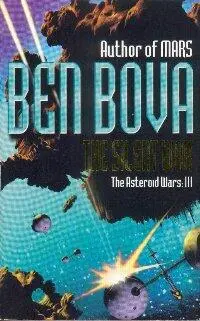
- Название:The Silent War
- Автор:
- Издательство:NEL
- Жанр:
- Год:2004
- ISBN:0-340-76963-7
- Рейтинг книги:5 / 5. Голосов: 1
-
Избранное:Добавить в избранное
- Отзывы:
-
Ваша оценка:
The Silent War: краткое содержание, описание и аннотация
Предлагаем к чтению аннотацию, описание, краткое содержание или предисловие (зависит от того, что написал сам автор книги «The Silent War»). Если вы не нашли необходимую информацию о книге — напишите в комментариях, мы постараемся отыскать её.
As they fight it out, the lives of thousands of innocents hang in the balance, including the rock rats, who make their living off the asteroids, and the inhabitants of Selene City on Earth’s moon. As if matters weren’t complicated enough, the shadowy Yamagata corporation sets its sights on taking advantage of other people’s quarrels, and space pirate Lars Fuchs decides it’s time to make good on his own personal vendetta…
It’s a breakneck finale that can end only in earth’s salvation—or the annihilation of all that humankind has ever accomplished in space.
The Silent War — читать онлайн бесплатно полную книгу (весь текст) целиком
Ниже представлен текст книги, разбитый по страницам. Система сохранения места последней прочитанной страницы, позволяет с удобством читать онлайн бесплатно книгу «The Silent War», без необходимости каждый раз заново искать на чём Вы остановились. Поставьте закладку, и сможете в любой момент перейти на страницу, на которой закончили чтение.
Интервал:
Закладка:
Harbin heard the alarm in the voice of his pilot. “They’re firing at us! Firing at all three of us.”
“They can’t do much damage at this range,” he said calmly.
“If they hit our thrusters…” The pilot turned in his chair and saw the set of Harbin’s jaw. “Sir,” he added lamely.
“All ships,” Harbin commanded, “increase elevation three degrees, now.”
To his exec he said, “Activate the rocks.”
“They’re maneuvering!” sang out the weapons officer.
Gormley saw it on the nav screen. “Keep locked onto them. Don’t let them get away!”
Even the Sudanese had turned his attention away from the small rocks that were now fairly far off to their starboard to concentrate on the battle action. The enemy ships were maneuvering in unison, which was foolish. Far better, when being chased, to maneuver independently and set up a more difficult targeting problem for the attackers.
The collision-avoidance radar began to bong loudly.
“What in blazes is that?” Gormley shouted.
The navigation screen automatically switched to show several dozen meter-sized rocks hurtling toward Gormley’s ships. The Sudanese could see glowing plumes of exhaust plasma thrusting the rocks toward them.
How simple! he realized. Set up small rocks with plasma thrusters and guidance chips, lure your enemy toward them, and then fire the rocks into your enemy’s ships. How simple. And how deadly.
The rocks were moving at high velocity when they smashed into the Astro Corporation ships. They tore the ships apart, like high-speed bullets fired through tin cans. One of them blasted through the bridge of Antares, ripped through the helmeted head of the ship’s pilot and plowed out the other side of the bridge while the woman’s decapitated body showered blood everywhere. Screams and cries of horror filled the Sudanese’s helmet earphones. Cursing wildly, he cut off the suit radio as his chair ripped free of its mounting on the ship’s deck and crashed through the gaping hole in the bridge where the rock had gone through. He felt his left arm snap, and a dizzying wave of excruciating pain shot down his spine. Then he felt and heard nothing.
He was spinning slowly, slowly through empty space, still strapped into his broken chair. He could feel nothing below his neck. He could hardly breathe. Through tear-filled eyes he saw the shattered remnants of Gormley’s fleet, broken and smashed pieces of spacecraft, bodies floating in their space suits, a proud armada reduced in a few seconds to a slowly spreading patch of debris. Flotsam, he thought idly. We are going to die in this empty wilderness.
“My god,” whispered someone on the bridge of Samarkand.
Harbin also stared at the destruction. The Astro fleet looked as if it had gone through a shredder. A meatgrinder. Bodies and wreckage were strewn everywhere, spinning, tumbling, coasting through space.
“Should we pick up the survivors?” his pilot asked, in a hushed voice.
Harbin shook his head. “There are no survivors.”
“But maybe some—”
“There are no survivors,” he repeated harshly. But his eyes lingered on the display screen. A few hundred new asteroids have been added to the Belt, he told himself. Some of them were once human beings.
ASTRO CORPORATION HEADQUARTERS
“Wiped out?” Pancho asked, her insides suddenly gone hollow.
“Every ship,” said Jake Wanamaker. “No survivors.” He looked grim, beaten.
“What happened?”
Wanamaker was standing before her desk like a man facing a firing squad. Pancho pushed herself to her feet and gestured him to one of the comfortably padded chairs arranged around the small oval table in the corner of her office. Feeling shaky, her knees rubbery, she went to the table and sat next to her military commander. “We’re not certain. We got a brief signal that they used small asteroids—some of them no bigger than a man’s fist—and rammed them into Gormley’s ships.”
“How could they do that?” Pancho asked.
“Attach a plasma rocket and a simple guidance system to the rock,” said Wanamaker. “It doesn’t have to be fancy. Just juice the rocks up to very high velocity and ram them into our ships. Like buckshot hitting paper bags.”
“And they’re all dead?”
Wanamaker nodded bleakly.
Jesus sufferin’ Christ, Pancho thought. Thirteen ships. A hundred and fifty people, just about.
“I think I should tender my resignation,” said Wanamaker.
Pancho glared at him. “Giving up?”
He flinched as though she’d slapped him. “No. But a defeat like this… you’ll probably want a better man to head your war.”
Shaking her head slowly, Pancho said, “No, I want you, Jake. One battle doesn’t mean we’ve lost it all.”
But inwardly she thought, I want you to keep on heading the military operations. But I’ll take charge of this goddamned war. Humphries might have the edge on us militarily, with more mercenaries and more ships and better experience. But there’s more than one way to fight a war.
To Wanamaker, she said, “I’m not giving up. Far as I’m concerned, this war’s just started.”
“ ‘I have not yet begun to fight,’ ” he muttered.
“I heard that one,” Pancho said. “John Paul Jones, wasn’t it?”
Wanamaker nodded.
“Okay. You recruit more mercenaries, I’ll buy more ships. For the time being, Humphries has the run of the Belt. He’s gonna attack any Astro vessels he can find out there, try to drive us out of the Belt altogether.”
“Convoy them.”
“Convoy?”
“Don’t let them sail alone. Put them in groups. It’s harder to attack a formation of armed ships than a single ship.”
“Makes sense,” Pancho agreed. “I’ll send out the word right away.”
“I think Yamagata Corporation can provide us with reliable mercenaries.”
“Good. Go get ’em.”
It took a moment for Wanamaker to realize he’d been dismissed. It only hit him when Pancho pushed her chair back from the conference table and got to her feet. He shot up and started to salute, then caught himself and reddened slightly.
“I’ve got a lot of work to do,” he said, as if excusing himself for leaving the room.
“Me too,” said Pancho.
Wanamaker left, and Pancho returned to her desk. She called up reports on where the Astro ships were, and where Humphries’s vessels were. A holographic representation of the vast space between Earth and the Belt took form in the air beyond her desk, a huge dark expanse with flickering pinpoints of light showing the positions of the ships, Astro’s in blue, HSS’s in red. There was a cluster of ships between the Earth and Moon; Pancho blanked them out to simplify the three-dimensional picture.
Cripes, there’s a lot of red ones out in the Belt, she said to herself. And those are just the ones we know about. The Humper’s prob’ly got a lot more out there, moving around the Belt without any telemetry or identification beacons for the IAA to pick up.
She had the computer identify the ore freighters, logistics carriers, and ships carrying miners to specific asteroids. Then she added the freelancers, the prospectors and miners who worked on their own, independent of the big corporations.
Minutes ticked into hours as she studied the situation. We’re outnumbered in the Belt two, three to one, Pancho saw. The Hump’s been building up his fleet out there for years now. We’ve gotta play catch-up.
But why should we play their game? she asked herself. That’s what we were doing with Gormley and look what it got us.
She leaned back in her softly yielding desk chair and closed her eyes briefly. What’s the point of all those ships out in the Belt? To bring ores to the factories on Earth, or in Earth orbit, or here at Selene, she answered her own question.
Читать дальшеИнтервал:
Закладка:
Похожие книги на «The Silent War»
Представляем Вашему вниманию похожие книги на «The Silent War» списком для выбора. Мы отобрали схожую по названию и смыслу литературу в надежде предоставить читателям больше вариантов отыскать новые, интересные, ещё непрочитанные произведения.
Обсуждение, отзывы о книге «The Silent War» и просто собственные мнения читателей. Оставьте ваши комментарии, напишите, что Вы думаете о произведении, его смысле или главных героях. Укажите что конкретно понравилось, а что нет, и почему Вы так считаете.